Jakość dowodów 4.63/5
Ocena recenzji w ośmiu wymiarach względem rubryki jakości . Każdy wymiar oceniony w skali 1–5.
- D1 Zakotwiczenie w źródłach
- 5/5
- D2 Autorytet źródeł
- 5/5
- D3 Arytmetyka
- 4/5
- D4 Niepewność
- 4/5
- D5 Zakres
- 5/5
- D6 Tekst
- 5/5
- D7 Uczciwość co do percepcji
- 4/5
- D8 Kompletność zastrzeżeń
- 5/5
● twoje czynniki — kliknij to ryzyko ▾ aby ujawnić
- Twoje czynniki
≈ Tak samo prawdopodobne jak

Postrzegane
Kręcenie dzieci trzymając je za ręce, wspólne zjeżdżanie ze zjeżdżalni i noszenie na barana wydają się zabawne i bezpieczne — obrażenia jawią się jako mało prawdopodobny efekt zwykłej zabawy budującej więź. Te aktywności są na tyle powszechne, że większość rodziców robiła je wszystkie wielokrotnie bez żadnego incydentu, co wzmacnia intuicję, że krzywda jest w gruncie rzeczy hipotetyczna. Konkretne mechanizmy, przez które każda z tych aktywności może spowodować obrażenia, nie są szeroko znane.
Źródło: intuicja redakcyjna, bez badania
Rzeczywiste
~6 na 10 000 dzieci poniżej 6 roku życia rocznie trafia na oddział ratunkowy z łokciem niańki (podwichnięcie głowy kości promieniowej)
dzieci w USA w wieku 0–5 lat
Śr. spotkań w życiu: ~59 (1/yr × 59 yr)
Pokaż obliczenia
The NEISS-based ED rate of 6 per 10,000 children ≤6/year (Rangan et al. 2021) is a lower bound — it counts only ED-treated cases. Community-level estimates from clinical literature (Aberdeen, 1990, cited widely) place the true event rate at approximately 1% per year (10 per 1,000) for children in the peak-risk window. Peak risk is age 1–4 (approximately 3 years of meaningful exposure); annular ligament strengthens markedly after age 5. Central estimate: 1% × 3 years = 3%, with lower bound using NEISS-only rate (0.6/1,000 × 3 = 0.18%, rounded to 0.012 for conservative single-tail lower) and upper bound including mild underdiagnosis (2%/year × 3 = 6%). Scope: subgroup_lifetime (early childhood, not adult lifetime).
Zastrzeżenia: Łokieć niani leczy się zwykle prostym ręcznym manewrem repozycji, który trwa sek…
Łokieć niani leczy się zwykle prostym ręcznym manewrem repozycji, który trwa sekundy i nie wymaga sedacji, gipsowania ani znieczulenia; większość dzieci wraca do normalnego używania ręki w ciągu minut od repozycji. Stan ten nie obejmuje prawdziwego złamania. Złamania przy zjeżdżaniu na kolanach są rzadsze w ujęciu bezwzględnym, ale bardziej istotne klinicznie — złamanie kości piszczelowej zwykle wymaga gipsowania przez 3–6 tygodni. Te aktywności nie są z natury niebezpieczne przy jakiejkolwiek pojedynczej okazji: ryzyko na epizod jest niskie, a większość dzieci huśtanych za ręce lub zjeżdżających na kolanach rodzica ze zjeżdżalni nigdy nie dozna obrażeń. Głównym czynnikiem ryzyka łokcia niani jest wiek poniżej 3 lat, gdy główka kości promieniowej nie jest jeszcze w pełni rozwinięta. Noszenie na barkach i zabawa na barana niosą ryzyko upadku, jeśli dorosły straci równowagę, ale dla tych aktywności nie ma dobrze ustalonego swoistego populacyjnego wskaźnika obrażeń.
Powiązane ryzyka
Inne ryzyka o podobnej tematyce — do odkrywania powiązanych obaw.

Uraz glowy dziecka przy upadku
Jakie jest prawdopodobienstwo, ze dziecko dozna powaznych obrazen glowy lub oka w wyniku upadku?
Uraz zabawką, izba przyjęć (dziecko)
Jakie jest prawdopodobieństwo, że dziecko trafi na izbę przyjęć z powodu urazu związanego z zabawką?
Upadek ze schodów maluch
Jakie jest prawdopodobieństwo, że maluch dozna poważnego urazu przy upadku ze schodów?
Diagnoza autyzmu
Jakie są szanse, że u Twojego dziecka zostanie zdiagnozowane zaburzenie ze spektrum autyzmu?

Śmierć dziecka (<18)
Jakie jest prawdopodobieństwo śmierci dziecka przed ukończeniem 18. roku życia w USA?
Powikłania cięcia cesarskiego
Jakie jest prawdopodobieństwo poważnych powikłań po cięciu cesarskim w porównaniu z porodem naturalnym?
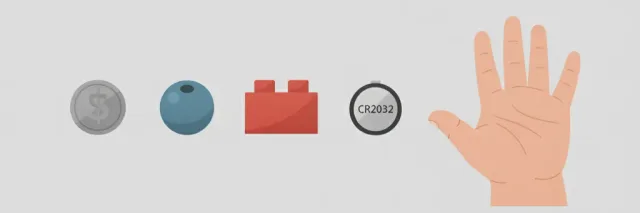
Dziecko połyka przedmiot (SOR)
Jakie jest prawdopodobieństwo, że małe dziecko połknie przedmiot i będzie potrzebować pomocy medycznej?
Zgon podczas wspólnego spania
Jakie jest prawdopodobieństwo śmierci niemowlęcia z powodu wspólnego spania lub dzielenia łóżka?
Wybierz rywala
The most thoroughly documented injury from common childhood play activities is nursemaid’s elbow (radial head subluxation) — a partial dislocation of the elbow caused when the arm is pulled sharply or swung while the forearm is pronated. In US emergency departments, children aged six and under present with this injury at a rate of approximately 6 per 10,000 per year (NEISS data, 2004–2018), though this is a floor: community studies place the true incidence closer to 1% per year across the peak-risk window of ages one to four, since many reductions occur at primary care or, after the first episode, at home. The condition accounts for more than 20% of upper extremity injuries in young children and is one of the most common reasons a toddler is brought to an emergency department with a painful or unmoving arm. Swinging a child by the hands or wrists is an explicitly named mechanism alongside pulling and lifting by one arm.
A less widely known but better-controlled finding concerns the family slide. A NEISS-based study of 12,686 playground slide injuries in children aged five and under (2002–2015, Jennissen et al., Injury Epidemiology 2018) found that children riding on an adult’s lap had 49.5 times higher odds of a lower leg or ankle fracture than children sliding solo (OR 49.5, 95% CI 31.7–77.4). The mechanism is counterintuitive: the slide looks safe because the parent is behind and in control, but if the child’s foot catches the edge or inner wall of the slide chute, the adult’s momentum continues forward while the child’s lower leg is held in place, generating a torsional force sufficient to fracture the tibia. An earlier case series (Gaffney, Journal of Pediatric Orthopedics 2009) found that all eight tibia fractures sustained on playground slides in an eleven-month review occurred while the child was on an adult’s lap — none occurred during independent sliding.
Risk for nursemaid’s elbow is concentrated in the first three years of life: the annular ligament is immature during this period, and the radial head can slip beneath it with traction forces that would be inconsequential in an older child. After age five, the ligament strengthens markedly and the injury becomes rare. Once the subluxation occurs, the recurrence rate is approximately 20%, meaning the annular ligament remains a weak point until it matures. Treatment is a closed reduction — a specific rotation of the forearm performed in seconds without sedation — and most children resume normal arm use within minutes. For piggyback or shoulder-carry, the documented risk is primarily from falls if the adult loses balance; no injury-specific epidemiology comparable to nursemaid’s elbow data exists for this activity.
Powiązane ciekawostki
Mniej więcej 3 na 100 dzieci przed 6. rokiem życia doznają tzw. łokcia niańki, czyli podwichnięcia głowy kości promieniowej po nagłym szarpnięciu ręki podczas huśtania lub podnoszenia. Wygląda groźnie, ale lekarz zwykle nastawia go w kilka sekund, bez trwałych następstw.
Rejestr twierdzeń
Każda liczba poniżej jest tym, co podało dane źródło — z dosłownym cytatem, na którym się oparliśmy, i sposobem, w jaki doszliśmy do naszej wartości. Kliknij dowolny link, żeby zweryfikować bezpośrednio.
3/4 źródeł niezależnie zweryfikowanych słowo w słowo z podanym źródłem
-
[1] European Journal of Orthopaedic Surgery & Traumatology — Trends and epidemiology of radial head subluxation in the United States from 2004 to 2018 Zweryfikowane
Trends and epidemiology of radial head subluxation in the United States from 2004 to 2018- Statystyka
6.03 per 10,000 children ≤6 years per year (ED-treated); ~253,578 total cases 2004–2018- Cytat
“"The overall annual rate of RHS per 10,000 children ≤ 6 years was 6.03 (95% CI = 4.85–7.58). The rate significantly increased from 5.18 (95% CI 2.96–7.39) in 2004 to 7.69 (95% CI = 4.63–10.75) in 2018. An estimated total 253,578 children 6 years or younger were treated for RHS." ”
- Dane źródłowe z
- 2021-08-01
- Dostęp
- 2026-05-02 · kopia archiwalna
- Weryfikacja
- Cytat niezależnie pobrany ponownie i potwierdzony słowo w słowo z podanym źródłem podczas naszego audytu ugruntowania.
- Obliczenie
- NEISS national sample, 2004–2018. The rate of 6.03 per 10,000/year is used as the native numerator (6) per 10,000 denominator. This is an ED-treated rate only; community-level incidence (including primary care and self-resolved reductions) is higher. Pulling mechanisms accounted for 36.2% of cases, swinging and similar arm-traction mechanisms for the remainder alongside falls. The native figure intentionally uses the conservative ED rate; the normalized central estimate uses the higher 1%/year community-level figure (Aberdeen-origin, cited in clinical literature) over 3 peak-risk years.
-
[2] Injury Epidemiology (Springer) — Playground slide-related injuries in preschool children: increased risk of lower extremity injuries when riding on laps
Playground slide-related injuries in preschool children: increased risk of lower extremity injuries when riding on laps- Statystyka
OR 49.5 (95% CI 31.7–77.4) for lower leg/ankle fracture when child rides on adult's lap vs. riding solo- Cytat
“"When a young child is going down a slide on the lap of another person, their foot may catch on the slide's surfaces including the inner side or bottom of the slide. The lower leg can then twist and be pulled backward as both proceed down the slide. Children identified as riding on another person's lap had 43 times higher odds (OR 43.0, 95% CI 32.0–58.0) of lower extremity injury versus other body parts, and 49.5 times higher odds (95% CI 31.7–77.4) of lower leg/ankle fracture compared with other fracture locations." ”
- Dane źródłowe z
- 2018-04-09
- Dostęp
- 2026-05-02 · kopia archiwalna
- Obliczenie
- NEISS-based study of 12,686 playground slide injuries in children ≤5 years (2002–2015), estimating >350,000 total US slide injuries in the period. Lap-riding was documented in 644 cases (5% of total), with infants most affected (34% of under-1s, 15% of 1-year-olds). The OR of 49.5 for lower leg/ankle fracture is used as the effect-size anchor for the lap-slide paragraph in prose. Not used in the native→normalized arithmetic (which uses nursemaid's elbow as the primary axis) but establishes the lap-slide fracture risk as the secondary quantified finding.
-
[3] Gaffney JT — Journal of Pediatric Orthopedics, 2009 — Tibia fractures in children sustained on a playground slide Zweryfikowane
Tibia fractures in children sustained on a playground slide- Statystyka
8 of 58 tibia fractures (13.8%) reviewed over an 11-month period were sustained on a playground slide; all 8 occurred while the child rode down on an adult's lap, none while sliding independently- Cytat
“"During the period of study, 58 fractures of the tibia were found. Eight (13.8%) of the tibia fractures were sustained while playing on a playground slide... All tibia fractures associated with playing on a slide were sustained while going down the slide on the lap of an adult. None of the 8 children studied went down the slide alone." ”
- Dane źródłowe z
- 2009-09-01
- Dostęp
- 2026-07-03 · kopia archiwalna
- Weryfikacja
- Cytat niezależnie pobrany ponownie i potwierdzony słowo w słowo z podanym źródłem podczas naszego audytu ugruntowania.
- Obliczenie
- Single-institution case series (Gaffney, 2009) reviewing all tibia fractures presenting over an 11-month period; 8 of 58 (13.8%) were slide-related, and all 8 occurred while the child rode down the slide on an adult's lap rather than independently. Used in body prose as a second, independent confirmation of the lap-riding mechanism established in the larger Jennissen et al. (2018) NEISS-based study; not used in the native/normalized arithmetic, which is anchored on the nursemaid's-elbow NEISS rate.
- Niezależność
- Single-institution case-series chart review, methodologically independent of the national NEISS-based surveillance study (Jennissen et al. 2018) and of the StatPearls nursemaid's-elbow reference.
-
[4] NCBI Bookshelf / StatPearls — Nursemaid Elbow — StatPearls Zweryfikowane
Nursemaid Elbow — StatPearls- Statystyka
Represents >20% of upper extremity injuries in children; recurrence rate ~20%; resolves with closed reduction in seconds- Cytat
“"Radial head subluxation (RHS) is common in children 1 to 4 years of age and represents more than 20% of upper extremity injuries in children. The injury occurs when a child is swung around by the arms, or lifted by one arm. Recurrence rate is approximately 20%. Treatment involves closed reduction, and this can be performed in a few seconds without sedation. It occurs less commonly in children older than the age of 5 because the annular ligament strengthens with age." ”
- Dane źródłowe z
- 2024-01-01
- Dostęp
- 2026-05-02 · kopia archiwalna
- Weryfikacja
- Cytat niezależnie pobrany ponownie i potwierdzony słowo w słowo z podanym źródłem podczas naszego audytu ugruntowania.
- Obliczenie
- Used to establish: (1) swinging by arms as a named mechanism of nursemaid's elbow, (2) recurrence rate of ~20% quoted in the personal_factor_multipliers section, (3) that the condition accounts for >20% of upper extremity injuries in children, (4) age boundary (resolves after 5) underlying the 3-year peak window used in normalized assumptions. Not used in the primary arithmetic; supports narrative claims.