Якість доказів 4.75/5
Восьмивимірна оцінка перевірки за рубрикою якості . Кожен вимір оцінений 1–5.
- D1 Прив’язка до джерел
- 5/5
- D2 Авторитет джерела
- 5/5
- D3 Арифметика
- 3/5
- D4 Невизначеність
- 5/5
- D5 Сфера
- 5/5
- D6 Проза
- 5/5
- D7 Чесність сприйняття
- 5/5
- D8 Повнота застережень
- 5/5
≈ Так само ймовірно, як
Сприйнятий
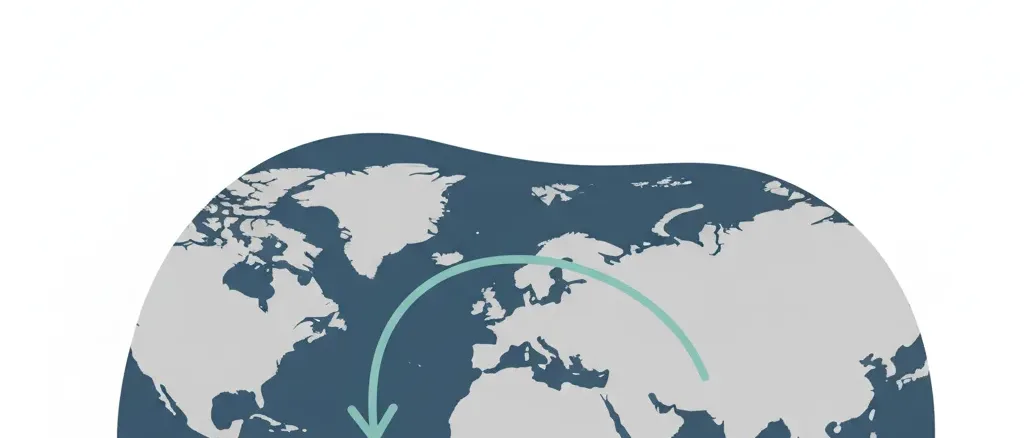
Атлантична меридіональна перекидна циркуляція — не побутовий термін, і її потенційний колапс лише нещодавно набув широкої видимості. Популярне висвітлення схильне коливатися між запереченням («вчені кажуть, що океанічний конвеєр уповільнюється») та катастрофізмом (заголовки, що згадують фільм «Післязавтра», зображення миттєвого замерзання в якому було науковою фантастикою). Концепція точок незворотності океанічної циркуляції увійшла в ширшу суспільну свідомість після звіту IPCC 2021 року та знову після суперечливої статті 2023 року, яка передбачила колапс потенційно в середині століття. Опитування American Fears Університету Чапмена не відстежує обізнаність про AMOC конкретно; ширші дані про кліматичну тривогу свідчать, що приблизно 48 % американців повідомляють, що бояться або дуже бояться глобального потепління та зміни клімату (Chapman 2024), але конкретні точки незворотності, як-от AMOC, не виокремлюються. Ризик перебуває десь між таким, якого активно бояться, і таким, що значною мірою не розпізнається.
Грубна оцінка: ~47,7 % дорослих американців повідомляють, що «бояться» або «дуже бояться» глобального потепління та зміни клімату загалом (Chapman University Survey, Wave 10, 2024) — окремих опитувальних даних щодо AMOC не існує
Фактичний
~5 % ймовірність різкого колапсу AMOC до 2100 року (IPCC «дуже малоймовірно» = 0–10 %, узгоджено з SROCC 2019 / AR6)
Населення світу — колапс AMOC є подією планетарного масштабу без ймовірності, специфічної для конкретної популяції
Показати обчислення
IPCC AR6 WG1 (2021) оцінила, що AMOC «дуже ймовірно» слабшатиме протягом 21-го століття, з «середньою впевненістю, що це послаблення не включатиме різкого колапсу до 2100 року». IPCC SROCC (2019) SPM (B.2.7) — це оцінка, яка застосовує калібрований термін імовірності «дуже малоймовірно (середня впевненість)» до колапсу AMOC. Калібрована мова IPCC: «дуже малоймовірно» = 0–10 % ймовірності. Використання 5 % як середини цього діапазону дає підсумкову цифру. Це ймовірність події цивілізаційного масштабу, а не особиста ймовірність смерті: колапс AMOC нікого не вб'є миттєво, але спричинить каскад наслідків (падіння зимових температур у Європі на 5-15 °C, прискорення підвищення рівня моря на східному узбережжі США, порушення тропічного дощового поясу), непряма смертність від яких протягом десятиліть була б суттєвою. Дослідження на основі спостережень дають значно вищі оцінки: Ditlevsen and Ditlevsen (2023, Nature Communications) вивели центральну дату колапсу 2057 рік з 95 % ДІ 2025-2095 років зі статистичних сигналів раннього попередження в проксі температури поверхні моря, що передбачає >50 % ймовірність протягом 50-річного дорослого життя. Smolders et al. (2024) оцінили ймовірність колапсу AMOC до 2050 року у 59 ± 17 %, використовуючи фізичні індикатори солоності. Обидва підходи оскаржуються з методологічних міркувань кількома провідними океанографами, а дослідження ансамблю з 34 моделей 2025 року (Baker et al., Nature) виявило AMOC стійкою до колапсу за всіх протестованих сценаріїв форсингу. Широкий діапазон невизначеності (1-40 %) відображає цю справжню наукову розбіжність, а не просто статистичну невизначеність навколо відомого розподілу. Уточнення 2025 року (додано 2026-06-14) загострюють питання ЧАСУ, не вирішуючи ймовірності: van Westen et al. (2025, JGR Oceans) розміщують початок колапсу близько 2063 року (2026-2095, 25-й-57-й перцентилі) за SSP2-4.5 з порогом незворотності близько ~2,5 °C, тоді як Drijfhout et al. (2025, ERL) виявляють, що в розширеннях CMIP6 повне припинення північного перекидання розгортається після 2100 року протягом 50-100 років, навіть коли зумовлене раніше. Ці уточнюють центральну оцінку початку та підкріплюють розрізнення між початком і реалізацією, але жодне не є переоцінкою офіційного агентства, тож підсумкова цифра 5 %, прив'язана до IPCC, і діапазон 1-40 % зберігаються незмінними.
Застереження: Підсумкові 5 % відповідають каліброваній мові IPCC «дуже малоймовірно» (0-10 % й…
Підсумкові 5 % відповідають каліброваній мові IPCC «дуже малоймовірно» (0-10 % ймовірності, середня впевненість) — термін «дуже малоймовірно (середня впевненість)» для колапсу AMOC походить з IPCC SROCC (2019) SPM (B.2.7), а AR6 WG1 (2021) переформулювала це як «середня впевненість, що це послаблення не включатиме різкого колапсу до 2100 року». Підсумкова цифра відображає якір наукового консенсусу, а не весь діапазон опублікованих оцінок. Дослідження на основі спостережень (Ditlevsen 2023; Smolders et al. 2024) дають істотно вищі оцінки — 50-60 % ймовірності колапсу до середини століття — але ці методи оскаржуються щодо репрезентативності проксі, довжини часових рядів та модельних припущень. Дослідження ансамблю з 34 моделей Baker et al. 2025 наводить доводи на користь стійкості AMOC за всіх протестованих сценаріїв, підтримуючи оцінку IPCC «дуже малоймовірно». Наукова дискусія справді не вирішена; діапазон невизначеності (1-40 %) відображає це, а не просто статистичну невизначеність навколо відомого параметра. «Колапс» AMOC у цьому записі означає різке самопідтримуване зниження до драматично ослабленого стану — а не поступове послаблення (наразі оцінюване як «дуже ймовірне»), яке вже триває. Наслідки колапсу розгорталися б протягом років і десятиліть, а не за одну ніч: зимові температури в Європі могли б впасти на 5-15 °C у масштабах 10-30 років, рівень моря на східному узбережжі США піднявся б додатково на 10-50 см понад базові прогнози, а моделі тропічних опадів суттєво змістилися б. Довічна цифра — це ймовірність того, що подія буде запущена, а не того, що її наслідки будуть повністю реалізовані протягом життя цільового дорослого. Два дослідження 2025 року загострюють час, не зрушуючи підсумкову цифру. Van Westen et al. (2025, JGR Oceans), аналізуючи 25 кліматичних моделей, оцінюють, що колапс AMOC міг би початися до 2063 року (діапазон 2026-2095) за сценарієм проміжних викидів і до 2055 року за високих викидів, з порогом незворотності близько ~2,5 °C глобального потепління — але наголошують, що після початку досягнення істотно ослабленого стану займає понад 100 років. Drijfhout et al. (2025, Environmental Research Letters), досліджуючи симуляції CMIP6, розширені за межі 2100 року, виявляють, що повне припинення північного глибинного перекидання настає після 2100 року в усіх моделях з високими викидами (SSP5-8.5), запущених так далеко, і в 37 % моделей проміжних викидів до 2300 року. Ці уточнюють центральну оцінку початку відносно тривоги одиничного дослідження 2023 року, але підкріплюють, а не спростовують, наведене вище формулювання: початок у середині століття був би зобов'язанням, а не завершеним колапсом протягом життя живого дорослого.
Пов’язані ризики
Інші ризики на схожі теми — для вивчення пов’язаних страхів.
Точка перелому WAIS
Які шанси, що точку перелому Західного Антарктичного льодовикового щита буде пройдено за вашого життя?

Катастрофа екстремістського уряду
Які шанси, що уряд політичних екстремістів катастрофічно зруйнує вашу країну?






Обрати порівнюваний
The Atlantic Meridional Overturning Circulation is the vast network of ocean currents that transports warm surface water northward through the Atlantic and returns cold, deep water southward — the system responsible for northwestern Europe’s mild climate relative to its latitude. IPCC AR6 (2021) assessed that AMOC will “very likely” decline over the 21st century, with “medium confidence that the decline will not involve an abrupt collapse before 2100.” The earlier IPCC SROCC (2019) is the assessment that applied the calibrated “very unlikely (medium confidence)” likelihood term to an AMOC collapse — where “very unlikely” denotes a 0-10% probability. Using the midpoint of that calibrated range gives a ~5% lifetime probability of abrupt collapse before 2100. Caesar and colleagues (2018, Nature) documented that AMOC has already weakened by approximately 15% since the mid-twentieth century, using an independent sea-surface temperature fingerprinting approach that is consistent with RAPID array direct measurements begun in 2004.
The scientific debate is unusually polarised. Observation-based early-warning studies (Boers 2021, Nature Climate Change; Ditlevsen 2023, Nature Communications; van Westen 2024, Science Advances) identify statistical and physical signals consistent with AMOC approaching a tipping threshold, with Ditlevsen’s contested analysis predicting collapse most likely between 2025 and 2095. These findings imply a much higher probability than the IPCC consensus — in some estimates, 50-60% before mid-century. The counterargument came in February 2025 from Baker et al. (Nature), whose 34-model ensemble found AMOC resilient to collapse under all tested forcing scenarios, with Southern Ocean wind-driven upwelling sustaining the circulation even under extreme greenhouse gas concentrations. The IPCC’s “very unlikely” assessment rests primarily on this model-ensemble evidence. Both camps are publishing in leading peer-reviewed journals; the discrepancy is not a matter of one side being wrong in an obvious way.
Should AMOC collapse occur, the consequences within the following few decades would be substantial. Van Westen et al.’s consequence modelling projects European winter temperature drops of 5-15°C across northwestern Europe, with London’s average winter temperature falling from roughly 7°C to near 2°C and Oslo’s to well below -10°C. Sea level on the US East Coast would rise by an additional 10-50 cm above baseline sea level rise projections, as the ocean surface that AMOC currently depresses would rebound northward. The Amazon rainforest would face additional drying as tropical rainfall patterns shift. These are not immediate effects but decadal-to-century timescale consequences of a threshold crossing that, if it occurs, would likely be irreversible on any timescale relevant to human planning.
Пов’язані факти
МГЕЗК AR6 оцінює різкий колапс AMOC до 2100 року як «дуже малоймовірний», з імовірністю близько 5 відсотків. Кілька досліджень на основі спостережень стверджують, що шанси вищі, а діапазон невизначеності широкий.
Реєстр тверджень
Кожне число нижче — це те, що повідомило джерело, з дослівною цитатою, на яку ми спиралися, та тим, як ми дійшли до нашої цифри. Натисніть на посилання, щоб перевірити самостійно.
-
[1] Intergovernmental Panel on Climate Change (IPCC), Working Group I, Sixth Assessment Report — Climate Change 2021: The Physical Science Basis — Chapter 9: Ocean, Cryosphere and Sea Level Change
Climate Change 2021: The Physical Science Basis — Chapter 9: Ocean, Cryosphere and Sea Level ChangeSee all 2 Likelier entries citing this source →
- Статистика
AMOC will 'very likely' decline over the 21st century for all SSP scenarios; there is 'medium confidence' that the decline will not involve an abrupt collapse before 2100- Витяг
“"The Atlantic Meridional Overturning Circulation (AMOC) will very likely decline over the 21st century for all SSP scenarios. There is medium confidence that the decline will not involve an abrupt collapse before 2100." ”
- Дані джерела:
- 2021-08-09
- Дата звернення
- 2026-05-09 · архівна копія
- Розрахунок
- AR6 WG1 Ch9 does not itself assign a numerical probability, nor does it use the "very unlikely" likelihood term for AMOC collapse — it states only "medium confidence that the decline will not involve an abrupt collapse before 2100." The "very unlikely (medium confidence)" characterization of an AMOC collapse is the IPCC SROCC (2019) SPM B.2.7 assessment (see the SROCC source below), which AR6 Ch9 is consistent with. Under the IPCC calibrated-language scale "very unlikely" = 0-10% probability; 5% is taken as the midpoint of that SROCC-defined range for the headline. The IPCC does not give a numerical probability; 5% is the author's interpretation of the calibrated-language midpoint. The 59-year adult lifetime window (age 18 to 77) maps roughly onto the "before 2100" horizon.
-
[2] Intergovernmental Panel on Climate Change (IPCC), SROCC 2019 — Special Report on the Ocean and Cryosphere in a Changing Climate — Summary for Policymakers (section B.2.7)
Special Report on the Ocean and Cryosphere in a Changing Climate — Summary for Policymakers (section B.2.7)- Статистика
AMOC is projected to weaken in the 21st century under all RCPs ('very likely'), although a collapse is 'very unlikely' (medium confidence)- Витяг
“"The AMOC is projected to weaken in the 21st century under all RCPs (very likely), although a collapse is very unlikely (medium confidence)." ”
- Дані джерела:
- 2019-09-25
- Дата звернення
- 2026-07-11 · архівна копія
- Розрахунок
- This SROCC SPM statement (B.2.7) is the IPCC assessment that actually applies the "very unlikely (medium confidence)" likelihood term to an AMOC collapse. It is the grounding for the headline: under IPCC calibrated language "very unlikely" = 0-10% probability, and 5% is taken as the midpoint of that range. AR6 WG1 Ch9 (2021) restated this as "medium confidence that the decline will not involve an abrupt collapse before 2100," consistent with SROCC but without repeating the "very unlikely" term. Neither report gives a numerical probability; the 5% midpoint is the author's interpretation of the SROCC-stated calibrated-language range.
-
[3] Nature — Caesar, Rahmstorf et al., 2018 — Observed fingerprint of a weakening Atlantic Ocean overturning circulation
Observed fingerprint of a weakening Atlantic Ocean overturning circulation- Статистика
AMOC has weakened by approximately 3 ± 1 sverdrups (around 15%) since the mid-20th century, revealed by characteristic sea-surface temperature fingerprint- Витяг
“"The AMOC has weakened by about 3 ± 1 sverdrups (around 15 per cent) since the mid-twentieth century, revealed by a characteristic spatial and seasonal sea-surface temperature 'fingerprint' — consisting of a pattern of cooling in the subpolar Atlantic Ocean and warming in the Gulf Stream region." ”
- Дані джерела:
- 2018-04-11
- Дата звернення
- 2026-05-09 · архівна копія
- Розрахунок
- Caesar et al. 2018 is the observational foundation for the AMOC weakening narrative. The 15% weakening since the mid-20th century is separate from the collapse-probability question — weakening and collapse are different states, and the IPCC projects continued weakening with high confidence even while assessing collapse as very unlikely. This source establishes that AMOC is not stable at its current state, providing the background against which collapse probability must be assessed.
- Незалежність
- Caesar et al. use an independent SST-based fingerprinting approach developed separately from the RAPID array direct measurements (which began in 2004) and from the statistical early-warning methods of Boers 2021 and Ditlevsen 2023. The three methodologies corroborate each other on the weakening trend.
-
[4] Nature Communications — Ditlevsen and Ditlevsen, 2023 — Warning of a forthcoming collapse of the Atlantic meridional overturning circulation
Warning of a forthcoming collapse of the Atlantic meridional overturning circulation- Статистика
Statistical early-warning signals in SST proxies predict central AMOC collapse in 2057 (95% CI: 2025-2095); method is contested by multiple senior oceanographers- Витяг
“"Data-driven estimators for the time of tipping predict a potential AMOC collapse mid-century under the current emission scenario, with a 95% confidence interval of 2025–2095." ”
- Дані джерела:
- 2023-07-25
- Дата звернення
- 2026-05-09 · архівна копія
- Розрахунок
- Ditlevsen 2023 derives its estimate from statistical early-warning signals (variance and autocorrelation growth) in North Atlantic SST proxies interpreted as fingerprints of approaching instability. The method is contested: Prof. Penny Holliday (National Oceanography Centre) stated "sea surface temperature of the North Atlantic subpolar gyre is not a clear indicator of the state of the AMOC"; Prof. Niklas Boers (TU Munich) argued "uncertainties in the heavily oversimplified model assumptions... are too high"; Dr. Levke Caesar (Univ. Bremen) stated "the resulting time series are too short." This source represents the upper bound of the scientific plausibility range and is not the headline figure, but it anchors the upper end of the uncertainty band.
- Незалежність
- Ditlevsen 2023 is methodologically distinct from the IPCC's model-ensemble approach and from Caesar 2018's SST fingerprinting. It is included to represent the range of scientific opinion rather than as an independent confirmation of any single estimate.
-
[5] Science Advances — van Westen, Kliphuis and Dijkstra, 2024 — Physics-based early warning signal shows that AMOC is on tipping course
Physics-based early warning signal shows that AMOC is on tipping course- Статистика
Freshwater transport indicator (F_ovS) shows significant negative trend over past 40 years, consistent with AMOC approaching tipping point; European temperature drops of 5-15°C projected in collapse scenario- Витяг
“"Reanalysis products indicate that the present-day AMOC is on route to tipping... Temperature trends exceed 1°C per decade across northwestern Europe during collapse." ”
- Дані джерела:
- 2024-02-09
- Дата звернення
- 2026-05-09 · архівна копія
- Розрахунок
- Van Westen 2024 uses a physics-based indicator (minimum of AMOC-induced freshwater transport, F_ovS) rather than statistical proxies. It finds a statistically significant negative trend of -1.20 mSv/year over the past 40 years, consistent with approach to tipping, but explicitly states inability to determine when tipping would occur. The consequence model run shows London's average winter temperature falling to ~1.9°C (from ~7°C today) and Oslo's to -16.5°C. These are consequences of full collapse, not of the current trajectory in isolation.
- Незалежність
- Van Westen et al. use a different indicator (F_ovS from ocean reanalysis products) than Ditlevsen 2023 (SST statistical signals) or Caesar 2018 (SST fingerprinting), providing genuinely independent physics-based evidence for AMOC approaching instability.
-
[6] Nature — Baker et al. (Met Office and University of Exeter), 2025 — Continued Atlantic overturning circulation even under climate extremes
Continued Atlantic overturning circulation even under climate extremes- Статистика
34-model ensemble finds AMOC resilient to collapse under all tested greenhouse gas and freshwater forcing scenarios; Southern Ocean wind-driven upwelling sustains circulation- Витяг
“"The AMOC is resilient to extreme greenhouse gas and North Atlantic freshwater forcings across 34 climate models." ”
- Дані джерела:
- 2025-02-19
- Дата звернення
- 2026-05-09 · архівна копія
- Розрахунок
- Baker et al. 2025 is the primary model-based counterargument. The 34-model ensemble finds that Southern Ocean upwelling — not captured in the observation-based early-warning studies — sustains AMOC circulation even under extreme forcing. This mechanism explains why most CMIP climate models do not show AMOC collapse this century, which IPCC AR6 uses as the primary basis for its "very unlikely" assessment. Baker 2025 is cited here as a materially important dissenting view that anchors the lower end of the uncertainty range. The discrepancy between the observation-based (Ditlevsen, Boers, van Westen) and model-based (Baker, IPCC) views is the fundamental unresolved debate in AMOC science.
- Незалежність
- Baker et al. is methodologically opposed to the observation-based early-warning literature — it uses fully coupled climate models rather than statistical signals — and its conclusion directly contradicts the observation-based studies. Both methodologies are active areas of peer-reviewed research; neither has been refuted.
-
[7] Journal of Geophysical Research: Oceans — van Westen, Kliphuis and Dijkstra, 2025 — Physics-Based Indicators for the Onset of an AMOC Collapse Under Climate Change
Physics-Based Indicators for the Onset of an AMOC Collapse Under Climate Change- Статистика
25-model analysis estimates AMOC collapse could begin by 2063 (2026-2095, 25th-57th percentiles) under SSP2-4.5, or by 2055 (2023-2076) under SSP5-8.5; tipping threshold near ~2.5C global warming- Витяг
“"An analysis consisting of 25 different climate models shows that the AMOC could begin to collapse by 2063 (from 2026 to 2095, 25th to 57th percentiles) under an intermediate emission scenario (SSP2-4.5), or by 2055 (from 2023 to 2076, 25th to 75th percentiles) under a high-end emission scenario (SSP5-8.5). When the AMOC collapses, the Northwestern European climate changes drastically and this will likely induce severe societal impacts." ”
- Дані джерела:
- 2025-08-24
- Дата звернення
- 2026-06-14 · архівна копія
- Розрахунок
- Van Westen et al. 2025 (JGR Oceans, Vol 130 Issue 8) develops a buoyancy-flux physics-based indicator for the ONSET of AMOC tipping — the moment the system becomes committed, not the moment a weakened state is reached. The paper's body places the multimodel-mean tipping threshold near ~2.5C of global warming above pre-industrial (the abstract states the onset years; the 2.5C / +2.48C figure is in the results text, paraphrased here, not in the verbatim excerpt). Critically, the paper states that once collapse begins it "takes more than 100 years to reach a substantially weaker state" — so a ~2063 onset under SSP2-4.5 describes a committed trajectory, not consequences realised within a focal adult's lifetime. This refines collapse TIMING relative to the contested 2023 single-study alarm but does not itself yield a numerical lifetime probability, so the 5% headline is unchanged; the result is recorded as a caveat and an assumptions addendum.
- Незалежність
- Van Westen 2025 (JGR) uses a buoyancy-flux onset indicator across 25 CMIP-class models — distinct from both the SSP-extension shutdown framing of the 2025 ERL CMIP6 study and the F_ovS reanalysis indicator of van Westen 2024 (Science Advances). It sits between the observation-based alarm and the model-based resilience views.