Якість доказів 4.0/5
Восьмивимірна оцінка перевірки за рубрикою якості . Кожен вимір оцінений 1–5.
- D1 Прив’язка до джерел
- 4/5
- D2 Авторитет джерела
- 5/5
- D3 Арифметика
- 4/5
- D4 Невизначеність
- 3/5
- D5 Сфера
- 4/5
- D6 Проза
- 4/5
- D7 Чесність сприйняття
- 4/5
- D8 Повнота застережень
- 4/5
≈ Так само ймовірно, як
Сприйнятий
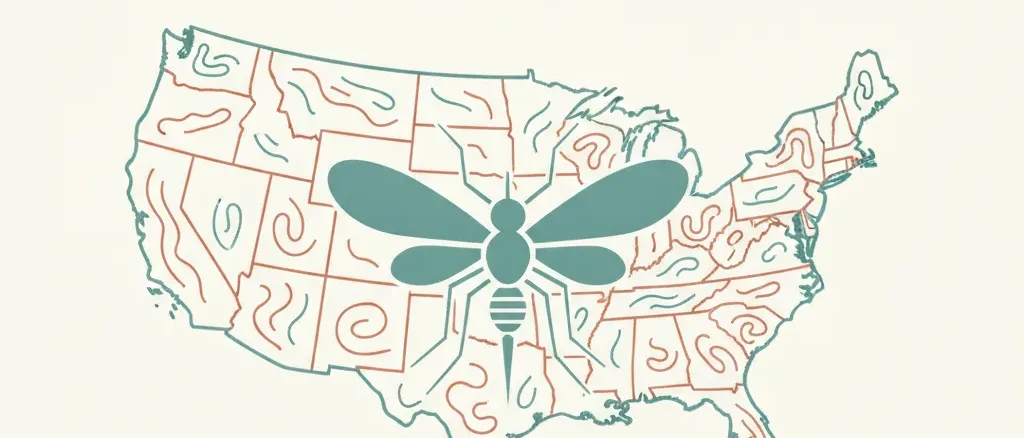
Більшість мешканців США відносять денге до «тропічних хвороб мандрівників» і припускають нульовий ризик, залишаючись удома. Жодне опубліковане опитування не вимірює страх заразитися денге всередині країни, тож це інтуїтивне прочитання: сприйнятий внутрішній ризик фактично нульовий майже для всіх, що недооцінює малий, але зростаючий ризик місцевої передачі в кількох південних штатах і переоцінює майже нульовий ризик усюди інде. Розбіжність полягає радше в категорійній помилці, ніж у величині.
Грубна оцінка: ≈ 0 (вважається хворобою суто мандрівників)
Джерело: редакційна інтуїція, не опитування
Фактичний
105 місцево набутих випадків серед ~338 мільйонів мешканців континентальної частини США у 2024 році
Мешканці 48 суміжних штатів США + округ Колумбія, 2024
Показати обчислення
Підгрупа = особа, яка проживає в континентальній частині США (48 штатів + округ Колумбія); горизонт = 59 років залишку дорослого життя (усталене значення сайту від 18 років). Заголовок рахує ДІАГНОСТОВАНИЙ клінічний випадок денге, а не інфекцію (40–80 % інфекцій денге є безсимптомними, а багато симптоматичних випадків не тестують, тож справжній ризик інфікування вищий — це підіймає верхню межу). Базова річна частота за CDC MMWR 2024: 105 місцево набутих випадків (Флорида 85, Каліфорнія 18, Техас 2) / ~338 млн мешканців континентальної частини США = 3,1e-7 на людину-рік. Скомпоновано за 59 років: 1-(1-3,1e-7)^59 = 1,83e-5 (~1 з 54 600), що є частотою РЕКОРДНОГО 2024 РОКУ. 2024-й був піком +359 %; до 2023 року місцева передача на континенті була майже нульовою в більшість років. Точкову оцінку встановлено трохи НИЖЧЕ за показник лише 2024 року — на рівні 1,5e-5 (~1 з 67 000), щоб усереднити нещодавній пік з набагато нижчим історичним базовим рівнем, схиляючись водночас до сталості, адже вся передумова запису — розширення ареалу Aedes та потепління — є висхідним трендом. Нижня межа 1,5e-6 відображає роки майже нульової місцевої передачі до 2023 (~у 10 разів нижче 2024). Верхня межа 1,5e-4 відображає клінічний недооблік плюс сценарій погіршення передачі (~у 10 разів вище 2024). Діапазон у 2 порядки величини є чесним щодо мінливого, географічно сконцентрованого, зростаючого ризику, а не оманливо точним.
Застереження: Це знімок мінливого, географічно сконцентрованого і, вочевидь, зростаючого ризик…
Це знімок мінливого, географічно сконцентрованого і, вочевидь, зростаючого ризику, а не стала довічна константа. Точкова оцінка спирається на єдиний рекордний рік (2024-й, +359 % над середнім за 2010–2023 роки), а проєкція цієї частоти на 59-річний горизонт припускає, що місцева передача рівня 2024 року збережеться — свідомий нахил до висхідного тренду розширення ареалу Aedes та потепління, який описує запис. Діапазон невизначеності охоплює два порядки величини (~1 з 670 000 до ~1 з 6 700) саме тому, що річні показники місцевих випадків різко коливаються, а справжня частота інфікування недооблікована: 40–80 % інфекцій денге є безсимптомними, а багато симптоматичних випадків не тестують, тож заголовкова частота «діагностованих випадків» є нижньою межею фактичного впливу. Ризик є переважно явищем Флориди (особливо округ Маямі-Дейд) та вогнищевої Каліфорнії; для мешканця більшої частини континентальних США він близький до нижньої межі. Жодне опубліковане опитування не вимірює страх заразитися денге всередині країни, тож прочитання сприйняття є інтуїцією, а не опитуванням. Оскільки діапазон широкий, а знаменник національний, тоді як ризик локальний, D4 (невизначеність) і D5 (охоплення) є найслабшими вимірами; обидва опрацьовано явно через охоплення підгрупи та regional_breakdown, а не єдиний оманливий національний заголовок. Запис не стверджує, що денге є ендемічною будь-де в континентальній частині США — жодна юрисдикція США офіційно не класифікована як ендемічна.
Як змінюється ризик
Заголовна цифра усереднює дуже різні ситуації. Ось як ймовірність варіюється залежно від сценарію чи контексту:
1 з 4 545
85 of the 105 continental locally-acquired cases in 2024 (81%) were in Florida, across 10 counties but concentrated in the Miami-Dade area. 85 / ~23M Florida residents = 3.7e-6/yr → ~2.2e-4 (~1 in 4,600) over 59 yr; the Miami-Dade sub-rate is higher still. Florida is not officially endemic but reports local cases every year.
1 з 50 000
18 local cases statewide in 2024; LA County had 14 of them, all clustered within small radii consistent with focal outbreaks (some within a 1-mile radius over 7 weeks). 18 / ~39M = 4.6e-7/yr → ~2.7e-5 over 59 yr, but risk is concentrated in a few neighborhoods, not statewide.
1 з 666 667
Northern and interior states reported zero locally-acquired cases in 2024. Risk there is driven by occasional vector spread and remains near the lower bound.
Довжина та відтінок смуги ранжують ці сценарії один відносно одного, а не відносно інших ризиків. Точні шанси вказані поряд із кожним.
Пов’язані ризики
Інші ризики на схожі теми — для вивчення пов’язаних страхів.

Ранова інфекція Vibrio vulnificus
Яка ймовірність того, що дорослий американець заразиться плотоїдною інфекцією Vibrio vulnificus після контакту з теплою прибережною водою?

Алюміній і Альцгеймер
Які шанси захворіти на хворобу Альцгеймера від приготування їжі в алюмінієвому посуді або фользі?

Витік газу в будинку
Яка ймовірність загинути внаслідок вибуху або пожежі від витоку газу в житловому будинку?

Набряк мозку від грипу в дитини
Яка ймовірність того, що у дитини з грипом розвинеться раптовий набряк мозку (грипозна енцефалопатія або гострий некротизуючий енцефаліт)?


Загибель дитини в гарячому авто
Яка ймовірність загибелі дитини, залишеної в розпеченому автомобілі?

Загибель собаки в гарячому авто
Яка ймовірність загибелі собаки, залишеної в розпеченому автомобілі?
Обрати порівнюваний
For most of the country, dengue is filed under tropical travel: a fever you bring back from Southeast Asia or the Caribbean, not something the mosquito on your own patio can give you. That filing is mostly correct and slowly going stale. In 2024 the United States recorded 3,798 dengue cases, a 359 percent jump above the 2010–2023 average. The headline number is dominated by travelers (97.2 percent), but 2.8 percent — 105 cases in the contiguous states — were locally acquired, meaning the patient had not left the reporting jurisdiction in the two weeks before symptoms began. Florida accounted for 85 of those, California 18, and Texas 2. The mosquito did the importing.
The national per-resident rate is small. Spread 105 cases across roughly 338 million continental residents and the annual odds are about 3 in 10 million; compounded over a typical adult lifetime, that lands near 1 in 67,000, in the same neighborhood as dying in a plane crash and a few times above being struck by lightning. The number is also nearly meaningless as a national figure, because the cases are not spread out. Eighty-one percent were in Florida, clustered around Miami-Dade, and California’s were not statewide but focal: a Los Angeles County investigation found 14 local cases between August and November 2024, several within a one-mile radius over seven weeks. For a resident of Miami the lifetime odds run into the low thousands; for a resident of Minnesota they sit at the floor.
Two things make the lifetime figure soft rather than firm. First, 2024 was a record year, and projecting a peak across 59 years assumes the surge holds — a bet the underlying trend supports, since Aedes aegypti and albopictus are established across the southeastern and southwestern US and continue to spread as temperatures climb. Second, the count undercounts: 40 to 80 percent of dengue infections produce no symptoms, and many that do are never tested, so 105 diagnosed cases is a floor on actual local exposure, not a ceiling. No US jurisdiction is officially endemic, and Florida’s health department still reports cases as locally acquired rather than expected. The honest summary is a wide band around a rising number, concentrated in a handful of southern counties, for a disease that no longer requires a passport.
Пов’язані факти
Денге зазвичай вважають хворобою лише для мандрівників, але вдома вона не дорівнює нулю. У 2024 році в континентальних США зареєстрували 105 місцевих випадків, що дає життєвий ризик близько 1 на 67 000. Рідкісна, географічно зосереджена і вже не суто завізна.
Реєстр тверджень
Кожне число нижче — це те, що повідомило джерело, з дослівною цитатою, на яку ми спиралися, та тим, як ми дійшли до нашої цифри. Натисніть на посилання, щоб перевірити самостійно.
2/5 джерел незалежно перевірено дослівно за вказаним джерелом
-
[1] CDC Morbidity and Mortality Weekly Report (MMWR) — Increase in Travel-Associated and Locally Acquired Dengue Cases — United States, 2024
Increase in Travel-Associated and Locally Acquired Dengue Cases — United States, 2024See all 2 Likelier entries citing this source →
- Статистика
3,798 total US dengue cases in 2024 (+359% above the 2010–2023 average); 97.2% travel-associated, 2.8% locally acquired; continental US locally-acquired cases: Florida 85 (10 counties), California 18 (3 counties), Texas 2 (2 counties) = 105.- Витяг
“During 2024, a record 3,798 dengue cases were reported [...] a 359% increase above the 2010–2023 annual average. Among these 3,798 cases, 97.2% were associated with travel outside the reporting jurisdiction during the 2 weeks preceding symptom onset; the remaining 2.8% were locally acquired. [...] Three jurisdictions reported locally acquired cases, including Florida (85 cases reported from 10 counties), California (18 from three counties), and Texas (two from two counties).”
- Дані джерела:
- 2026-05-14
- Дата звернення
- 2026-06-13 · архівна копія
- Розрахунок
- Locally-acquired continental total = 85+18+2 = 105. Annual rate = 105 / 338,000,000 continental residents = 3.1e-7/person-year. 59-year compounded = 1-(1-3.1e-7)^59 = 1.83e-5. This is the authoritative FINAL count; an earlier CDC HAN (March 2025) listed Florida as 91 preliminarily — the MMWR's 85 supersedes it.
-
[2] CDC Emerging Infectious Diseases — Investigation of and Response to Autochthonous Dengue, Los Angeles County, California, USA, August–November 2024 Перевірено
Investigation of and Response to Autochthonous Dengue, Los Angeles County, California, USA, August–November 2024- Статистика
14 locally-acquired dengue cases in LA County Aug–Nov 2024, geographically clustered (some within a 1-mile radius over 7 weeks), consistent with focal local transmission rather than diffuse community spread.- Витяг
“During August–November 2024, a total of 14 locally acquired cases of dengue were identified in Los Angeles County, California, USA. [...] All 6 cases were identified within a 1-mile radius over a 7-week period, consistent with an outbreak involving ongoing local transmission.”
- Дані джерела:
- 2026-05-06
- Дата звернення
- 2026-06-13 · архівна копія
- Перевірка
- Витяг незалежно повторно отримано та дослівно підтверджено за вказаним джерелом під час нашого аудиту обґрунтованості.
- Розрахунок
- Grounds the regional_breakdown claim that California's 18 cases were not statewide-uniform but concentrated in a few LA-area clusters. Supports treating local dengue as a focal/neighborhood risk, not a flat per-capita state rate.
- Незалежність
- Same publisher family (CDC) as the MMWR source but a distinct peer-reviewed field investigation with separate authors and data.
-
[3] CDC Health Alert Network (HAN) — Ongoing Risk of Dengue Virus Infections and Updated Testing Recommendations in the United States
Ongoing Risk of Dengue Virus Infections and Updated Testing Recommendations in the United States- Статистика
CDC advisory that dengue activity remained high into 2025 and that spring/summer raise both travel-associated and locally-acquired risk; 2024 local cases listed as Florida 91 (preliminary), California 18, Texas 1.- Витяг
“Dengue activity remains high in some parts of the United States [...] Spring and summer travel coincide with the peak season for dengue in many countries, increasing the risk of both travel-associated and locally acquired cases.”
- Дані джерела:
- 2025-03-18
- Дата звернення
- 2026-06-13 · архівна копія
- Розрахунок
- Used to establish that the risk is ongoing/elevated rather than a one-off 2024 spike, supporting the upward-trend framing. Its preliminary Florida count (91) differs from the MMWR final (85); the entry uses the MMWR figure and flags the discrepancy in assumptions.
-
[4] CIDRAP, University of Minnesota — US dengue cases jumped 359% in 2024 amid global surge Перевірено
US dengue cases jumped 359% in 2024 amid global surge- Статистика
Confirms 3,798 total cases, 359% increase, 2.8% locally acquired, 105 locally-acquired nationwide with Florida 85 (81%); notes Aedes aegypti and albopictus are established across the southeastern/southwestern US and continue to spread as temperatures rise.- Витяг
“Florida accounting for 85 of the 105 locally acquired cases (81%) reported nationwide [...] Ae aegypti and albopictus mosquitoes are found throughout large areas of the southeastern and southwestern United States and continue to spread to other regions [...] Vector presence and distribution might be further affected by increasing temperatures, which can expand the range of mosquitoes that spread dengue.”
- Дані джерела:
- 2026-05-15
- Дата звернення
- 2026-06-13 · архівна копія
- Перевірка
- Витяг незалежно повторно отримано та дослівно підтверджено за вказаним джерелом під час нашого аудиту обґрунтованості.
- Розрахунок
- Independent confirmation of the MMWR 85/105 split and the vector-range-expansion premise that motivates the entry. Used for the Aedes-range and warming framing in the prose.
- Незалежність
- Independent academic center summarizing the MMWR; not a CDC publication.
-
[5] University of Florida Emerging Pathogens Institute — Dengue in Florida: What to know
Dengue in Florida: What to know- Статистика
Florida reported 1,044 local + travel-associated dengue cases in 2024 (most in the continental US); local cases concentrate in Miami-Dade County; no part of the US is officially endemic for dengue despite recurring local transmission.- Витяг
“Although no part of the United States is officially labeled as endemic for dengue, Florida's health department continues to report cases acquired locally or linked to travel in 2025. [...] one case of locally acquired dengue in Miami-Dade County”
- Дані джерела:
- 2025-06-24
- Дата звернення
- 2026-06-13 · архівна копія
- Розрахунок
- Grounds the Florida/Miami-Dade concentration in the regional_breakdown and the 'not endemic' caveat. The 1,044 figure is local+travel combined (most are travel-associated); only the locally-acquired subset (85) feeds the native rate.