Якість доказів 4.75/5
Восьмивимірна оцінка перевірки за рубрикою якості . Кожен вимір оцінений 1–5.
- D1 Прив’язка до джерел
- 5/5
- D2 Авторитет джерела
- 5/5
- D3 Арифметика
- 5/5
- D4 Невизначеність
- 4/5
- D5 Сфера
- 5/5
- D6 Проза
- 5/5
- D7 Чесність сприйняття
- 4/5
- D8 Повнота застережень
- 5/5
≈ Так само ймовірно, як
Сприйнятий
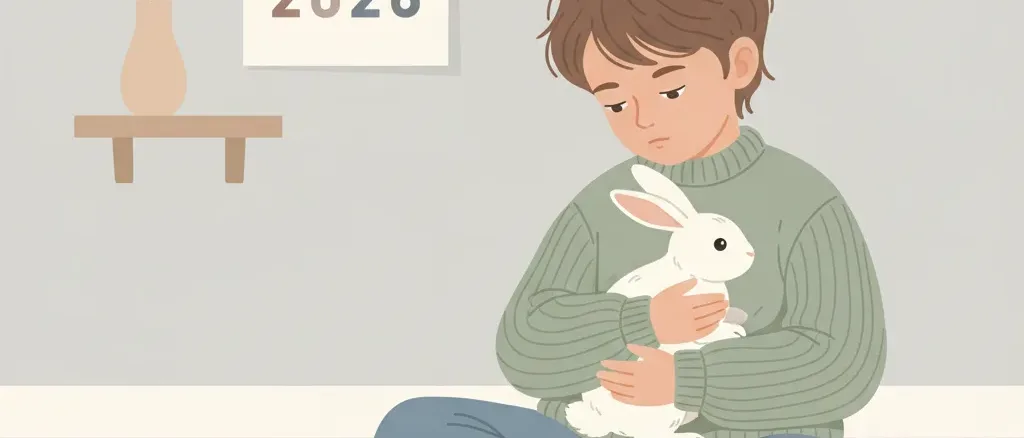
Батьки й діти часто вважають, що кролики — недовговічні «перші домашні улюбленці» тієї ж ліги, що й хом'яки, — той, хто, найімовірніше, помре протягом року чи двох. Насправді ж домашній кролик, за яким добре доглядають у приміщенні, зазвичай живе 8–12 років, через що кролик, подарований 9-річній дитині, доволі ймовірно буде ще живий, коли їй виповниться 13. Жодне суворе опитування не вимірювало безпосередньо батьківські інтуїції щодо тривалості життя кролика в контексті дитячого утримання домашніх тварин, тож цей запис позначено як інтуїцію.
Грубна оцінка: багато батьків вважають, що кролики живуть 2–4 роки, як хом'яки
Джерело: редакційна інтуїція, не опитування
Фактичний
~30 зі 100 домашніх кроликів у приміщенні гинуть протягом 4 років після придбання
Домашні кролики у приміщенні в сімейних домогосподарствах
Показати обчислення
Ретроспективне японське дослідження 898 домашніх кроликів, оглянутих у клініці екзотичних тварин (2006–2020), виявило медіанну тривалість життя 7 років (IQR 5–9), з 18 %, які прожили понад 9 років. Застосовуючи експоненційну модель виживання з λ = ln(2)/7 ≈ 0,099 на рік, ймовірність смерті протягом 4 років від придбання (у віці ~8–12 тижнів) становить 1 − e^(−0,099 × 4) ≈ 0,33. House Rabbit Society повідомляє, що домашні кролики в приміщенні зазвичай живуть 8–12 років за оптимальних умов; використання медіани 10 років дає λ ≈ 0,069 і P(4 роки) ≈ 0,24. Центральна оцінка 0,30 розподіляється між типовим і оптимальним доглядом, відображаючи те, що перший кролик дитини часто отримує адекватний, але не завжди експертний догляд. Scope — subgroup_lifetime: показник стосується 4-річного вікна після придбання тварини, а не 59-річного дорослого життя.
Застереження: Scope — subgroup_lifetime: це ймовірність за 4-річне вікно, а не показник за 59-…
Scope — subgroup_lifetime: це ймовірність за 4-річне вікно, а не показник за 59-річне доросле життя. Результати суттєво різняться за породою (дрібні породи, як-от нідерландський карликовий, живуть довше за великі, як-от фламандський велетень), утриманням у приміщенні чи назовні (кролики на вулиці мають приблизно вдвічі коротшу медіанну тривалість життя), статусом стерилізації (нестерилізація несе високий довічний ризик раку матки в самок, а House Rabbit Society повідомляє про 8–12 років очікуваної тривалості життя для стерилізованих кроликів у приміщенні), віком на момент придбання (старші кролики мають менше років попереду) та доступом до ветеринарної допомоги. Кролик, придбаний у віці 2 років, а не 8 тижнів, зіткнувся б із суттєво нижчим 4-річним ризиком смертності. Центральна оцінка 30 % відображає типового домашнього кролика в приміщенні із доглядом середньої якості в дитячому домогосподарстві.
Пов’язані ризики
Інші ризики на схожі теми — для вивчення пов’язаних страхів.
Втеча домашнього кота
Яка ймовірність того, що виключно домашній кіт зазнає серйозних травм або загине після втечі на вулицю?

Хом'як помирає до підліткового віку
Яка ймовірність того, що хом'як, подарований 9-річній дитині, помре до її 13-річчя?


Укус собаки без повідка
Які шанси, що ваш собака без повідка вкусить людину або іншого собаку?

Втрата бабусі/дідуся в дитинстві
Яка ймовірність того, що 9-річна дитина втратить хоча б одного бабусю чи дідуся до свого 18-річчя?

Діти та відвертий контент
Які шанси дитини зіткнутися з відвертим або насильницьким контентом онлайн до 13 років?

Сексуальне насильство над дітьми
Яка ймовірність того, що дитина зазнає сексуального насильства?

Рішення, на які впливає цей ризик
Вибори, що залежать від цього ризику — як зважують цей компроміс.
Сказати правду vs. збрехати про смерть улюбленця
% шкодує про цей вибір
Переважає бездіяльність
Жаль за бездіяльність на ∞× вищий
Обрати порівнюваний
Domestic rabbits live far longer than most people expect. A well-cared-for indoor pet rabbit has a median lifespan of roughly 7–10 years depending on breed, care quality, and whether it has been spayed or neutered. A child who receives a rabbit at age 9 is likely to still have that animal when they turn 13 — the four-year window that matters here only captures the early portion of a rabbit’s expected life. Applying an exponential survival model to the median lifespan reported in peer-reviewed retrospective data suggests roughly 25–33% of typical pet rabbits die within four years of acquisition. The central estimate of 30% reflects average child-household care, which is adequate but rarely as thorough as the husbandry practiced by dedicated rabbit owners.
The contrast with hamsters is stark and often overlooked. A Syrian hamster — the most common species sold in pet stores — has an average lifespan of two to three years. A hamster acquired at age 9 is nearly certain to be gone before the child turns 12, let alone 13. Rabbits are routinely grouped with hamsters and guinea pigs in the cultural category of “small, easy, short-lived pets,” but that framing is wrong for rabbits. A rabbit is more comparable in longevity to a cat than to a hamster: both can live into their early teens with good care, and both require a decade-long commitment rather than a 1–3 year one.
Several variables shift the probability meaningfully. Outdoor rabbits face predators, extremes of temperature, and diseases that cut life expectancy substantially compared to indoor counterparts. Unspayed female rabbits carry a high lifetime risk of developing uterine cancer, which makes spaying a major longevity intervention, not merely an optional procedure — the House Rabbit Society notes that a spayed or neutered house rabbit has a life expectancy of 8 to 12 years. Small breeds such as Netherland Dwarfs and Mini Lops typically outlive large breeds like Flemish Giants by several years. A rabbit acquired at eight weeks old faces a different 4-year survival curve than one acquired as a two-year-old adult from a rescue. These factors compound: the best-case scenario (indoor, neutered, small breed, rabbit-specialist vet) produces a 4-year mortality risk closer to 18–20%; the worst realistic scenario (outdoor, unspayed female, minimal veterinary care) climbs toward the top of this entry’s uncertainty range, around 45%.
Пов’язані факти
Близько 3 in 10 домашніх кроликів помирають протягом 4 років після того, як дитина його завела. Смерть першого улюбленця досить поширена, тож родини часто стикаються з питанням, як її пояснити.
У шведському когортному дослідженні втрати 27% батьків, які уникали чесної розмови про смерть, згодом пошкодували, що не зробили цього. Ніхто зі 147 батьків, які поговорили, про це не пошкодував.
Реєстр тверджень
Кожне число нижче — це те, що повідомило джерело, з дослівною цитатою, на яку ми спиралися, та тим, як ми дійшли до нашої цифри. Натисніть на посилання, щоб перевірити самостійно.
1/3 джерел незалежно перевірено дослівно за вказаним джерелом
-
[1] Journal of Exotic Pet Medicine (ScienceDirect) — Age at death and cause of death of pet rabbits (Oryctolagus cuniculus) seen at an exotic animal clinic in Tokyo, Japan: a retrospective study of 898 cases (2006–2020)
Age at death and cause of death of pet rabbits (Oryctolagus cuniculus) seen at an exotic animal clinic in Tokyo, Japan: a retrospective study of 898 cases (2006–2020)- Статистика
Median age at death of 898 pet rabbits was 7 years (IQR 5–9); 18% lived beyond 9 years- Витяг
“"The median age at death was 7 years (interquartile range: 5 to 9 years), and 18% of all rabbits lived beyond 9 years. The main causes of death included neoplasia (n = 223; 24.8%), gastrointestinal disease (n = 135; 15.0%), bacterial abscess (n = 90; 10.0%), urinary disease (n = 85; 9.5%), trauma (n = 44; 4.9%), and cardiac disease (n = 27; 3.0%)." ”
- Дані джерела:
- 2022-07-01
- Дата звернення
- 2026-05-03 · архівна копія
- Розрахунок
- Median lifespan of 7 years from this peer-reviewed retrospective is the primary anchor for the central estimate. Applying an exponential survival model: λ = ln(2) / 7 ≈ 0.099 per year. P(rabbit dies within 4 years of acquisition) = 1 − e^(−0.099 × 4) = 1 − 0.671 ≈ 0.33. This population (clinic patients in an exotic-animal practice in Tokyo) likely overrepresents rabbits receiving better-than-average care, so 0.33 may be a slight underestimate relative to the average child's pet rabbit. Used as the lower anchor of the central estimate.
- Незалежність
- Drawn from a Japanese exotic-animal clinic's case records (2006–2020); methodologically independent of the UK VetCompass cohort and the House Rabbit Society lifespan guidance.
-
[2] House Rabbit Society — How Long Do Rabbits Live? Перевірено
How Long Do Rabbits Live?- Статистика
Indoor house rabbits typically live 8–12 years- Витяг
“"Indoor house rabbits typically live 8–12 years, depending on their size, breed, and the quality of care they receive. A well-cared-for house rabbit that has been spayed or neutered early in life has a life expectancy of 8 to 12 years." ”
- Дані джерела:
- 2024-01-01
- Дата звернення
- 2026-05-03 · архівна копія
- Перевірка
- Витяг незалежно повторно отримано та дослівно підтверджено за вказаним джерелом під час нашого аудиту обґрунтованості.
- Розрахунок
- Under ideal indoor care (spayed/neutered, optimal diet), median lifespan is approximately 10 years. Applying exponential survival: λ = ln(2)/10 ≈ 0.069 per year. P(dies within 4 years) = 1 − e^(−0.069 × 4) ≈ 0.24. This represents the lower bound of the uncertainty range — best-case indoor care. The 12-year upper end of HRS's range gives λ = 0.058, P(4 years) ≈ 0.21. The 8-year lower end gives λ = 0.087, P(4 years) ≈ 0.30, consistent with the central estimate. Difference between HRS guidance and clinical studies likely reflects selection bias in both directions: HRS population are committed rabbit owners; clinic patients skew toward unwell rabbits.
- Незалежність
- House Rabbit Society is the leading US rabbit welfare organization, drawing on veterinary guidance and member surveys. Methodologically independent of the Japanese and UK academic studies.
-
[3] Veterinary Record / O'Neill et al. (VetCompass Programme) — Morbidity and mortality of domestic rabbits (Oryctolagus cuniculus) under primary veterinary care in England
Morbidity and mortality of domestic rabbits (Oryctolagus cuniculus) under primary veterinary care in England- Статистика
Median age at death among 370 rabbits that died during the study was 4.3 years (IQR 2.1–7.0, range 0.1–14.4)- Витяг
“"The median age at death of the 370 rabbits that died during the study was 4.3 years (IQR 2.1–7.0, range 0.1–14.4). For males, the median age at death was older (5.2 years, IQR 3.0–8.1, range 0.2–14.4) than for females (3.7 years, IQR 2.0–5.9, range 0.1–11.8)." ”
- Дані джерела:
- 2020-01-01
- Дата звернення
- 2026-05-03 · архівна копія
- Розрахунок
- The VetCompass UK figure of 4.3 years is the median age at death among rabbits that died during a 1-year observational window (2013) across 107 clinics — it is NOT a cohort survival median. It captures which rabbits were dying at the time of observation, which skews toward younger ages because older rabbits had not yet died. This number should not be read as "median lifespan = 4.3 years." The Japanese retrospective (7-year median) is a more direct measure of lifespan because it follows rabbits through to death. The UK study is included as independent corroboration of mortality patterns and cause-of-death data (flystrike, GI stasis, anorexia) rather than as a lifespan anchor. The UK study also includes outdoor rabbits, who have significantly shorter lifespans than indoor pets.
- Незалежність
- VetCompass draws from primary-care veterinary records across England in 2013; methodologically independent of both the Japanese clinic study and the HRS member-survey data.