Якість доказів 4.25/5
Восьмивимірна оцінка перевірки за рубрикою якості . Кожен вимір оцінений 1–5.
- D1 Прив’язка до джерел
- 4/5
- D2 Авторитет джерела
- 5/5
- D3 Арифметика
- 4/5
- D4 Невизначеність
- 4/5
- D5 Сфера
- 4/5
- D6 Проза
- 4/5
- D7 Чесність сприйняття
- 4/5
- D8 Повнота застережень
- 5/5
≈ Так само ймовірно, як
Сприйнятий
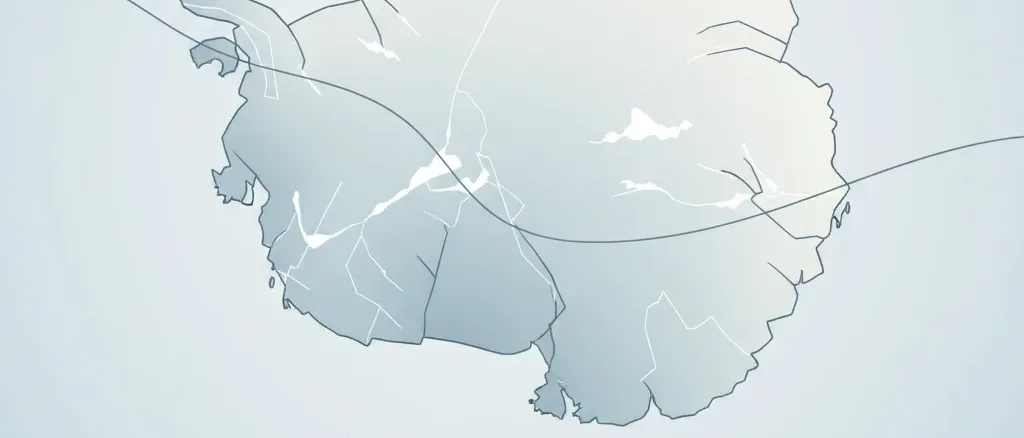
Нестабільність Західного Антарктичного льодовикового щита обговорюється в науковій літературі та в колах кліматичної політики, але ще не набула сталого культурного образу так, як його мають затоплення міст чи лісові пожежі. Більшість людей, які про неї чули, приблизно знають, що її колапс означав би суттєвий підйом рівня моря і що Антарктида тане. Що не є широко зрозумілим, так це те, що наука про точки перелому розрізняє перетин незворотного порогу (запуск точки перелому) і повне вираження підйому рівня моря — яке може тривати століттями. Так само мало відомо, що за поточних траєкторій викидів кілька незалежних модельних досліджень визначають імовірність запуску понад 90% до 2100 року. Ризик суттєво недооцінений у суспільній свідомості, яка схильна подавати втрату антарктичної криги як повільну й віддалену проблему, а не як потенційно вже неминучу.
Грубна оцінка: ~47,7 % дорослих американців повідомляють, що «бояться» або «дуже бояться» глобального потепління та зміни клімату загалом (Chapman University Survey, Wave 10, 2024) — окремого опитування щодо WAIS не існує
Фактичний
>90% імовірності перетину порогу перелому WAIS до 2100 року (поточні викиди, SSP2-4.5)
Глобально — перетин точки перелому WAIS є подією планетарного масштабу, а не специфічною для певної популяції
Показати обчислення
Wunderling та ін. (2025, Earth System Dynamics) змоделювали ймовірність запуску шістнадцяти кліматичних точок перелому за різних сценаріїв викидів, використовуючи зв'язану модель елементів перелому з параметрами, обмеженими спостереженнями. За SSP2-4.5 (сценарій, найближчий до поточних глобальних політичних зобов'язань, що прогнозує потепління на ~2,6-2,8 °C до 2100 року) ймовірність запуску WAIS перевищувала 90%. Це ймовірність запуску — ймовірність того, що глобальне потепління перетне температурний поріг, за яким відступ WAIS стає самопідтримним, — а не ймовірність повного колапсу впродовж людського життя. Повний колапс WAIS вивільнив би приблизно 3,3-5,3 метра підйому рівня моря, але в масштабах від десятиліть до тисячоліть залежно від сценарію форсингу та динаміки зворотних зв'язків. Перетин порогу перелому прирікає світ на цей кінцевий результат, але більшість підйому рівня моря відбулася б далеко за межами життя цільового дорослого. Armstrong McKay та ін. (2022, Science) оцінили центральний поріг у ~1,5 °C понад доіндустріальний рівень, з діапазоном 1-3 °C — рівень, який поточні траєкторії можуть перевищити у 2030-ті роки. IPCC AR6 WG1 (2021) застосовує сценарій «низька ймовірність, високий вплив» для процесів, що додають понад 1 метр додаткового підйому рівня моря до 2100 року через нестабільність льодовикового щита, водночас визнаючи «глибоку невизначеність» щодо часових рамок. Діапазон невизначеності (30-99%) охоплює широкий спектр від сценаріїв агресивного пом'якшення (SSP1-1.9, де ймовірність запуску нижча, але все ще значна) до сценаріїв звичайного розвитку подій.
Застереження: Показник >90% — це ймовірність запуску точки перелому за поточних викидів (SSP2-…
Показник >90% — це ймовірність запуску точки перелому за поточних викидів (SSP2-4.5), а не ймовірність повного колапсу WAIS чи досягнення підйомом рівня моря катастрофічних значень упродовж людського життя. Повний колапс WAIS триватиме від десятиліть до тисячоліть після перетину порогу перелому — наслідки для рівня моря в більшості сценаріїв розгортаються далеко за межами життя цільового дорослого. Центральний поріг ~1,5 °C (Armstrong McKay 2022), можливо, вже було короткочасно перевищено: середня глобальна температура ненадовго перевищила 1,5 °C понад доіндустріальний рівень у 2023-2024 роках, хоча релевантним показником для WAIS є стале багатодесятилітнє середнє, а не піковий річний відхил. Обережніше формулювання IPCC AR6 відрізняється від ймовірності запуску >90% у Wunderling 2025, бо ці дві оцінки вимірюють різні речі: IPCC явно виключає раптовий початок нестабільності морського льодовикового щита зі своїх прогнозів імовірного діапазону, розглядаючи його як сценарій «глибокої невизначеності» / низької ймовірності з високим впливом, оцінений у моделях CMIP, які не моделюють нестабільність WAIS; Wunderling моделює перетин порогу, що прирікає на кінцевий колапс, у межах підходу елементів перелому. Це радше сумісні, ніж суперечливі оцінки різних процесів. Нестабільність морських льодовикових урвищ (MICI) — механізм, який міг би різко прискорити руйнування WAIS, — залишається спірною і виключена з основних прогнозів IPCC.
Пов’язані ризики
Інші ризики на схожі теми — для вивчення пов’язаних страхів.






Обрати порівнюваний
The West Antarctic Ice Sheet contains enough ice to raise global sea levels by 3.3 to 5.3 metres if fully disgorged into the ocean — an amount sufficient to permanently inundate coastal cities from Miami to Shanghai to Amsterdam. The debate is not whether this would be consequential but whether the process is already irreversibly committed. Wunderling et al. (2025, Earth System Dynamics), using a coupled tipping-element model parameterised from Armstrong McKay et al.’s (2022, Science) threshold synthesis, found that under SSP2-4.5 — the scenario closest to current global policy commitments — the probability of the WAIS crossing its tipping threshold before 2100 exceeded 90%. Armstrong McKay estimated the central threshold at roughly 1.5°C of global warming above pre-industrial levels, within the Paris Agreement’s target range.
The critical distinction is between triggering and completing. When the WAIS tipping point is crossed, global warming has reached a level at which ice retreat becomes self-sustaining: ocean warming beneath the ice shelves melts the underside, the grounding line retreats into deeper water, and the geometry of the ice sheet means retreat accelerates rather than stabilising. But this process unfolds over decades to millennia, not years. Naughten et al. (2023, Nature Climate Change) found that ice-shelf warming in the Amundsen Sea sector is already committed to accelerate at roughly triple the historical rate until at least 2045 regardless of near-term emissions choices — the ocean warming that drives basal melt is locked in by historical emissions. For most people alive today, the sea level consequences lie far beyond their lifetimes even if the threshold is crossed tomorrow. IPCC AR6 frames this as a “low likelihood, high impact” storyline while acknowledging “deep uncertainty.”
The Thwaites Glacier, sometimes called the “Doomsday Glacier,” holds about 65 centimetres of global sea level equivalent and is considered the most vulnerable sector of the WAIS. Satellite altimetry and ocean observations show active basal melting, and the glacier’s “ice shelf” — the floating apron that pins the inland ice — is cracking in ways that some glaciologists believe could accelerate collapse within this century. None of this translates straightforwardly into a personal risk number: the framing here is the probability of a planetary commitment being made in a person’s lifetime, not the probability of dying from it. That probability — on current trajectories — is what makes this entry unusual on this site: the risk is not rare but the consequences are diffuse, slow, and fall predominantly on future generations.
Пов’язані факти
За нинішніх викидів моделі оцінюють імовірність переходу критичного порогу Західної Антарктиди до 2100 року вище 90%. Жодне опитування навіть не вимірює, наскільки ймовірним це вважає громадськість.
Реєстр тверджень
Кожне число нижче — це те, що повідомило джерело, з дослівною цитатою, на яку ми спиралися, та тим, як ми дійшли до нашої цифри. Натисніть на посилання, щоб перевірити самостійно.
1/5 джерел незалежно перевірено дослівно за вказаним джерелом
-
[1] Earth System Dynamics — Wunderling, Sakschewski, Rockström, Flores, Hirota, Staal, 2025 — High probability of triggering climate tipping points under current policies modestly amplified by Amazon dieback and permafrost thaw
High probability of triggering climate tipping points under current policies modestly amplified by Amazon dieback and permafrost thaw- Статистика
WAIS triggering probability >90% under SSP2-4.5 (current policy scenario); all sixteen tipping elements analyzed show elevated triggering probabilities under policies as of 2025- Витяг
“"Under SSP2-4.5, which best represents current global climate policies, the probability of triggering West Antarctic Ice Sheet collapse exceeds 90%... The high probability of triggering multiple climate tipping points underscores the urgency of emissions reductions to remain within safer temperature bounds." ”
- Дані джерела:
- 2025-05-01
- Дата звернення
- 2026-05-09 · архівна копія
- Розрахунок
- Wunderling et al. 2025 is the primary quantitative source for the >90% headline. SSP2-4.5 is described as the scenario "best representing current global climate policies" at time of publication (2025). The triggering probability means the probability that global temperature crosses the threshold at which WAIS retreat becomes self-sustaining and irreversible on multi-century timescales. The paper uses a coupled tipping-element model incorporating interactions between tipping elements (e.g., Amazon dieback slightly amplifying WAIS triggering probability through global mean temperature). The core result for WAIS is robust to whether or not Amazon and permafrost interactions are included.
- Незалежність
- Wunderling et al. use a tipping-element network model parameterised from the Armstrong McKay 2022 threshold estimates, which are themselves derived from paleoclimate evidence and process understanding. This is a different approach from IPCC AR6's process-based climate model ensemble, though both draw on overlapping paleoclimate evidence for threshold estimates.
-
[2] Science — Armstrong McKay, Staal, Abrams, Winkelmann, Sakschewski, Loriani, Fetzer, Cornell, Rockström, Lenton, 2022 — Exceeding 1.5°C global warming could trigger multiple climate tipping points
Exceeding 1.5°C global warming could trigger multiple climate tipping points- Статистика
WAIS central temperature threshold ~1.5°C (range 1-3°C); 'likely' to be triggered above 1.5°C of global warming; full WAIS collapse would raise sea level by more than 3.3 metres over centuries- Витяг
“"The West Antarctic Ice Sheet has a central threshold of approximately 1.5°C of global warming above pre-industrial levels, with a range of 1 to 3°C... Above 1.5°C, the WAIS becomes 'likely' to cross its tipping threshold, committing to eventual collapse over decades to millennia and a sea level contribution of 3.3-5.3 metres." ”
- Дані джерела:
- 2022-09-09
- Дата звернення
- 2026-05-09 · архівна копія
- Розрахунок
- Armstrong McKay et al. 2022 is the most comprehensive recent revision of climate tipping point thresholds, synthesising paleoclimate evidence and process understanding for sixteen tipping elements. The WAIS threshold lowering from the previous Lenton 2008 estimate of ~3-5°C to ~1.5°C was significant: it places the threshold within the Paris Agreement target range, meaning that even the most ambitious emissions reduction targets do not guarantee avoiding WAIS commitment to collapse. The 1-3°C range captures deep uncertainty in the threshold itself.
- Незалежність
- Armstrong McKay et al. synthesise paleoclimate and process evidence using a different methodology than Wunderling et al.'s probabilistic network model. Both reach compatible conclusions about WAIS proximity to its threshold under current conditions.
-
[3] Nature Climate Change — Naughten et al., 2023 — Unavoidable future increase in West Antarctic ice-shelf melting over the twenty-first century
Unavoidable future increase in West Antarctic ice-shelf melting over the twenty-first century- Статистика
All four tested emissions scenarios produce similar accelerated Amundsen Sea warming until at least 2045; ice-shelf warming projected at ~triple the historical rate regardless of near-term mitigation- Витяг
“"These results suggest that mitigation of greenhouse gases now has limited power to prevent ocean warming that could lead to the collapse of the West Antarctic Ice Sheet... Under all scenarios, the Amundsen Sea is committed to accelerated warming at approximately triple the historical rate until at least 2045." ”
- Дані джерела:
- 2023-10-23
- Дата звернення
- 2026-05-09 · архівна копія
- Розрахунок
- Naughten et al. 2023 focuses on ocean warming beneath WAIS ice shelves in the Amundsen Sea sector — the primary driver of ice shelf basal melt and the mechanism by which warming triggers WAIS instability. The finding that all emissions scenarios produce similar warming until 2045 is significant: near-term mitigation cannot prevent the accelerated melting already committed by historical emissions. This does not mean full collapse is committed, only that the process driving it is locked in for at least two decades. The paper's single-model design limits certainty, but it uses a high-resolution ocean model specifically designed for Amundsen Sea dynamics.
- Незалежність
- Naughten et al. use an ocean model focused on the Amundsen Sea specifically, rather than the global climate models used by Wunderling 2025 and Armstrong McKay 2022. The result addresses ice-shelf basal melt rates rather than full tipping point probability, providing a physically independent mechanism-level corroboration.
-
[4] Intergovernmental Panel on Climate Change (IPCC), Working Group I, Sixth Assessment Report — Climate Change 2021: The Physical Science Basis — Chapter 9: Ocean, Cryosphere and Sea Level Change
Climate Change 2021: The Physical Science Basis — Chapter 9: Ocean, Cryosphere and Sea Level ChangeSee all 2 Likelier entries citing this source →
- Статистика
Antarctic Ice Sheet 'likely' to keep losing mass all century; MISI/MICI excluded from likely-range projections as 'deep uncertainty'; 'low likelihood, high impact' storyline for >1m additional SLR from these instability processes by 2100- Витяг
“"Both the Greenland Ice Sheet (virtually certain) and the Antarctic Ice Sheet (likely) will continue to lose mass throughout this century under all considered SSP scenarios... Under high-emissions scenarios, poorly understood processes related to marine ice sheet instability and marine ice cliff instability, characterized by deep uncertainty, have the potential to strongly increase Antarctic mass loss on century to multi-century time scales... These likely range projections do not include those ice-sheet-related processes that are characterized by deep uncertainty... In a low-likelihood, high-impact storyline, under high emissions such processes could in combination contribute more than one additional metre of sea level rise by 2100." ”
- Дані джерела:
- 2021-08-09
- Дата звернення
- 2026-05-09 · архівна копія
- Розрахунок
- IPCC AR6 does not assign a numerical probability to WAIS collapse before 2100. Instead it explicitly excludes the abrupt, widespread onset of marine ice sheet instability (MISI) and marine ice cliff instability (MICI) from its likely-range projections because those processes are "characterized by deep uncertainty arising from limited process understanding." It does assess that the Antarctic Ice Sheet is likely to keep losing mass throughout this century, and treats a >1 m additional sea-level-rise contribution from these instability processes by 2100 as a low-likelihood, high-impact storyline under high emissions. The Bamber et al. 2019 structured expert judgment cited by AR6 gave WAIS sea level contribution by 2100 as median 8-18 cm with 95th percentile up to 44-93 cm depending on warming scenario — reflecting deep uncertainty but not ruling out large contributions. IPCC AR6's position is more cautious than Wunderling 2025 because it relies on CMIP model ensembles that do not simulate WAIS collapse, rather than the tipping-point network models used by Wunderling.
-
[5] Columbia Climate School — State of the Planet — Crucial Antarctic Glacier Likely to Collapse Much Earlier than Expected Перевірено
Crucial Antarctic Glacier Likely to Collapse Much Earlier than Expected- Статистика
Thwaites Glacier alone holds approximately 65 centimetres of global sea-level-rise equivalent if it melted entirely; identified as the most vulnerable, structurally unstable sector of the West Antarctic Ice Sheet.- Витяг
“"If the entire glacier were to melt then global sea levels would rise by 65 centimeters, or about two feet." ”
- Дані джерела:
- 2021-12-17
- Дата звернення
- 2026-07-03 · архівна копія
- Перевірка
- Витяг незалежно повторно отримано та дослівно підтверджено за вказаним джерелом під час нашого аудиту обґрунтованості.
- Розрахунок
- Supplies the Thwaites-specific sea-level-equivalent figure used in the body prose (65 cm). This is a subset of, and consistent with, the 3.3-5.3 m full-WAIS collapse range from Armstrong McKay et al. 2022 (source above) — Thwaites is one glacier within the broader ice sheet. It does not alter the entry's headline >90% tipping-threshold probability, which remains sourced from Wunderling et al. 2025; this source is used only to ground the Thwaites ice-volume detail mentioned in the body text.
- Незалежність
- Science journalism from a university climate research center, reporting on glaciological modelling distinct from the tipping-point probability studies (Wunderling 2025, Armstrong McKay 2022) and the ocean-forcing study (Naughten 2023) cited above; used only for the Thwaites-specific ice-volume figure, not for probability estimates.