Kwaliteit van bewijs 4.75/5
Beoordelingsscore op acht dimensies volgens de kwaliteitsrubriek . Elke dimensie krijgt een score van 1 tot 5.
- D1 Verankering in bronnen
- 5/5
- D2 Autoriteit van bronnen
- 5/5
- D3 Rekenkunde
- 3/5
- D4 Onzekerheid
- 5/5
- D5 Bereik
- 5/5
- D6 Proza
- 5/5
- D7 Eerlijkheid over perceptie
- 5/5
- D8 Volledigheid van voorbehouden
- 5/5
≈ Net zo waarschijnlijk als
Waargenomen
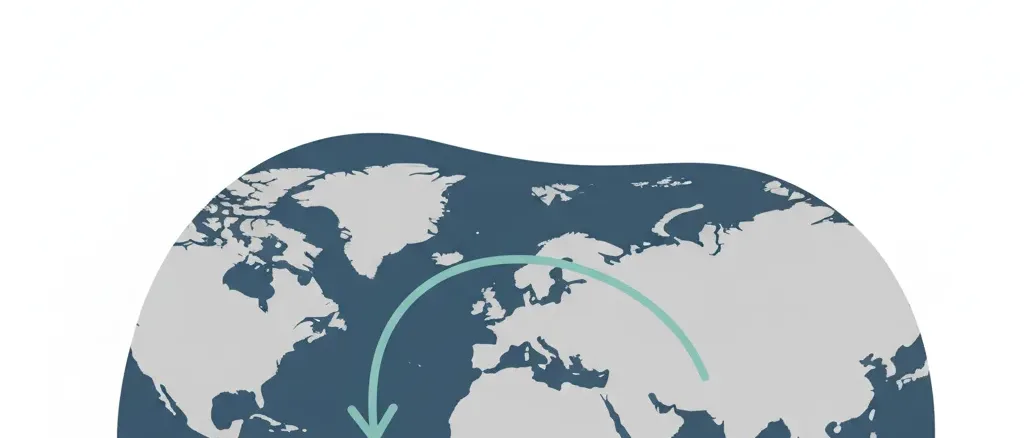
De Atlantic Meridional Overturning Circulation is geen alledaagse term, en de mogelijke instorting ervan heeft pas recent bredere bekendheid gekregen. Populaire berichtgeving neigt te schommelen tussen bagatellisering («wetenschappers zeggen dat de oceanische transportband vertraagt») en catastrofisme (koppen die verwijzen naar de film «The Day After Tomorrow», waarvan de weergave van onmiddellijke bevriezing wetenschappelijke fictie was). Het concept van kantelpunten in de oceaancirculatie kwam breder onder de publieke aandacht na het IPCC-rapport van 2021 en opnieuw nadat een omstreden artikel uit 2023 een instorting voorspelde die mogelijk rond het midden van de eeuw plaatsvindt. De Survey of American Fears van Chapman University volgt AMOC-bewustzijn niet specifiek; bredere data over klimaatangst suggereert dat ruwweg 48 % van de Amerikanen aangeeft bang of erg bang te zijn voor opwarming van de aarde en klimaatverandering (Chapman 2024), maar specifieke kantelpunten zoals de AMOC worden niet uitgesplitst. Het risico bevindt zich ergens tussen actief gevreesd en grotendeels onopgemerkt.
Ruwe schatting: ~47,7 % van de Amerikaanse volwassenen geeft aan «bang» of «erg bang» te zijn voor opwarming van de aarde en klimaatverandering in brede zin (Chapman University Survey, Wave 10, 2024) — er bestaan geen AMOC-specifieke enquêtegegevens
Werkelijk
~5 % kans op abrupte AMOC-instorting vóór 2100 (IPCC «zeer onwaarschijnlijk» = 0–10 %, SROCC 2019 / AR6 consistent)
Wereldbevolking — AMOC-instorting is een gebeurtenis op planetaire schaal zonder bevolkingsspecifieke kans
Berekening tonen
IPCC AR6 WG1 (2021) beoordeelde dat de AMOC «zeer waarschijnlijk» zal afnemen gedurende de 21e eeuw, met «gemiddeld vertrouwen dat de afname geen abrupte instorting vóór 2100 zal omvatten.» De IPCC SROCC (2019) SPM (B.2.7) is de beoordeling die de gekalibreerde waarschijnlijkheidsterm «zeer onwaarschijnlijk (gemiddeld vertrouwen)» toepast op een AMOC-instorting. IPCC-gekalibreerde taal: «zeer onwaarschijnlijk» = 0–10 % kans. Door 5 % als het middelpunt van die marge te nemen ontstaat het kopcijfer. Dit is de kans op een gebeurtenis van beschavingsomvang, geen persoonlijke sterftekans: een AMOC-instorting zou niemand onmiddellijk doden, maar zou een cascade van gevolgen teweegbrengen (Europese winterse temperatuurdalingen van 5-15°C, versnelling van zeespiegelstijging aan de Amerikaanse oostkust, verstoring van de tropische regengordel) waarvan de indirecte sterfte over decennia aanzienlijk zou zijn. Op waarneming gebaseerde studies leveren aanzienlijk hogere schattingen op: Ditlevsen en Ditlevsen (2023, Nature Communications) leidden een centrale instortdatum van 2057 af met een 95 %-BI van 2025-2095 uit statistische vroegwaarschuwingssignalen in proxy's voor zeeoppervlaktetemperatuur, wat een kans van >50 % binnen een volwassen leven van 50 jaar impliceert. Smolders et al. (2024) schatten de kans op een AMOC-instorting vóór 2050 op 59 ± 17 % met op fysica gebaseerde saliniteitsindicatoren. Beide benaderingen worden op methodologische gronden betwist door meerdere vooraanstaande oceanografen, en een ensemble-studie met 34 modellen uit 2025 (Baker et al., Nature) vond de AMOC bestand tegen instorting onder alle geteste forceringsscenario's. De brede onzekerheidsmarge (1-40 %) weerspiegelt deze werkelijke wetenschappelijke onenigheid, niet louter statistische onzekerheid rond een bekende verdeling. Verfijningen uit 2025 (toegevoegd op 2026-06-14) scherpen de TIMING-vraag aan zonder de kans op te lossen: van Westen et al. (2025, JGR Oceans) plaatsen het begin van de instorting nabij 2063 (2026-2095, 25e-57e percentiel) onder SSP2-4.5 met een kantelpunt-drempel nabij ~2,5C, terwijl Drijfhout et al. (2025, ERL) vinden dat in CMIP6-extensies een volledige stilstand van de noordelijke omwenteling zich na 2100 over 50-100 jaar ontvouwt, zelfs wanneer eerder vastgelegd. Deze verscherpen de centrale beginschatting en versterken het onderscheid tussen begin en realisatie, maar geen van beide is een herbeoordeling door een officiële instantie, dus het IPCC-verankerde kopcijfer van 5 % en de marge van 1-40 % blijven onveranderd behouden.
Kanttekeningen: Het kopcijfer van 5 % volgt de gekalibreerde taal «zeer onwaarschijnlijk» van he…
Het kopcijfer van 5 % volgt de gekalibreerde taal «zeer onwaarschijnlijk» van het IPCC (0-10 % kans, gemiddeld vertrouwen) — de term «zeer onwaarschijnlijk (gemiddeld vertrouwen)» voor een AMOC-instorting komt uit de IPCC SROCC (2019) SPM (B.2.7), waarbij AR6 WG1 (2021) dit herformuleert als «gemiddeld vertrouwen dat de afname geen abrupte instorting vóór 2100 zal omvatten.» Het kopcijfer vertegenwoordigt het anker van de wetenschappelijke consensus in plaats van de volledige reeks gepubliceerde schattingen. Op waarneming gebaseerde studies (Ditlevsen 2023; Smolders et al. 2024) leveren aanzienlijk hogere schattingen op — 50-60 % kans op instorting tegen het midden van de eeuw — maar deze methoden worden betwist op representativiteit van proxy's, lengte van de tijdreeks en modelaannames. De ensemble-studie met 34 modellen van Baker et al. 2025 pleit voor veerkracht van de AMOC onder alle geteste scenario's, ter ondersteuning van de beoordeling «zeer onwaarschijnlijk» van het IPCC. Het wetenschappelijke debat is werkelijk onbeslist; de onzekerheidsmarge (1-40 %) weerspiegelt dit in plaats van louter statistische onzekerheid rond een bekende parameter. Een AMOC-«instorting» betekent in dit item een abrupte, zichzelf in stand houdende reductie tot een dramatisch verzwakte toestand — niet de geleidelijke verzwakking (momenteel beoordeeld als «zeer waarschijnlijk») die al gaande is. Gevolgen van een instorting zouden zich over jaren tot decennia ontvouwen, niet van de ene op de andere dag: Europese wintertemperaturen zouden met 5-15°C kunnen dalen over tijdschalen van 10-30 jaar, de zeespiegel aan de Amerikaanse oostkust zou met een extra 10-50 cm boven de basisprognoses stijgen, en tropische regenpatronen zouden aanzienlijk verschuiven. Het levenslange cijfer is een kans dat de gebeurtenis in gang wordt gezet, niet dat de gevolgen ervan volledig worden gerealiseerd binnen het leven van de betrokken volwassene. Twee studies uit 2025 scherpen de timing aan zonder het kopcijfer te verschuiven. Van Westen et al. (2025, JGR Oceans), die 25 klimaatmodellen analyseren, schatten dat een AMOC-instorting zou kunnen beginnen tegen 2063 (bereik 2026-2095) onder een scenario met gematigde uitstoot en tegen 2055 bij hoge uitstoot, met de kantelpunt-drempel nabij ~2,5C mondiale opwarming — maar benadrukken dat, eenmaal begonnen, het bereiken van een substantieel zwakkere toestand meer dan 100 jaar duurt. Drijfhout et al. (2025, Environmental Research Letters), die CMIP6-simulaties tot voorbij 2100 onderzoeken, vinden dat een volledige stilstand van de noordelijke diepe omwenteling zich na 2100 voordoet in alle modellen met hoge uitstoot (SSP5-8.5) die zo ver doorlopen, en in 37 % van de modellen met gematigde uitstoot tegen 2300. Deze verfijnen de centrale beginschatting ten opzichte van het alarm van de enkele studie uit 2023, maar versterken, in plaats van omver te werpen, het bovenstaande kader: een begin rond het midden van de eeuw zou een verbintenis zijn, geen voltooide instorting binnen het leven van een levende volwassene.
Gerelateerde risico’s
Andere risico’s over vergelijkbare thema’s — om gerelateerde angsten te verkennen.
Kantelpunt WAIS
Wat is de kans dat het kantelpunt van de West-Antarctische ijskap binnen jouw leven wordt overschreden?

Extremistische regeringscatastrofe
Wat is de kans dat een politiek extremistische regering uw land catastrofaal ruïneert?

Klimaatverandering sterfte
Wat is de kans om te sterven aan de gevolgen van klimaatverandering?





Kies vergelijking
The Atlantic Meridional Overturning Circulation is the vast network of ocean currents that transports warm surface water northward through the Atlantic and returns cold, deep water southward — the system responsible for northwestern Europe’s mild climate relative to its latitude. IPCC AR6 (2021) assessed that AMOC will “very likely” decline over the 21st century, with “medium confidence that the decline will not involve an abrupt collapse before 2100.” The earlier IPCC SROCC (2019) is the assessment that applied the calibrated “very unlikely (medium confidence)” likelihood term to an AMOC collapse — where “very unlikely” denotes a 0-10% probability. Using the midpoint of that calibrated range gives a ~5% lifetime probability of abrupt collapse before 2100. Caesar and colleagues (2018, Nature) documented that AMOC has already weakened by approximately 15% since the mid-twentieth century, using an independent sea-surface temperature fingerprinting approach that is consistent with RAPID array direct measurements begun in 2004.
The scientific debate is unusually polarised. Observation-based early-warning studies (Boers 2021, Nature Climate Change; Ditlevsen 2023, Nature Communications; van Westen 2024, Science Advances) identify statistical and physical signals consistent with AMOC approaching a tipping threshold, with Ditlevsen’s contested analysis predicting collapse most likely between 2025 and 2095. These findings imply a much higher probability than the IPCC consensus — in some estimates, 50-60% before mid-century. The counterargument came in February 2025 from Baker et al. (Nature), whose 34-model ensemble found AMOC resilient to collapse under all tested forcing scenarios, with Southern Ocean wind-driven upwelling sustaining the circulation even under extreme greenhouse gas concentrations. The IPCC’s “very unlikely” assessment rests primarily on this model-ensemble evidence. Both camps are publishing in leading peer-reviewed journals; the discrepancy is not a matter of one side being wrong in an obvious way.
Should AMOC collapse occur, the consequences within the following few decades would be substantial. Van Westen et al.’s consequence modelling projects European winter temperature drops of 5-15°C across northwestern Europe, with London’s average winter temperature falling from roughly 7°C to near 2°C and Oslo’s to well below -10°C. Sea level on the US East Coast would rise by an additional 10-50 cm above baseline sea level rise projections, as the ocean surface that AMOC currently depresses would rebound northward. The Amazon rainforest would face additional drying as tropical rainfall patterns shift. These are not immediate effects but decadal-to-century timescale consequences of a threshold crossing that, if it occurs, would likely be irreversible on any timescale relevant to human planning.
Gerelateerde weetjes
Het IPCC AR6 beoordeelt een abrupte AMOC-ineenstorting vóór 2100 als "zeer onwaarschijnlijk", een kans van ongeveer 5 procent. Verschillende op waarnemingen gebaseerde studies stellen dat de kans hoger is, en de onzekerheidsmarge is breed.
Bronnenverantwoording
Elk getal hieronder is wat elke bron rapporteerde, met het letterlijke citaat waarop we ons baseerden en hoe we tot ons cijfer kwamen. Klik op een link om rechtstreeks te verifiëren.
-
[1] Intergovernmental Panel on Climate Change (IPCC), Working Group I, Sixth Assessment Report — Climate Change 2021: The Physical Science Basis — Chapter 9: Ocean, Cryosphere and Sea Level Change
Climate Change 2021: The Physical Science Basis — Chapter 9: Ocean, Cryosphere and Sea Level ChangeSee all 2 Likelier entries citing this source →
- Statistiek
AMOC will 'very likely' decline over the 21st century for all SSP scenarios; there is 'medium confidence' that the decline will not involve an abrupt collapse before 2100- Fragment
“"The Atlantic Meridional Overturning Circulation (AMOC) will very likely decline over the 21st century for all SSP scenarios. There is medium confidence that the decline will not involve an abrupt collapse before 2100." ”
- Brongegevens van
- 2021-08-09
- Geraadpleegd
- 2026-05-09 · gearchiveerde kopie
- Berekening
- AR6 WG1 Ch9 does not itself assign a numerical probability, nor does it use the "very unlikely" likelihood term for AMOC collapse — it states only "medium confidence that the decline will not involve an abrupt collapse before 2100." The "very unlikely (medium confidence)" characterization of an AMOC collapse is the IPCC SROCC (2019) SPM B.2.7 assessment (see the SROCC source below), which AR6 Ch9 is consistent with. Under the IPCC calibrated-language scale "very unlikely" = 0-10% probability; 5% is taken as the midpoint of that SROCC-defined range for the headline. The IPCC does not give a numerical probability; 5% is the author's interpretation of the calibrated-language midpoint. The 59-year adult lifetime window (age 18 to 77) maps roughly onto the "before 2100" horizon.
-
[2] Intergovernmental Panel on Climate Change (IPCC), SROCC 2019 — Special Report on the Ocean and Cryosphere in a Changing Climate — Summary for Policymakers (section B.2.7)
Special Report on the Ocean and Cryosphere in a Changing Climate — Summary for Policymakers (section B.2.7)- Statistiek
AMOC is projected to weaken in the 21st century under all RCPs ('very likely'), although a collapse is 'very unlikely' (medium confidence)- Fragment
“"The AMOC is projected to weaken in the 21st century under all RCPs (very likely), although a collapse is very unlikely (medium confidence)." ”
- Brongegevens van
- 2019-09-25
- Geraadpleegd
- 2026-07-11 · gearchiveerde kopie
- Berekening
- This SROCC SPM statement (B.2.7) is the IPCC assessment that actually applies the "very unlikely (medium confidence)" likelihood term to an AMOC collapse. It is the grounding for the headline: under IPCC calibrated language "very unlikely" = 0-10% probability, and 5% is taken as the midpoint of that range. AR6 WG1 Ch9 (2021) restated this as "medium confidence that the decline will not involve an abrupt collapse before 2100," consistent with SROCC but without repeating the "very unlikely" term. Neither report gives a numerical probability; the 5% midpoint is the author's interpretation of the SROCC-stated calibrated-language range.
-
[3] Nature — Caesar, Rahmstorf et al., 2018 — Observed fingerprint of a weakening Atlantic Ocean overturning circulation
Observed fingerprint of a weakening Atlantic Ocean overturning circulation- Statistiek
AMOC has weakened by approximately 3 ± 1 sverdrups (around 15%) since the mid-20th century, revealed by characteristic sea-surface temperature fingerprint- Fragment
“"The AMOC has weakened by about 3 ± 1 sverdrups (around 15 per cent) since the mid-twentieth century, revealed by a characteristic spatial and seasonal sea-surface temperature 'fingerprint' — consisting of a pattern of cooling in the subpolar Atlantic Ocean and warming in the Gulf Stream region." ”
- Brongegevens van
- 2018-04-11
- Geraadpleegd
- 2026-05-09 · gearchiveerde kopie
- Berekening
- Caesar et al. 2018 is the observational foundation for the AMOC weakening narrative. The 15% weakening since the mid-20th century is separate from the collapse-probability question — weakening and collapse are different states, and the IPCC projects continued weakening with high confidence even while assessing collapse as very unlikely. This source establishes that AMOC is not stable at its current state, providing the background against which collapse probability must be assessed.
- Onafhankelijkheid
- Caesar et al. use an independent SST-based fingerprinting approach developed separately from the RAPID array direct measurements (which began in 2004) and from the statistical early-warning methods of Boers 2021 and Ditlevsen 2023. The three methodologies corroborate each other on the weakening trend.
-
[4] Nature Communications — Ditlevsen and Ditlevsen, 2023 — Warning of a forthcoming collapse of the Atlantic meridional overturning circulation
Warning of a forthcoming collapse of the Atlantic meridional overturning circulation- Statistiek
Statistical early-warning signals in SST proxies predict central AMOC collapse in 2057 (95% CI: 2025-2095); method is contested by multiple senior oceanographers- Fragment
“"Data-driven estimators for the time of tipping predict a potential AMOC collapse mid-century under the current emission scenario, with a 95% confidence interval of 2025–2095." ”
- Brongegevens van
- 2023-07-25
- Geraadpleegd
- 2026-05-09 · gearchiveerde kopie
- Berekening
- Ditlevsen 2023 derives its estimate from statistical early-warning signals (variance and autocorrelation growth) in North Atlantic SST proxies interpreted as fingerprints of approaching instability. The method is contested: Prof. Penny Holliday (National Oceanography Centre) stated "sea surface temperature of the North Atlantic subpolar gyre is not a clear indicator of the state of the AMOC"; Prof. Niklas Boers (TU Munich) argued "uncertainties in the heavily oversimplified model assumptions... are too high"; Dr. Levke Caesar (Univ. Bremen) stated "the resulting time series are too short." This source represents the upper bound of the scientific plausibility range and is not the headline figure, but it anchors the upper end of the uncertainty band.
- Onafhankelijkheid
- Ditlevsen 2023 is methodologically distinct from the IPCC's model-ensemble approach and from Caesar 2018's SST fingerprinting. It is included to represent the range of scientific opinion rather than as an independent confirmation of any single estimate.
-
[5] Science Advances — van Westen, Kliphuis and Dijkstra, 2024 — Physics-based early warning signal shows that AMOC is on tipping course
Physics-based early warning signal shows that AMOC is on tipping course- Statistiek
Freshwater transport indicator (F_ovS) shows significant negative trend over past 40 years, consistent with AMOC approaching tipping point; European temperature drops of 5-15°C projected in collapse scenario- Fragment
“"Reanalysis products indicate that the present-day AMOC is on route to tipping... Temperature trends exceed 1°C per decade across northwestern Europe during collapse." ”
- Brongegevens van
- 2024-02-09
- Geraadpleegd
- 2026-05-09 · gearchiveerde kopie
- Berekening
- Van Westen 2024 uses a physics-based indicator (minimum of AMOC-induced freshwater transport, F_ovS) rather than statistical proxies. It finds a statistically significant negative trend of -1.20 mSv/year over the past 40 years, consistent with approach to tipping, but explicitly states inability to determine when tipping would occur. The consequence model run shows London's average winter temperature falling to ~1.9°C (from ~7°C today) and Oslo's to -16.5°C. These are consequences of full collapse, not of the current trajectory in isolation.
- Onafhankelijkheid
- Van Westen et al. use a different indicator (F_ovS from ocean reanalysis products) than Ditlevsen 2023 (SST statistical signals) or Caesar 2018 (SST fingerprinting), providing genuinely independent physics-based evidence for AMOC approaching instability.
-
[6] Nature — Baker et al. (Met Office and University of Exeter), 2025 — Continued Atlantic overturning circulation even under climate extremes
Continued Atlantic overturning circulation even under climate extremes- Statistiek
34-model ensemble finds AMOC resilient to collapse under all tested greenhouse gas and freshwater forcing scenarios; Southern Ocean wind-driven upwelling sustains circulation- Fragment
“"The AMOC is resilient to extreme greenhouse gas and North Atlantic freshwater forcings across 34 climate models." ”
- Brongegevens van
- 2025-02-19
- Geraadpleegd
- 2026-05-09 · gearchiveerde kopie
- Berekening
- Baker et al. 2025 is the primary model-based counterargument. The 34-model ensemble finds that Southern Ocean upwelling — not captured in the observation-based early-warning studies — sustains AMOC circulation even under extreme forcing. This mechanism explains why most CMIP climate models do not show AMOC collapse this century, which IPCC AR6 uses as the primary basis for its "very unlikely" assessment. Baker 2025 is cited here as a materially important dissenting view that anchors the lower end of the uncertainty range. The discrepancy between the observation-based (Ditlevsen, Boers, van Westen) and model-based (Baker, IPCC) views is the fundamental unresolved debate in AMOC science.
- Onafhankelijkheid
- Baker et al. is methodologically opposed to the observation-based early-warning literature — it uses fully coupled climate models rather than statistical signals — and its conclusion directly contradicts the observation-based studies. Both methodologies are active areas of peer-reviewed research; neither has been refuted.
-
[7] Journal of Geophysical Research: Oceans — van Westen, Kliphuis and Dijkstra, 2025 — Physics-Based Indicators for the Onset of an AMOC Collapse Under Climate Change
Physics-Based Indicators for the Onset of an AMOC Collapse Under Climate Change- Statistiek
25-model analysis estimates AMOC collapse could begin by 2063 (2026-2095, 25th-57th percentiles) under SSP2-4.5, or by 2055 (2023-2076) under SSP5-8.5; tipping threshold near ~2.5C global warming- Fragment
“"An analysis consisting of 25 different climate models shows that the AMOC could begin to collapse by 2063 (from 2026 to 2095, 25th to 57th percentiles) under an intermediate emission scenario (SSP2-4.5), or by 2055 (from 2023 to 2076, 25th to 75th percentiles) under a high-end emission scenario (SSP5-8.5). When the AMOC collapses, the Northwestern European climate changes drastically and this will likely induce severe societal impacts." ”
- Brongegevens van
- 2025-08-24
- Geraadpleegd
- 2026-06-14 · gearchiveerde kopie
- Berekening
- Van Westen et al. 2025 (JGR Oceans, Vol 130 Issue 8) develops a buoyancy-flux physics-based indicator for the ONSET of AMOC tipping — the moment the system becomes committed, not the moment a weakened state is reached. The paper's body places the multimodel-mean tipping threshold near ~2.5C of global warming above pre-industrial (the abstract states the onset years; the 2.5C / +2.48C figure is in the results text, paraphrased here, not in the verbatim excerpt). Critically, the paper states that once collapse begins it "takes more than 100 years to reach a substantially weaker state" — so a ~2063 onset under SSP2-4.5 describes a committed trajectory, not consequences realised within a focal adult's lifetime. This refines collapse TIMING relative to the contested 2023 single-study alarm but does not itself yield a numerical lifetime probability, so the 5% headline is unchanged; the result is recorded as a caveat and an assumptions addendum.
- Onafhankelijkheid
- Van Westen 2025 (JGR) uses a buoyancy-flux onset indicator across 25 CMIP-class models — distinct from both the SSP-extension shutdown framing of the 2025 ERL CMIP6 study and the F_ovS reanalysis indicator of van Westen 2024 (Science Advances). It sits between the observation-based alarm and the model-based resilience views.