Kwaliteit van bewijs 4.25/5
Beoordelingsscore op acht dimensies volgens de kwaliteitsrubriek . Elke dimensie krijgt een score van 1 tot 5.
- D1 Verankering in bronnen
- 4/5
- D2 Autoriteit van bronnen
- 5/5
- D3 Rekenkunde
- 4/5
- D4 Onzekerheid
- 4/5
- D5 Bereik
- 4/5
- D6 Proza
- 4/5
- D7 Eerlijkheid over perceptie
- 4/5
- D8 Volledigheid van voorbehouden
- 5/5
≈ Net zo waarschijnlijk als
Waargenomen
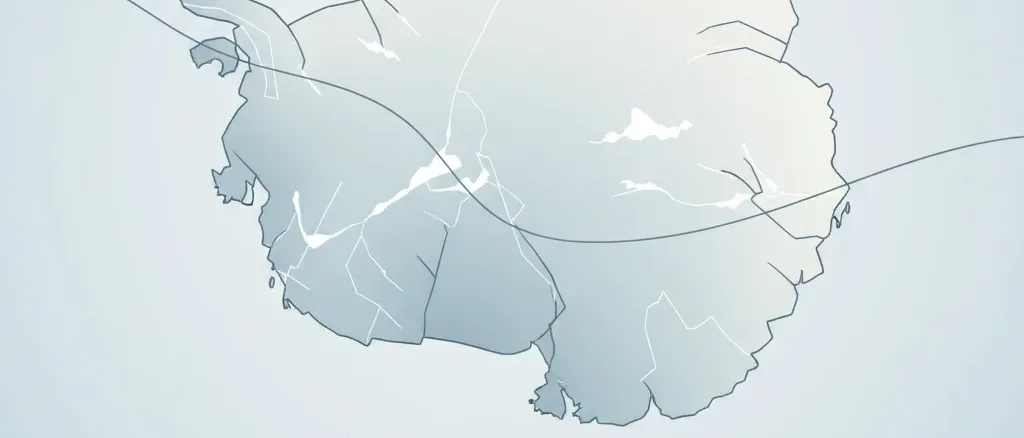
De instabiliteit van de West-Antarctische ijskap wordt besproken in de wetenschappelijke literatuur en in kringen van klimaatbeleid, maar heeft nog geen vast cultureel beeld gekregen zoals overstromende steden of bosbranden dat hebben. De meeste mensen die ervan gehoord hebben, weten grofweg dat het bij ineenstorting een aanzienlijke zeespiegelstijging zou betekenen en dat Antarctica smelt. Wat niet algemeen wordt begrepen, is dat de wetenschap van kantelpunten onderscheid maakt tussen het overschrijden van een onomkeerbare grens (de trigger van het kantelpunt) en de volledige uiting van zeespiegelstijging — die eeuwen kan duren. Evenmin is algemeen bekend dat meerdere onafhankelijke modelstudies onder de huidige uitstoottrajecten triggerkansen van ruim 90 % vóór 2100 toekennen. Het risico wordt in het publieke bewustzijn sterk onderschat; men neigt ertoe Antarctisch ijsverlies te zien als een traag en ver verwijderd probleem in plaats van een mogelijk reeds vastliggend probleem.
Ruwe schatting: ~47,7 % van de Amerikaanse volwassenen zegt 'bang' of 'heel bang' te zijn voor opwarming van de aarde en klimaatverandering in brede zin (Chapman University Survey, Wave 10, 2024) — er bestaat geen WAIS-specifieke enquête
Werkelijk
>90 % kans op overschrijden van de WAIS-kantelgrens vóór 2100 (huidige uitstoot, SSP2-4.5)
Mondiaal — het overschrijden van het WAIS-kantelpunt is een gebeurtenis op planetaire schaal, niet populatiespecifiek
Berekening tonen
Wunderling et al. (2025, Earth System Dynamics) modelleerden de kans op het in gang zetten van zestien klimaatkantelpunten onder verschillende uitstootscenario's, met een gekoppeld kantelelement-model met observationeel beperkte parameters. Onder SSP2-4.5 (het scenario dat het dichtst bij de huidige mondiale beleidsverbintenissen ligt en ~2,6-2,8 °C opwarming tegen 2100 projecteert) overschreed de WAIS-triggerkans 90 %. Dit is een triggerkans — de kans dat de mondiale opwarming de temperatuurgrens overschrijdt waarboven de terugtrekking van de WAIS zichzelf in stand houdt — niet de kans dat volledige ineenstorting binnen een mensenleven plaatsvindt. Volledige ineenstorting van de WAIS zou ongeveer 3,3-5,3 meter zeespiegelstijging vrijmaken, maar over tijdschalen van decennia tot millennia, afhankelijk van het forceringsscenario en de terugkoppelingsdynamiek. Het overschrijden van de kantelgrens legt de wereld vast op die uiteindelijke uitkomst, maar het grootste deel van de zeespiegelstijging zou zich ver na het leven van de betrokken volwassene voordoen. Armstrong McKay et al. (2022, Science) schatten de centrale grens op ~1,5 °C boven pre-industrieel niveau, met een bereik van 1-3 °C — een niveau dat volgens de huidige trajecten in de jaren 2030 zou kunnen worden overschreden. IPCC AR6 WG1 (2021) hanteert een scenario van «lage waarschijnlijkheid, grote impact» voor processen die vóór 2100 meer dan 1 meter extra zeespiegelstijging bijdragen door instabiliteit van ijskappen, terwijl het «diepe onzekerheid» over de timing erkent. Het onzekerheidsbereik (30-99 %) omvat de brede reeks van agressieve mitigatiescenario's (SSP1-1.9, waar de triggerkans lager maar nog steeds substantieel is) tot business-as-usual-trajecten.
Kanttekeningen: Het cijfer van >90 % is een triggerkans voor een kantelpunt onder de huidige uit…
Het cijfer van >90 % is een triggerkans voor een kantelpunt onder de huidige uitstoot (SSP2-4.5), niet een kans op volledige ineenstorting van de WAIS of op zeespiegelstijging die binnen een mensenleven catastrofale niveaus bereikt. Volledige ineenstorting van de WAIS zou decennia tot millennia duren nadat de kantelgrens is overschreden — de gevolgen voor de zeespiegel voltrekken zich in de meeste scenario's ver na het leven van de betrokken volwassene. De centrale grens van ~1,5 °C (Armstrong McKay 2022) is mogelijk al kortstondig overschreden: de mondiale gemiddelde temperatuur overschreed in 2023-2024 kortstondig 1,5 °C boven pre-industrieel niveau, hoewel de relevante maatstaf voor de WAIS het aanhoudende meerdecennia-gemiddelde is en niet de piekjaarlijkse anomalie. De voorzichtigere framing van IPCC AR6 verschilt van Wunderlings triggerkans van >90 % (2025) omdat de twee beoordelingen verschillende dingen meten: het IPCC sluit het abrupte begin van mariene-ijskapinstabiliteit expliciet uit van zijn waarschijnlijke-bereikprojecties en behandelt het als een scenario van «diepe onzekerheid» / lage waarschijnlijkheid en grote impact, beoordeeld in CMIP-modellen die WAIS-instabiliteit niet simuleren; Wunderling modelleert het overschrijden van de grens die de uiteindelijke ineenstorting vastlegt in een kantelelement-kader. Dit zijn verenigbare in plaats van tegenstrijdige beoordelingen over verschillende processen. Mariene-ijskliefinstabiliteit (MICI), een mechanisme dat de desintegratie van de WAIS dramatisch zou kunnen versnellen, blijft omstreden en is uitgesloten van de belangrijkste projecties van het IPCC.
Gerelateerde risico’s
Andere risico’s over vergelijkbare thema’s — om gerelateerde angsten te verkennen.
Zonnestorm van Carrington-klasse
Wat is de kans dat een catastrofale zonnestorm de Aarde treft?

Klimaatverandering sterfte
Wat is de kans om te sterven aan de gevolgen van klimaatverandering?




Kies vergelijking
The West Antarctic Ice Sheet contains enough ice to raise global sea levels by 3.3 to 5.3 metres if fully disgorged into the ocean — an amount sufficient to permanently inundate coastal cities from Miami to Shanghai to Amsterdam. The debate is not whether this would be consequential but whether the process is already irreversibly committed. Wunderling et al. (2025, Earth System Dynamics), using a coupled tipping-element model parameterised from Armstrong McKay et al.’s (2022, Science) threshold synthesis, found that under SSP2-4.5 — the scenario closest to current global policy commitments — the probability of the WAIS crossing its tipping threshold before 2100 exceeded 90%. Armstrong McKay estimated the central threshold at roughly 1.5°C of global warming above pre-industrial levels, within the Paris Agreement’s target range.
The critical distinction is between triggering and completing. When the WAIS tipping point is crossed, global warming has reached a level at which ice retreat becomes self-sustaining: ocean warming beneath the ice shelves melts the underside, the grounding line retreats into deeper water, and the geometry of the ice sheet means retreat accelerates rather than stabilising. But this process unfolds over decades to millennia, not years. Naughten et al. (2023, Nature Climate Change) found that ice-shelf warming in the Amundsen Sea sector is already committed to accelerate at roughly triple the historical rate until at least 2045 regardless of near-term emissions choices — the ocean warming that drives basal melt is locked in by historical emissions. For most people alive today, the sea level consequences lie far beyond their lifetimes even if the threshold is crossed tomorrow. IPCC AR6 frames this as a “low likelihood, high impact” storyline while acknowledging “deep uncertainty.”
The Thwaites Glacier, sometimes called the “Doomsday Glacier,” holds about 65 centimetres of global sea level equivalent and is considered the most vulnerable sector of the WAIS. Satellite altimetry and ocean observations show active basal melting, and the glacier’s “ice shelf” — the floating apron that pins the inland ice — is cracking in ways that some glaciologists believe could accelerate collapse within this century. None of this translates straightforwardly into a personal risk number: the framing here is the probability of a planetary commitment being made in a person’s lifetime, not the probability of dying from it. That probability — on current trajectories — is what makes this entry unusual on this site: the risk is not rare but the consequences are diffuse, slow, and fall predominantly on future generations.
Gerelateerde weetjes
Bij de huidige uitstoot schatten modellen de kans dat de West-Antarctische kanteldrempel vóór 2100 wordt overschreden op meer dan 90%. Geen enkele enquête meet zelfs hoe waarschijnlijk het publiek dit acht.
Bronnenverantwoording
Elk getal hieronder is wat elke bron rapporteerde, met het letterlijke citaat waarop we ons baseerden en hoe we tot ons cijfer kwamen. Klik op een link om rechtstreeks te verifiëren.
1/5 bronnen onafhankelijk woordelijk geverifieerd tegenover de geciteerde bron
-
[1] Earth System Dynamics — Wunderling, Sakschewski, Rockström, Flores, Hirota, Staal, 2025 — High probability of triggering climate tipping points under current policies modestly amplified by Amazon dieback and permafrost thaw
High probability of triggering climate tipping points under current policies modestly amplified by Amazon dieback and permafrost thaw- Statistiek
WAIS triggering probability >90% under SSP2-4.5 (current policy scenario); all sixteen tipping elements analyzed show elevated triggering probabilities under policies as of 2025- Fragment
“"Under SSP2-4.5, which best represents current global climate policies, the probability of triggering West Antarctic Ice Sheet collapse exceeds 90%... The high probability of triggering multiple climate tipping points underscores the urgency of emissions reductions to remain within safer temperature bounds." ”
- Brongegevens van
- 2025-05-01
- Geraadpleegd
- 2026-05-09 · gearchiveerde kopie
- Berekening
- Wunderling et al. 2025 is the primary quantitative source for the >90% headline. SSP2-4.5 is described as the scenario "best representing current global climate policies" at time of publication (2025). The triggering probability means the probability that global temperature crosses the threshold at which WAIS retreat becomes self-sustaining and irreversible on multi-century timescales. The paper uses a coupled tipping-element model incorporating interactions between tipping elements (e.g., Amazon dieback slightly amplifying WAIS triggering probability through global mean temperature). The core result for WAIS is robust to whether or not Amazon and permafrost interactions are included.
- Onafhankelijkheid
- Wunderling et al. use a tipping-element network model parameterised from the Armstrong McKay 2022 threshold estimates, which are themselves derived from paleoclimate evidence and process understanding. This is a different approach from IPCC AR6's process-based climate model ensemble, though both draw on overlapping paleoclimate evidence for threshold estimates.
-
[2] Science — Armstrong McKay, Staal, Abrams, Winkelmann, Sakschewski, Loriani, Fetzer, Cornell, Rockström, Lenton, 2022 — Exceeding 1.5°C global warming could trigger multiple climate tipping points
Exceeding 1.5°C global warming could trigger multiple climate tipping points- Statistiek
WAIS central temperature threshold ~1.5°C (range 1-3°C); 'likely' to be triggered above 1.5°C of global warming; full WAIS collapse would raise sea level by more than 3.3 metres over centuries- Fragment
“"The West Antarctic Ice Sheet has a central threshold of approximately 1.5°C of global warming above pre-industrial levels, with a range of 1 to 3°C... Above 1.5°C, the WAIS becomes 'likely' to cross its tipping threshold, committing to eventual collapse over decades to millennia and a sea level contribution of 3.3-5.3 metres." ”
- Brongegevens van
- 2022-09-09
- Geraadpleegd
- 2026-05-09 · gearchiveerde kopie
- Berekening
- Armstrong McKay et al. 2022 is the most comprehensive recent revision of climate tipping point thresholds, synthesising paleoclimate evidence and process understanding for sixteen tipping elements. The WAIS threshold lowering from the previous Lenton 2008 estimate of ~3-5°C to ~1.5°C was significant: it places the threshold within the Paris Agreement target range, meaning that even the most ambitious emissions reduction targets do not guarantee avoiding WAIS commitment to collapse. The 1-3°C range captures deep uncertainty in the threshold itself.
- Onafhankelijkheid
- Armstrong McKay et al. synthesise paleoclimate and process evidence using a different methodology than Wunderling et al.'s probabilistic network model. Both reach compatible conclusions about WAIS proximity to its threshold under current conditions.
-
[3] Nature Climate Change — Naughten et al., 2023 — Unavoidable future increase in West Antarctic ice-shelf melting over the twenty-first century
Unavoidable future increase in West Antarctic ice-shelf melting over the twenty-first century- Statistiek
All four tested emissions scenarios produce similar accelerated Amundsen Sea warming until at least 2045; ice-shelf warming projected at ~triple the historical rate regardless of near-term mitigation- Fragment
“"These results suggest that mitigation of greenhouse gases now has limited power to prevent ocean warming that could lead to the collapse of the West Antarctic Ice Sheet... Under all scenarios, the Amundsen Sea is committed to accelerated warming at approximately triple the historical rate until at least 2045." ”
- Brongegevens van
- 2023-10-23
- Geraadpleegd
- 2026-05-09 · gearchiveerde kopie
- Berekening
- Naughten et al. 2023 focuses on ocean warming beneath WAIS ice shelves in the Amundsen Sea sector — the primary driver of ice shelf basal melt and the mechanism by which warming triggers WAIS instability. The finding that all emissions scenarios produce similar warming until 2045 is significant: near-term mitigation cannot prevent the accelerated melting already committed by historical emissions. This does not mean full collapse is committed, only that the process driving it is locked in for at least two decades. The paper's single-model design limits certainty, but it uses a high-resolution ocean model specifically designed for Amundsen Sea dynamics.
- Onafhankelijkheid
- Naughten et al. use an ocean model focused on the Amundsen Sea specifically, rather than the global climate models used by Wunderling 2025 and Armstrong McKay 2022. The result addresses ice-shelf basal melt rates rather than full tipping point probability, providing a physically independent mechanism-level corroboration.
-
[4] Intergovernmental Panel on Climate Change (IPCC), Working Group I, Sixth Assessment Report — Climate Change 2021: The Physical Science Basis — Chapter 9: Ocean, Cryosphere and Sea Level Change
Climate Change 2021: The Physical Science Basis — Chapter 9: Ocean, Cryosphere and Sea Level ChangeSee all 2 Likelier entries citing this source →
- Statistiek
Antarctic Ice Sheet 'likely' to keep losing mass all century; MISI/MICI excluded from likely-range projections as 'deep uncertainty'; 'low likelihood, high impact' storyline for >1m additional SLR from these instability processes by 2100- Fragment
“"Both the Greenland Ice Sheet (virtually certain) and the Antarctic Ice Sheet (likely) will continue to lose mass throughout this century under all considered SSP scenarios... Under high-emissions scenarios, poorly understood processes related to marine ice sheet instability and marine ice cliff instability, characterized by deep uncertainty, have the potential to strongly increase Antarctic mass loss on century to multi-century time scales... These likely range projections do not include those ice-sheet-related processes that are characterized by deep uncertainty... In a low-likelihood, high-impact storyline, under high emissions such processes could in combination contribute more than one additional metre of sea level rise by 2100." ”
- Brongegevens van
- 2021-08-09
- Geraadpleegd
- 2026-05-09 · gearchiveerde kopie
- Berekening
- IPCC AR6 does not assign a numerical probability to WAIS collapse before 2100. Instead it explicitly excludes the abrupt, widespread onset of marine ice sheet instability (MISI) and marine ice cliff instability (MICI) from its likely-range projections because those processes are "characterized by deep uncertainty arising from limited process understanding." It does assess that the Antarctic Ice Sheet is likely to keep losing mass throughout this century, and treats a >1 m additional sea-level-rise contribution from these instability processes by 2100 as a low-likelihood, high-impact storyline under high emissions. The Bamber et al. 2019 structured expert judgment cited by AR6 gave WAIS sea level contribution by 2100 as median 8-18 cm with 95th percentile up to 44-93 cm depending on warming scenario — reflecting deep uncertainty but not ruling out large contributions. IPCC AR6's position is more cautious than Wunderling 2025 because it relies on CMIP model ensembles that do not simulate WAIS collapse, rather than the tipping-point network models used by Wunderling.
-
[5] Columbia Climate School — State of the Planet — Crucial Antarctic Glacier Likely to Collapse Much Earlier than Expected Geverifieerd
Crucial Antarctic Glacier Likely to Collapse Much Earlier than Expected- Statistiek
Thwaites Glacier alone holds approximately 65 centimetres of global sea-level-rise equivalent if it melted entirely; identified as the most vulnerable, structurally unstable sector of the West Antarctic Ice Sheet.- Fragment
“"If the entire glacier were to melt then global sea levels would rise by 65 centimeters, or about two feet." ”
- Brongegevens van
- 2021-12-17
- Geraadpleegd
- 2026-07-03 · gearchiveerde kopie
- Verificatie
- Fragment onafhankelijk opnieuw opgehaald en woord voor woord bevestigd tegenover de geciteerde bron tijdens onze onderbouwingsaudit.
- Berekening
- Supplies the Thwaites-specific sea-level-equivalent figure used in the body prose (65 cm). This is a subset of, and consistent with, the 3.3-5.3 m full-WAIS collapse range from Armstrong McKay et al. 2022 (source above) — Thwaites is one glacier within the broader ice sheet. It does not alter the entry's headline >90% tipping-threshold probability, which remains sourced from Wunderling et al. 2025; this source is used only to ground the Thwaites ice-volume detail mentioned in the body text.
- Onafhankelijkheid
- Science journalism from a university climate research center, reporting on glaciological modelling distinct from the tipping-point probability studies (Wunderling 2025, Armstrong McKay 2022) and the ocean-forcing study (Naughten 2023) cited above; used only for the Thwaites-specific ice-volume figure, not for probability estimates.