Kwaliteit van bewijs 4.25/5
Beoordelingsscore op acht dimensies volgens de kwaliteitsrubriek . Elke dimensie krijgt een score van 1 tot 5.
- D1 Verankering in bronnen
- 4/5
- D2 Autoriteit van bronnen
- 5/5
- D3 Rekenkunde
- 3/5
- D4 Onzekerheid
- 4/5
- D5 Bereik
- 4/5
- D6 Proza
- 5/5
- D7 Eerlijkheid over perceptie
- 4/5
- D8 Volledigheid van voorbehouden
- 5/5
● uw factoren — klik op dit risico ▾ om te tonen
- Jouw factoren
≈ Net zo waarschijnlijk als
Waargenomen
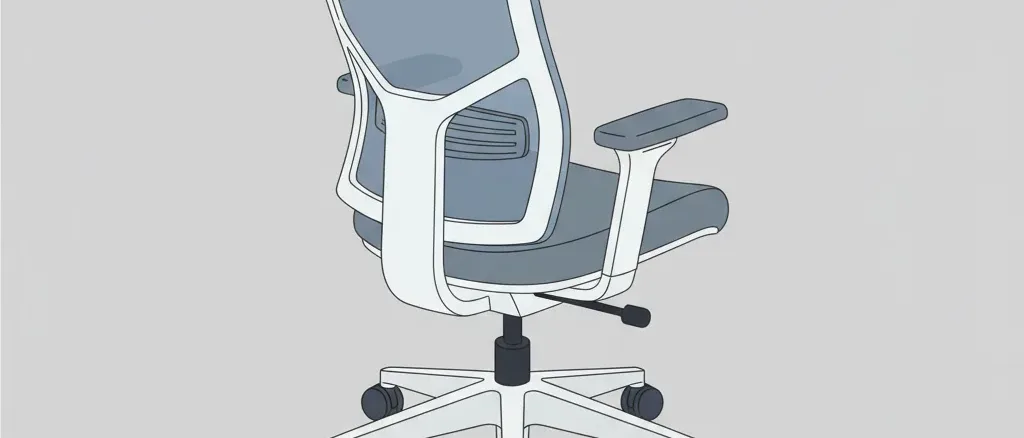
Lichamelijke inactiviteit is volgens de WHO de vierde belangrijkste risicofactor voor wereldwijde sterfte, verantwoordelijk voor ruwweg 4-5 miljoen sterfgevallen per jaar wereldwijd. Bijna niemand is er bang voor. Het komt niet voor in angstenquêtes, het speelt geen rol in rampenfilms en het neemt geen culturele ruimte in als bedreiging. «Ik zou meer moeten bewegen» valt onder kleine zelfverbetering, ergens tussen «Ik zou moeten flossen» en «Ik zou een taal moeten leren», niet onder het beheer van sterfterisico. Mensen besteden mentale energie aan zorgen over vliegtuigongelukken, haaienaanvallen en terrorisme terwijl ze meer dan 10 uur per dag zitten zonder het überhaupt als een risico te registreren. Het resultaat is een van de grootste perceptiekloven op deze site, in de onderschatte richting.
Ruwe schatting: De meeste volwassenen voelen aan dat inactiviteit ongezond is, maar classificeren het niet als een ernstig sterfterisico
Bron: redactionele intuïtie, niet gepeild
Werkelijk
HR 1,59 voor meest sedentair + minst actief versus minst sedentair + meest actief (sterfte door alle oorzaken)
volwassenen die >8 uur/dag zitten met <2,5 MET-uur/week lichaamsbeweging versus zij die <4 uur/dag zitten met >35,5 MET-uur/week
Berekening tonen
Het kerncijfer steunt op twee convergerende bewijslijnen. (1) Lee et al. 2012 (Lancet) schatte dat lichamelijke inactiviteit wereldwijd 9 % van de vroegtijdige sterfte veroorzaakt (bereik 5,1-12,5 %), overeenkomend met meer dan 5,3 miljoen van de 57 miljoen sterfgevallen in 2008. Toegepast op de Amerikaanse volwassen bevolking: ongeveer 3,4 miljoen Amerikaanse sterfgevallen per jaar, 9 % = ~306.000 aan inactiviteit toe te schrijven sterfgevallen per jaar. Tegen ~258 miljoen Amerikaanse volwassenen levert dat een jaarlijkse kans op van ~306.000/258.000.000 = 0,00119. Samengesteld over 59 jaar resterend volwassen leven: 1 - (1 - 0,00119)^59 = 0,068. Dit is echter een bevolkingsgemiddelde PAF die reeds actieve volwassenen omvat die nul bijdragen aan de teller. (2) Ekelund et al. 2016 (Lancet, 1.005.791 deelnemers) vond dat volwassenen die >8 uur/dag zitten met de laagste lichaamsbeweging (<2,5 MET-uur/week) een HR van 1,59 hadden (95% CI 1,52-1,66) voor sterfte door alle oorzaken vergeleken met de meest actieve + minst sedentaire referentiegroep. Voor de ~25 % van de Amerikaanse volwassenen die volledig inactief zijn (CDC 2024) is het extra sterfterisico gedurende het leven door inactiviteit aanzienlijk hoger dan het bevolkingsgemiddelde. We gebruiken 0,09 als puntschatting, die de PAF op bevolkingsniveau (Lee 2012) weerspiegelt, licht naar boven bijgesteld ten opzichte van de ruwe samenstelling omdat CDC-gegevens tonen dat slechts 26,4 % van de Amerikaanse volwassenen aan zowel de aerobe als de krachtrichtlijnen voldoet, wat betekent dat de meerderheid enig aan inactiviteit toe te schrijven risico draagt. Onzekerheidsbereik 0,05-0,13 beslaat het PAF-betrouwbaarheids- interval van Lee et al. (5,1-12,5 %) toegepast op de Amerikaanse sterfte.
Kanttekeningen: «Sedentaire levensstijl» is geen afzonderlijke blootstelling zoals een pakje per…
«Sedentaire levensstijl» is geen afzonderlijke blootstelling zoals een pakje per dag roken — het is een gradiënt die loopt van geen beweging tot net-niet-genoeg beweging tot richtlijn-halend tot zeer actief, met een dosis-responscurve die steil niet-lineair is aan de lage kant. Dit maakt een enkel getal op bevolkingsniveau inherent verliesgevend. De PAF van 9 % uit Lee et al. 2012 is een wereldwijd gemiddelde; het VS-specifieke cijfer kan afwijken gezien de hogere prevalentie van obesitas en meer sedentaire beroepspatronen. Confounding is de aanhoudende uitdaging: mensen die niet sporten hebben doorgaans een lagere sociaaleconomische status, hogere rookpercentages, slechtere diëten en meer chronische ziekten. De meta-analyses corrigeren voor deze factoren, maar restconfounding kan niet volledig worden uitgesloten uit observationele gegevens. De vergelijking «zitten is het nieuwe roken» is weliswaar pakkend, maar misleidend op individueel niveau: roken brengt een relatief risico van ~15-20x met zich mee voor longkanker, terwijl sedentair gedrag ~1,2-1,6x met zich meebrengt voor sterfte door alle oorzaken. De vergelijking werkt voor de populatie-attributieve fractie (beide doden miljoenen) maar niet voor de omvang van het individuele risico. Ten slotte omvat sterfte door alle oorzaken sterfgevallen die beweging niet zou hebben voorkomen — de toe te schrijven fractie isoleert het overschot, maar de grens tussen «zou toch zijn overleden» en «overleden omdat inactief» is een epidemiologisch construct, geen klinische zekerheid.
Hoe het risico varieert
Het hoofdcijfer is een gemiddelde over zeer verschillende situaties. Zo varieert de waarschijnlijkheid per scenario of context:
1 op 7,7 · 13%
Highest-risk group. Ekelund HR 1.59 applies most directly here. ~25% of US adults.
1 op 14 · 7,0%
Arem et al.: even sub-guideline activity yields HR 0.80 vs inactive. Partial protection.
1 op 50 · 2,0%
Baseline — excess mortality attributable to inactivity approaches zero. Arem HR 0.69 vs inactive.
1 op 100 · 1,0%
Maximum benefit range. Arem: no excess risk, slight additional benefit over 1x guidelines. Diminishing returns.
De lengte en tint van de balk rangschikken deze scenario's ten opzichte van elkaar, niet ten opzichte van andere risico's. De exacte kansen staan naast elk scenario.
Gerelateerde risico’s
Andere risico’s over vergelijkbare thema’s — om gerelateerde angsten te verkennen.


Eenzaamheid & gezondheid
Wat is de kans dat chronische eenzaamheid gedurende een leven ernstige gezondheidsschade veroorzaakt?

Rookloos tabak
Hoe groot is de kans dat een regelmatige gebruiker van rookloos tabak overlijdt aan een gerelateerde ziekte?


Voedselalergie op volwassen leeftijd
Hoe groot is de kans op een voedselalergie als volwassene?

Alzheimer
Hoe groot is de kans om te overlijden aan de ziekte van Alzheimer of andere dementie?

Kies vergelijking
The largest study on the subject is Ekelund et al. 2016, a harmonised meta-analysis of over one million men and women from 16 prospective cohorts, published in The Lancet. The headline: adults who sit more than eight hours per day and fall in the lowest quartile of physical activity (under 2.5 MET-hours/week, roughly zero deliberate exercise) face an all-cause mortality hazard ratio of 1.59 (95% CI 1.52-1.66) compared to those who sit less than four hours per day and exercise in the highest quartile. But the same study delivers the antidote: 60-75 minutes per day of moderate activity (brisk walking pace) reduces the hazard ratio to 1.04, statistically indistinguishable from the reference group. At the population level, Lee et al. 2012 estimated that physical inactivity causes 9% of premature mortality worldwide, or more than 5.3 million deaths per year. The WHO ranks it fourth among global mortality risk factors, behind high blood pressure, tobacco, and high blood glucose. Only 26.4% of US adults meet both aerobic and muscle-strengthening guidelines (CDC, 2024); roughly one in four does essentially nothing.
The perception gap here is enormous and runs in an unusual direction. People allocate worry to plane crashes, shark attacks, and terrorist attacks — each an individually vanishingly rare cause of death — while spending ten-plus hours a day in a chair without registering it as a mortality input at all. The phrase “sitting is the new smoking” circulates as a vague wellness slogan, but the underlying comparison is instructive in what it gets right and wrong. At the population level, both inactivity and tobacco kill millions: Lee et al.’s 9% global PAF for inactivity sits in the same single-digit range as the WHO’s estimate that tobacco use accounts for 9% of global deaths. At the individual level, the analogy collapses: smoking carries a relative risk of 15-20x for lung cancer, while the most sedentary-and-inactive group in the Ekelund data carries 1.59x for all-cause mortality. The gap between “similar population body count” and “very different individual hazard ratio” is the interesting part.
The dose-response curve is sharply non-linear in the helpful direction, which is where the number stops applying uniformly. Arem et al. 2015, pooling 661,137 participants, found that going from zero leisure-time activity to any amount below the guidelines buys a 20% mortality reduction (HR 0.80, 95% CI 0.78-0.82). Meeting the guidelines (150 min/week moderate) yields 31% reduction. Going from one to two times the guidelines adds a smaller increment, and maximum benefit plateaus at three to five times the guidelines. This means the entry is most relevant to the ~25% of US adults who do essentially nothing, where even 15 minutes of daily walking would capture most of the available mortality benefit. It is least relevant to the anxious gym-goer who sits at a desk eight hours but exercises regularly, for whom the Ekelund data show the excess risk is already near zero.
Gerelateerde weetjes
Sedentair gedrag veroorzaakt ~9% van de vroegtijdige sterfgevallen wereldwijd. De kans om te sterven bij een vliegtuigcrash is ~1 op 11 miljoen per vlucht. Je bureaustoel is statistisch gevaarlijker dan je vliegtuigstoel.
Een sedentaire leefstijl verhoogt het risico op vroegtijdige dood met 59% (HR 1,59). Chronisch slaaptekort voegt 12% toe (HR 1,12). Je bureaustoel is een grotere bedreiging dan je slechte nachtrust.
Fysieke inactiviteit is de 4e risicofactor voor mondiale sterfte, verantwoordelijk voor 9% van de vroegtijdige sterfgevallen. Het staat boven obesitas. De WHO plaatst het naast tabak, alcohol en hypertensie.
Bronnenverantwoording
Elk getal hieronder is wat elke bron rapporteerde, met het letterlijke citaat waarop we ons baseerden en hoe we tot ons cijfer kwamen. Klik op een link om rechtstreeks te verifiëren.
2/5 bronnen onafhankelijk woordelijk geverifieerd tegenover de geciteerde bron
-
[1] The Lancet (Ekelund, Steene-Johannessen, Brown, Fagerland, Owen, Powell, Bauman, Lee) — Does physical activity attenuate, or even eliminate, the detrimental association of sitting time with mortality? A harmonised meta-analysis of data from more than 1 million men and women
Does physical activity attenuate, or even eliminate, the detrimental association of sitting time with mortality? A harmonised meta-analysis of data from more than 1 million men and women- Statistiek
HR 1.59 (95% CI 1.52-1.66) for all-cause mortality in most sedentary + least active quartile; 60-75 min/day moderate activity eliminates excess sitting risk; 1,005,791 participants, 84,609 deaths- Fragment
“"High levels of moderate intensity physical activity (ie, about 60-75 min per day) seem to eliminate the increased risk of death associated with high sitting time. However, this high activity level attenuated, but did not eliminate the increased risk associated with high TV-viewing time." ”
- Brongegevens van
- 2016-07-28
- Geraadpleegd
- 2026-04-19 · gearchiveerde kopie
- Berekening
- Ekelund et al. harmonised individual-level data from 16 prospective cohort studies (13 with sitting data, 3 with TV-viewing data). Participants were stratified into quartiles of both sitting time and physical activity. The reference group was the least sedentary + most active quartile (<4 h/day sitting, >35.5 MET-h/week). The highest-risk group (>8 h/day sitting, <2.5 MET-h/week) had HR 1.59. Critically, those sitting >8 h/day but in the most active quartile (>35.5 MET-h/week, roughly 60-75 min/day of moderate activity) had HR 1.04 (95% CI 0.99-1.10), statistically indistinguishable from the reference. This demonstrates that high physical activity can fully offset the mortality risk of prolonged sitting. The HR 1.59 is used as the native display because it captures the worst-case combination most relevant to completely inactive office workers.
-
[2] The Lancet (Lee, Shiroma, Lobelo, Puska, Blair, Katzmarzyk) — Effect of physical inactivity on major non-communicable diseases worldwide: an analysis of burden of disease and life expectancy Geverifieerd
Effect of physical inactivity on major non-communicable diseases worldwide: an analysis of burden of disease and life expectancy- Statistiek
Physical inactivity causes 9% of premature mortality worldwide (range 5.1-12.5%); 6% of CHD, 7% of type 2 diabetes, 10% of breast cancer, 10% of colon cancer; elimination would increase global life expectancy by 0.68 years (0.41-0.95)- Fragment
“"We estimated that physical inactivity causes 6% of the burden of disease from coronary heart disease, 7% of type 2 diabetes, 10% of breast cancer, and 10% of colon cancer. Inactivity causes 9% of premature mortality, or more than 5.3 of the 57 million deaths that occurred worldwide in 2008." ”
- Brongegevens van
- 2012-07-21
- Geraadpleegd
- 2026-04-19
- Verificatie
- Fragment onafhankelijk opnieuw opgehaald en woord voor woord bevestigd tegenover de geciteerde bron tijdens onze onderbouwingsaudit.
- Berekening
- Lee et al. computed population attributable fractions (PAFs) by comparing disease incidence in inactive vs active populations across 122 countries. The 9% PAF for premature mortality is the primary basis for the normalized lifetime estimate. Applied to US mortality: ~3.4 million deaths/year x 0.09 = ~306,000 inactivity-attributable deaths per year. Against 258 million US adults, annual hazard = 0.00119. Over 59 years: 1 - (1 - 0.00119)^59 = 0.068. The point estimate of 0.09 is slightly above this raw compounding because only 26.4% of US adults meet both aerobic and strength guidelines (CDC 2024), meaning the US-specific PAF may be at the higher end of Lee's global range.
-
[3] JAMA Internal Medicine (Arem, Moore, Patel, Hartge, de Gonzalez, Visvanathan, et al.) — Leisure Time Physical Activity and Mortality: A Detailed Pooled Analysis of the Dose-Response Relationship
Leisure Time Physical Activity and Mortality: A Detailed Pooled Analysis of the Dose-Response Relationship- Statistiek
HR 0.80 (95% CI 0.78-0.82) for those doing less than recommended 7.5 MET-h/week vs none; HR 0.69 (0.67-0.70) at 1-2x guidelines; maximum benefit at 3-5x guidelines- Fragment
“"Compared to those reporting no leisure-time physical activity, we observed a 20% lower mortality risk among those performing less than the recommended minimum of 7.5 metabolic equivalent hours per week." ”
- Brongegevens van
- 2015-06-01
- Geraadpleegd
- 2026-04-19 · gearchiveerde kopie
- Berekening
- Arem et al. pooled six prospective cohort studies with 661,137 participants and 116,686 deaths over a median 14.2 years of follow-up. The key finding for this entry is the steep dose-response at the low end: going from zero activity to sub-guideline activity (less than 150 min/week moderate or 75 min/week vigorous) buys a 20% mortality reduction (HR 0.80). Meeting the guidelines (7.5-15 MET-h/week) yields HR 0.69 (31% reduction). Maximum benefit plateaus at 3-5x guidelines, with no excess risk even at 10x. This non-linear curve means the biggest marginal gain comes from moving off zero, not from optimizing an already-active regimen.
-
[4] CDC National Center for Health Statistics — Aerobic Physical Activity Among Adults Age 18 and Older: United States, 2024
Aerobic Physical Activity Among Adults Age 18 and Older: United States, 2024- Statistiek
47.2% of US adults met aerobic guidelines in 2024; 26.4% met both aerobic and muscle-strengthening guidelines; rates vary by sex, disability status, weight status- Fragment
“"In 2024, 47.2% of adults age 18 and older met the federal guidelines for aerobic physical activity. When broken down by sex, 52.3% of men and 42.4% of women met the standards." ”
- Brongegevens van
- 2025-04-07
- Geraadpleegd
- 2026-04-19 · gearchiveerde kopie
- Berekening
- CDC NCHS Data Brief 555 provides the most recent national prevalence data on physical activity. The 26.4% meeting both guidelines means roughly 73.6% of US adults carry some degree of inactivity-attributable risk. The ~25% who are completely inactive (no leisure-time physical activity) are the population most directly described by the Ekelund HR 1.59 estimate. These prevalence figures contextualize the PAF: if three-quarters of US adults fail to meet full guidelines, the population-level mortality burden of inactivity is substantial.
-
[5] World Health Organization — Global Recommendations on Physical Activity for Health Geverifieerd
Global Recommendations on Physical Activity for Health- Statistiek
Physical inactivity is the fourth leading risk factor for global mortality (6% of deaths globally), following high blood pressure (13%), tobacco use (9%), and high blood glucose (6%)- Fragment
“"Physical inactivity has been identified as the fourth leading risk factor for global mortality (6% of deaths globally). This follows high blood pressure (13%), tobacco use (9%) and high blood glucose (6%)." ”
- Brongegevens van
- 2010-01-01
- Geraadpleegd
- 2026-07-03 · gearchiveerde kopie
- Verificatie
- Fragment onafhankelijk opnieuw opgehaald en woord voor woord bevestigd tegenover de geciteerde bron tijdens onze onderbouwingsaudit.
- Berekening
- WHO's global risk-factor ranking, cited in the body text to support the "fourth leading risk factor" framing already present in perceived.description. Grounds the specific ranking (behind high blood pressure, tobacco, and high blood glucose) used in the second paragraph of the body prose. Not used in the native/normalized lifetime-probability calculation, which is derived from Lee et al. 2012 and Ekelund et al. 2016 above.