Качество доказательств 4.75/5
Оценка по восьми измерениям согласно рубрике качества . Каждое измерение оценивается от 1 до 5.
- D1 Обоснованность источниками
- 5/5
- D2 Авторитетность источника
- 5/5
- D3 Арифметика
- 3/5
- D4 Неопределённость
- 5/5
- D5 Охват
- 5/5
- D6 Текст
- 5/5
- D7 Честность восприятия
- 5/5
- D8 Полнота оговорок
- 5/5
≈ Так же вероятно, как
Воспринимаемый
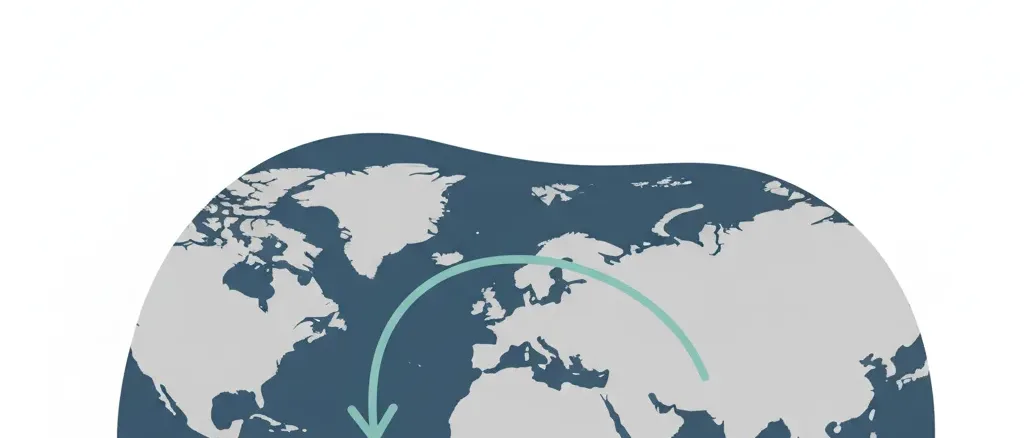
Атлантическая меридиональная опрокидывающая циркуляция — не расхожее выражение, и её потенциальный коллапс лишь недавно приобрёл заметность в массовом сознании. Популярное освещение обычно колеблется между отмахиванием («учёные говорят, что океанический конвейер замедляется») и катастрофизмом (заголовки, отсылающие к фильму «Послезавтра», чьё изображение мгновенного замерзания было научной фантастикой). Концепция точек невозврата океанической циркуляции вошла в более широкое общественное сознание после доклада МГЭИК 2021 года и вновь после спорной статьи 2023 года, предсказавшей возможный коллапс к середине века. Обзор американских страхов Чапменского университета не отслеживает осведомлённость об AMOC отдельно; более широкие данные о климатической тревоге показывают, что примерно 48 % американцев сообщают, что боятся или очень боятся глобального потепления и изменения климата (Chapman, 2024), но отдельные точки невозврата, такие как AMOC, не выделяются. Этот риск находится где-то между активно опасаемым и в значительной мере неосознаваемым.
Грубая оценка: ~47,7 % взрослых американцев сообщают, что «боятся» или «очень боятся» глобального потепления и изменения климата в целом (Обзор Чапменского университета, Волна 10, 2024) — данных опросов именно по AMOC не существует
Фактический
~5 % вероятность резкого коллапса AMOC до 2100 года (МГЭИК «весьма маловероятно» = 0–10 %, согласуется с SROCC 2019 / AR6)
Население мира — коллапс AMOC является событием планетарного масштаба без вероятности, специфичной для конкретной популяции
Показать вычисления
МГЭИК AR6 WG1 (2021) оценила, что AMOC «весьма вероятно» ослабнет в течение XXI века, со «средней уверенностью в том, что ослабление не будет включать резкий коллапс до 2100 года». Резюме для политиков МГЭИК SROCC (2019) (B.2.7) — это оценка, которая применяет калиброванный термин вероятности «весьма маловероятно (средняя уверенность)» к коллапсу AMOC. Калиброванный язык МГЭИК: «весьма маловероятно» = вероятность 0–10 %. Использование 5 % как середины этого диапазона даёт заглавную цифру. Это вероятность события цивилизационного масштаба, а не личная вероятность смерти: коллапс AMOC не убьёт никого мгновенно, но запустит каскад последствий (падение зимних температур в Европе на 5-15 °C, ускорение подъёма уровня моря на восточном побережье США, нарушение тропического пояса осадков), чья косвенная смертность за десятилетия была бы существенной. Исследования на основе наблюдений дают значительно более высокие оценки: Ditlevsen and Ditlevsen (2023, Nature Communications) вывели центральную дату коллапса 2057 год с 95 % доверительным интервалом 2025-2095 из статистических сигналов раннего предупреждения в косвенных данных температуры поверхности моря, что подразумевает вероятность >50 % в пределах 50-летней взрослой жизни. Smolders et al. (2024) оценили вероятность коллапса AMOC до 2050 года в 59 ± 17 %, используя физические индикаторы солёности. Оба подхода оспариваются по методологическим основаниям несколькими старшими океанографами, а исследование 2025 года на ансамбле из 34 моделей (Baker et al., Nature) обнаружило, что AMOC устойчив к коллапсу при всех проверенных сценариях воздействия. Широкая полоса неопределённости (1-40 %) отражает это подлинное научное разногласие, а не просто статистическую неопределённость вокруг известного распределения. Уточнения 2025 года (добавлены 2026-06-14) заостряют вопрос ВРЕМЕНИ, не разрешая вопрос вероятности: van Westen et al. (2025, JGR Oceans) помещают начало коллапса около 2063 года (2026-2095, 25-й–57-й процентили) при SSP2-4.5 с порогом невозврата около ~2,5 °C, тогда как Drijfhout et al. (2025, ERL) находят, что в расширениях CMIP6 полное прекращение северного опрокидывания разворачивается после 2100 года на протяжении 50-100 лет, даже если предопределено раньше. Эти работы уточняют центральную оценку начала и подкрепляют различие между началом и реализацией, но ни одна не является переоценкой официального агентства, поэтому заглавная цифра 5 %, опирающаяся на МГЭИК, и полоса 1-40 % сохраняются без изменений.
Оговорки: Заглавные 5 % следуют калиброванному языку МГЭИК «весьма маловероятно» (вероятно…
Заглавные 5 % следуют калиброванному языку МГЭИК «весьма маловероятно» (вероятность 0-10 %, средняя уверенность) — термин «весьма маловероятно (средняя уверенность)» для коллапса AMOC исходит из Резюме для политиков МГЭИК SROCC (2019) (B.2.7), а AR6 WG1 (2021) переформулировал это как «средняя уверенность в том, что ослабление не будет включать резкий коллапс до 2100 года». Заглавная цифра представляет опору на научный консенсус, а не полный диапазон опубликованных оценок. Исследования на основе наблюдений (Ditlevsen 2023; Smolders et al. 2024) дают существенно более высокие оценки — 50-60 % вероятность коллапса к середине века — но эти методы оспариваются по репрезентативности косвенных данных, длине временных рядов и модельным допущениям. Исследование Baker et al. 2025 на ансамбле из 34 моделей аргументирует устойчивость AMOC при всех проверенных сценариях, поддерживая оценку МГЭИК «весьма маловероятно». Научная дискуссия действительно не разрешена; полоса неопределённости (1-40 %) отражает это, а не просто статистическую неопределённость вокруг известного параметра. «Коллапс» AMOC в этой записи означает резкое, самоподдерживающееся снижение до драматически ослабленного состояния — а не постепенное ослабление (сейчас оцениваемое как «весьма вероятное»), которое уже идёт. Последствия коллапса разворачивались бы годами и десятилетиями, а не за одну ночь: зимние температуры в Европе могли бы упасть на 5-15 °C на протяжении 10-30 лет, уровень моря на восточном побережье США поднялся бы дополнительно на 10-50 см сверх базовых прогнозов, а тропические режимы осадков существенно сместились бы. Показатель за всю жизнь — это вероятность того, что событие запущено, а не того, что его последствия полностью реализованы в течение жизни рассматриваемого взрослого. Два исследования 2025 года заостряют вопрос времени, не сдвигая заглавную цифру. Van Westen et al. (2025, JGR Oceans), анализируя 25 климатических моделей, оценивают, что коллапс AMOC мог бы начаться к 2063 году (диапазон 2026-2095) при сценарии промежуточных выбросов и к 2055 году при высоких выбросах, с порогом невозврата около ~2,5 °C глобального потепления — но подчёркивают, что, начавшись, достижение существенно более слабого состояния занимает более 100 лет. Drijfhout et al. (2025, Environmental Research Letters), изучая симуляции CMIP6, продлённые за пределы 2100 года, находят, что полное прекращение северного глубинного опрокидывания проявляется после 2100 года во всех моделях с высокими выбросами (SSP5-8.5), доведённых так далеко, и в 37 % моделей с промежуточными выбросами к 2300 году. Эти работы уточняют центральную оценку начала относительно тревоги единичного исследования 2023 года, но подкрепляют, а не опровергают приведённую выше рамку: начало в середине века было бы предопределением, а не завершённым коллапсом в течение жизни ныне живущего взрослого.
Связанные риски
Другие риски на схожие темы — для изучения связанных страхов.
Точка невозврата WAIS
Каковы шансы прохождения точки невозврата Западно-Антарктического ледникового щита при вашей жизни?

Катастрофа от правительства
Каковы шансы того, что экстремистское политическое правительство катастрофически разрушит вашу страну?






Выбрать сравниваемый
The Atlantic Meridional Overturning Circulation is the vast network of ocean currents that transports warm surface water northward through the Atlantic and returns cold, deep water southward — the system responsible for northwestern Europe’s mild climate relative to its latitude. IPCC AR6 (2021) assessed that AMOC will “very likely” decline over the 21st century, with “medium confidence that the decline will not involve an abrupt collapse before 2100.” The earlier IPCC SROCC (2019) is the assessment that applied the calibrated “very unlikely (medium confidence)” likelihood term to an AMOC collapse — where “very unlikely” denotes a 0-10% probability. Using the midpoint of that calibrated range gives a ~5% lifetime probability of abrupt collapse before 2100. Caesar and colleagues (2018, Nature) documented that AMOC has already weakened by approximately 15% since the mid-twentieth century, using an independent sea-surface temperature fingerprinting approach that is consistent with RAPID array direct measurements begun in 2004.
The scientific debate is unusually polarised. Observation-based early-warning studies (Boers 2021, Nature Climate Change; Ditlevsen 2023, Nature Communications; van Westen 2024, Science Advances) identify statistical and physical signals consistent with AMOC approaching a tipping threshold, with Ditlevsen’s contested analysis predicting collapse most likely between 2025 and 2095. These findings imply a much higher probability than the IPCC consensus — in some estimates, 50-60% before mid-century. The counterargument came in February 2025 from Baker et al. (Nature), whose 34-model ensemble found AMOC resilient to collapse under all tested forcing scenarios, with Southern Ocean wind-driven upwelling sustaining the circulation even under extreme greenhouse gas concentrations. The IPCC’s “very unlikely” assessment rests primarily on this model-ensemble evidence. Both camps are publishing in leading peer-reviewed journals; the discrepancy is not a matter of one side being wrong in an obvious way.
Should AMOC collapse occur, the consequences within the following few decades would be substantial. Van Westen et al.’s consequence modelling projects European winter temperature drops of 5-15°C across northwestern Europe, with London’s average winter temperature falling from roughly 7°C to near 2°C and Oslo’s to well below -10°C. Sea level on the US East Coast would rise by an additional 10-50 cm above baseline sea level rise projections, as the ocean surface that AMOC currently depresses would rebound northward. The Amazon rainforest would face additional drying as tropical rainfall patterns shift. These are not immediate effects but decadal-to-century timescale consequences of a threshold crossing that, if it occurs, would likely be irreversible on any timescale relevant to human planning.
Связанные факты
МГЭИК AR6 оценивает резкий коллапс AMOC до 2100 года как «крайне маловероятный», с вероятностью около 5 процентов. Ряд исследований на основе наблюдений утверждает, что шансы выше, а диапазон неопределённости широк.
Реестр утверждений
Каждое число ниже — это то, что сообщил источник, с дословной цитатой, на которую мы опирались, и тем, как мы пришли к нашей цифре. Нажмите на ссылку, чтобы проверить самостоятельно.
-
[1] Intergovernmental Panel on Climate Change (IPCC), Working Group I, Sixth Assessment Report — Climate Change 2021: The Physical Science Basis — Chapter 9: Ocean, Cryosphere and Sea Level Change
Climate Change 2021: The Physical Science Basis — Chapter 9: Ocean, Cryosphere and Sea Level ChangeSee all 2 Likelier entries citing this source →
- Статистика
AMOC will 'very likely' decline over the 21st century for all SSP scenarios; there is 'medium confidence' that the decline will not involve an abrupt collapse before 2100- Выдержка
“"The Atlantic Meridional Overturning Circulation (AMOC) will very likely decline over the 21st century for all SSP scenarios. There is medium confidence that the decline will not involve an abrupt collapse before 2100." ”
- Данные источника:
- 2021-08-09
- Дата обращения
- 2026-05-09 · архивная копия
- Расчёт
- AR6 WG1 Ch9 does not itself assign a numerical probability, nor does it use the "very unlikely" likelihood term for AMOC collapse — it states only "medium confidence that the decline will not involve an abrupt collapse before 2100." The "very unlikely (medium confidence)" characterization of an AMOC collapse is the IPCC SROCC (2019) SPM B.2.7 assessment (see the SROCC source below), which AR6 Ch9 is consistent with. Under the IPCC calibrated-language scale "very unlikely" = 0-10% probability; 5% is taken as the midpoint of that SROCC-defined range for the headline. The IPCC does not give a numerical probability; 5% is the author's interpretation of the calibrated-language midpoint. The 59-year adult lifetime window (age 18 to 77) maps roughly onto the "before 2100" horizon.
-
[2] Intergovernmental Panel on Climate Change (IPCC), SROCC 2019 — Special Report on the Ocean and Cryosphere in a Changing Climate — Summary for Policymakers (section B.2.7)
Special Report on the Ocean and Cryosphere in a Changing Climate — Summary for Policymakers (section B.2.7)- Статистика
AMOC is projected to weaken in the 21st century under all RCPs ('very likely'), although a collapse is 'very unlikely' (medium confidence)- Выдержка
“"The AMOC is projected to weaken in the 21st century under all RCPs (very likely), although a collapse is very unlikely (medium confidence)." ”
- Данные источника:
- 2019-09-25
- Дата обращения
- 2026-07-11 · архивная копия
- Расчёт
- This SROCC SPM statement (B.2.7) is the IPCC assessment that actually applies the "very unlikely (medium confidence)" likelihood term to an AMOC collapse. It is the grounding for the headline: under IPCC calibrated language "very unlikely" = 0-10% probability, and 5% is taken as the midpoint of that range. AR6 WG1 Ch9 (2021) restated this as "medium confidence that the decline will not involve an abrupt collapse before 2100," consistent with SROCC but without repeating the "very unlikely" term. Neither report gives a numerical probability; the 5% midpoint is the author's interpretation of the SROCC-stated calibrated-language range.
-
[3] Nature — Caesar, Rahmstorf et al., 2018 — Observed fingerprint of a weakening Atlantic Ocean overturning circulation
Observed fingerprint of a weakening Atlantic Ocean overturning circulation- Статистика
AMOC has weakened by approximately 3 ± 1 sverdrups (around 15%) since the mid-20th century, revealed by characteristic sea-surface temperature fingerprint- Выдержка
“"The AMOC has weakened by about 3 ± 1 sverdrups (around 15 per cent) since the mid-twentieth century, revealed by a characteristic spatial and seasonal sea-surface temperature 'fingerprint' — consisting of a pattern of cooling in the subpolar Atlantic Ocean and warming in the Gulf Stream region." ”
- Данные источника:
- 2018-04-11
- Дата обращения
- 2026-05-09 · архивная копия
- Расчёт
- Caesar et al. 2018 is the observational foundation for the AMOC weakening narrative. The 15% weakening since the mid-20th century is separate from the collapse-probability question — weakening and collapse are different states, and the IPCC projects continued weakening with high confidence even while assessing collapse as very unlikely. This source establishes that AMOC is not stable at its current state, providing the background against which collapse probability must be assessed.
- Независимость
- Caesar et al. use an independent SST-based fingerprinting approach developed separately from the RAPID array direct measurements (which began in 2004) and from the statistical early-warning methods of Boers 2021 and Ditlevsen 2023. The three methodologies corroborate each other on the weakening trend.
-
[4] Nature Communications — Ditlevsen and Ditlevsen, 2023 — Warning of a forthcoming collapse of the Atlantic meridional overturning circulation
Warning of a forthcoming collapse of the Atlantic meridional overturning circulation- Статистика
Statistical early-warning signals in SST proxies predict central AMOC collapse in 2057 (95% CI: 2025-2095); method is contested by multiple senior oceanographers- Выдержка
“"Data-driven estimators for the time of tipping predict a potential AMOC collapse mid-century under the current emission scenario, with a 95% confidence interval of 2025–2095." ”
- Данные источника:
- 2023-07-25
- Дата обращения
- 2026-05-09 · архивная копия
- Расчёт
- Ditlevsen 2023 derives its estimate from statistical early-warning signals (variance and autocorrelation growth) in North Atlantic SST proxies interpreted as fingerprints of approaching instability. The method is contested: Prof. Penny Holliday (National Oceanography Centre) stated "sea surface temperature of the North Atlantic subpolar gyre is not a clear indicator of the state of the AMOC"; Prof. Niklas Boers (TU Munich) argued "uncertainties in the heavily oversimplified model assumptions... are too high"; Dr. Levke Caesar (Univ. Bremen) stated "the resulting time series are too short." This source represents the upper bound of the scientific plausibility range and is not the headline figure, but it anchors the upper end of the uncertainty band.
- Независимость
- Ditlevsen 2023 is methodologically distinct from the IPCC's model-ensemble approach and from Caesar 2018's SST fingerprinting. It is included to represent the range of scientific opinion rather than as an independent confirmation of any single estimate.
-
[5] Science Advances — van Westen, Kliphuis and Dijkstra, 2024 — Physics-based early warning signal shows that AMOC is on tipping course
Physics-based early warning signal shows that AMOC is on tipping course- Статистика
Freshwater transport indicator (F_ovS) shows significant negative trend over past 40 years, consistent with AMOC approaching tipping point; European temperature drops of 5-15°C projected in collapse scenario- Выдержка
“"Reanalysis products indicate that the present-day AMOC is on route to tipping... Temperature trends exceed 1°C per decade across northwestern Europe during collapse." ”
- Данные источника:
- 2024-02-09
- Дата обращения
- 2026-05-09 · архивная копия
- Расчёт
- Van Westen 2024 uses a physics-based indicator (minimum of AMOC-induced freshwater transport, F_ovS) rather than statistical proxies. It finds a statistically significant negative trend of -1.20 mSv/year over the past 40 years, consistent with approach to tipping, but explicitly states inability to determine when tipping would occur. The consequence model run shows London's average winter temperature falling to ~1.9°C (from ~7°C today) and Oslo's to -16.5°C. These are consequences of full collapse, not of the current trajectory in isolation.
- Независимость
- Van Westen et al. use a different indicator (F_ovS from ocean reanalysis products) than Ditlevsen 2023 (SST statistical signals) or Caesar 2018 (SST fingerprinting), providing genuinely independent physics-based evidence for AMOC approaching instability.
-
[6] Nature — Baker et al. (Met Office and University of Exeter), 2025 — Continued Atlantic overturning circulation even under climate extremes
Continued Atlantic overturning circulation even under climate extremes- Статистика
34-model ensemble finds AMOC resilient to collapse under all tested greenhouse gas and freshwater forcing scenarios; Southern Ocean wind-driven upwelling sustains circulation- Выдержка
“"The AMOC is resilient to extreme greenhouse gas and North Atlantic freshwater forcings across 34 climate models." ”
- Данные источника:
- 2025-02-19
- Дата обращения
- 2026-05-09 · архивная копия
- Расчёт
- Baker et al. 2025 is the primary model-based counterargument. The 34-model ensemble finds that Southern Ocean upwelling — not captured in the observation-based early-warning studies — sustains AMOC circulation even under extreme forcing. This mechanism explains why most CMIP climate models do not show AMOC collapse this century, which IPCC AR6 uses as the primary basis for its "very unlikely" assessment. Baker 2025 is cited here as a materially important dissenting view that anchors the lower end of the uncertainty range. The discrepancy between the observation-based (Ditlevsen, Boers, van Westen) and model-based (Baker, IPCC) views is the fundamental unresolved debate in AMOC science.
- Независимость
- Baker et al. is methodologically opposed to the observation-based early-warning literature — it uses fully coupled climate models rather than statistical signals — and its conclusion directly contradicts the observation-based studies. Both methodologies are active areas of peer-reviewed research; neither has been refuted.
-
[7] Journal of Geophysical Research: Oceans — van Westen, Kliphuis and Dijkstra, 2025 — Physics-Based Indicators for the Onset of an AMOC Collapse Under Climate Change
Physics-Based Indicators for the Onset of an AMOC Collapse Under Climate Change- Статистика
25-model analysis estimates AMOC collapse could begin by 2063 (2026-2095, 25th-57th percentiles) under SSP2-4.5, or by 2055 (2023-2076) under SSP5-8.5; tipping threshold near ~2.5C global warming- Выдержка
“"An analysis consisting of 25 different climate models shows that the AMOC could begin to collapse by 2063 (from 2026 to 2095, 25th to 57th percentiles) under an intermediate emission scenario (SSP2-4.5), or by 2055 (from 2023 to 2076, 25th to 75th percentiles) under a high-end emission scenario (SSP5-8.5). When the AMOC collapses, the Northwestern European climate changes drastically and this will likely induce severe societal impacts." ”
- Данные источника:
- 2025-08-24
- Дата обращения
- 2026-06-14 · архивная копия
- Расчёт
- Van Westen et al. 2025 (JGR Oceans, Vol 130 Issue 8) develops a buoyancy-flux physics-based indicator for the ONSET of AMOC tipping — the moment the system becomes committed, not the moment a weakened state is reached. The paper's body places the multimodel-mean tipping threshold near ~2.5C of global warming above pre-industrial (the abstract states the onset years; the 2.5C / +2.48C figure is in the results text, paraphrased here, not in the verbatim excerpt). Critically, the paper states that once collapse begins it "takes more than 100 years to reach a substantially weaker state" — so a ~2063 onset under SSP2-4.5 describes a committed trajectory, not consequences realised within a focal adult's lifetime. This refines collapse TIMING relative to the contested 2023 single-study alarm but does not itself yield a numerical lifetime probability, so the 5% headline is unchanged; the result is recorded as a caveat and an assumptions addendum.
- Независимость
- Van Westen 2025 (JGR) uses a buoyancy-flux onset indicator across 25 CMIP-class models — distinct from both the SSP-extension shutdown framing of the 2025 ERL CMIP6 study and the F_ovS reanalysis indicator of van Westen 2024 (Science Advances). It sits between the observation-based alarm and the model-based resilience views.