Качество доказательств 4.63/5
Оценка по восьми измерениям согласно рубрике качества . Каждое измерение оценивается от 1 до 5.
- D1 Обоснованность источниками
- 5/5
- D2 Авторитетность источника
- 5/5
- D3 Арифметика
- 4/5
- D4 Неопределённость
- 4/5
- D5 Охват
- 5/5
- D6 Текст
- 5/5
- D7 Честность восприятия
- 4/5
- D8 Полнота оговорок
- 5/5
● ваши факторы — нажмите на этот риск ▾ для отображения
- Ваши факторы
≈ Так же вероятно, как

Воспринимаемый
Кружение детей за руки, совместное катание с горки и катание на плечах ощущаются как игривые и безопасные — травма кажется маловероятным исходом обычной совместной игры. Эти занятия достаточно распространены, чтобы большинство родителей проделывали их многократно без происшествий, что укрепляет интуицию, будто вред по сути гипотетичен. Конкретные механизмы, которыми каждое занятие может причинить травму, широко не известны.
Источник: редакционная интуиция, не опрос
Фактический
~6 на 10 000 детей младше 6 лет в год попадают в отделение неотложной помощи с «локтем няньки» (подвывих головки лучевой кости)
Дети США в возрасте 0–5 лет
Ср. встреч за жизнь: ~59 (1/yr × 59 yr)
Показать вычисления
Основанный на NEISS показатель обращений в отделение неотложной помощи — 6 на 10 000 детей ≤6 лет в год (Rangan et al. 2021) — это нижняя граница: он учитывает только случаи, пролеченные в отделении неотложной помощи. Оценки на уровне сообщества из клинической литературы (Абердин, 1990, широко цитируется) относят истинную частоту событий примерно к 1% в год (10 на 1 000) для детей в окне пикового риска. Пик риска — возраст 1–4 года (примерно 3 года значимого воздействия); кольцевая связка заметно укрепляется после 5 лет. Центральная оценка: 1% × 3 года = 3%, с нижней границей по показателю только NEISS (0,6/1 000 × 3 = 0,18%, округлено до 0,012 для консервативной односторонней нижней границы) и верхней границей с учётом лёгкой недодиагностики (2% в год × 3 = 6%). Область охвата: subgroup_lifetime (раннее детство, а не взрослая жизнь).
Оговорки: «Локоть няньки» обычно лечится простым ручным вправлением, которое занимает секу…
«Локоть няньки» обычно лечится простым ручным вправлением, которое занимает секунды и не требует седации, гипса или анестезии; большинство детей возобновляют нормальное использование руки в течение нескольких минут после вправления. Это состояние не связано с настоящим переломом. Переломы при катании с горки на коленях в абсолютных числах реже, но клинически более значимы — перелом большеберцовой кости обычно требует гипса на 3–6 недель. Эти занятия не опасны сами по себе в любой отдельный раз: риск за один эпизод низок, и большинство детей, которых кружат за руки или катают с горки на коленях у родителя, никогда не получат травмы. Главный фактор риска «локтя няньки» — возраст младше 3 лет, когда головка лучевой кости ещё не полностью развита. Катание на плечах и на спине несёт риск падения, если взрослый теряет равновесие, но никакого конкретного популяционного показателя травматизма для этих занятий надёжно не установлено.
Связанные риски
Другие риски на схожие темы — для изучения связанных страхов.

Травма головы при падении
Какова вероятность того, что ребёнок получит серьёзную травму головы или глаза в результате падения?
Травма от игрушки, скорая (ребёнок)
Какова вероятность того, что ребёнку потребуется экстренная помощь из-за травмы, связанной с игрушкой?
Падение с лестницы малыш
Какова вероятность того, что малыш получит серьёзную травму при падении с лестницы?

Диагноз аутизма
Каковы шансы того, что у вашего ребенка будет диагностировано расстройство аутистического спектра?

Осложнения кесарева сечения
Каковы шансы серьезных осложнений при кесаревом сечении по сравнению с вагинальными родами?
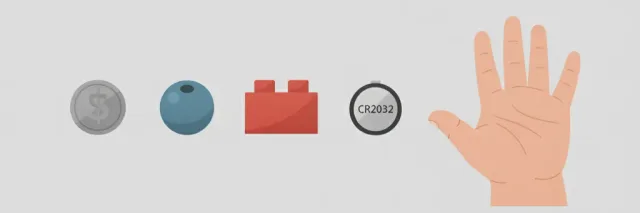
Ребёнок глотает предмет (скорая)
Какова вероятность того, что маленький ребёнок проглотит предмет и ему понадобится медицинская помощь?
Смерть при совместном сне
Каковы шансы смерти младенца от совместного сна или сна в одной постели?
Выбрать сравниваемый
The most thoroughly documented injury from common childhood play activities is nursemaid’s elbow (radial head subluxation) — a partial dislocation of the elbow caused when the arm is pulled sharply or swung while the forearm is pronated. In US emergency departments, children aged six and under present with this injury at a rate of approximately 6 per 10,000 per year (NEISS data, 2004–2018), though this is a floor: community studies place the true incidence closer to 1% per year across the peak-risk window of ages one to four, since many reductions occur at primary care or, after the first episode, at home. The condition accounts for more than 20% of upper extremity injuries in young children and is one of the most common reasons a toddler is brought to an emergency department with a painful or unmoving arm. Swinging a child by the hands or wrists is an explicitly named mechanism alongside pulling and lifting by one arm.
A less widely known but better-controlled finding concerns the family slide. A NEISS-based study of 12,686 playground slide injuries in children aged five and under (2002–2015, Jennissen et al., Injury Epidemiology 2018) found that children riding on an adult’s lap had 49.5 times higher odds of a lower leg or ankle fracture than children sliding solo (OR 49.5, 95% CI 31.7–77.4). The mechanism is counterintuitive: the slide looks safe because the parent is behind and in control, but if the child’s foot catches the edge or inner wall of the slide chute, the adult’s momentum continues forward while the child’s lower leg is held in place, generating a torsional force sufficient to fracture the tibia. An earlier case series (Gaffney, Journal of Pediatric Orthopedics 2009) found that all eight tibia fractures sustained on playground slides in an eleven-month review occurred while the child was on an adult’s lap — none occurred during independent sliding.
Risk for nursemaid’s elbow is concentrated in the first three years of life: the annular ligament is immature during this period, and the radial head can slip beneath it with traction forces that would be inconsequential in an older child. After age five, the ligament strengthens markedly and the injury becomes rare. Once the subluxation occurs, the recurrence rate is approximately 20%, meaning the annular ligament remains a weak point until it matures. Treatment is a closed reduction — a specific rotation of the forearm performed in seconds without sedation — and most children resume normal arm use within minutes. For piggyback or shoulder-carry, the documented risk is primarily from falls if the adult loses balance; no injury-specific epidemiology comparable to nursemaid’s elbow data exists for this activity.
Связанные факты
Примерно у 3 из 100 детей до 6 лет случается «локоть няньки» — подвывих головки лучевой кости из-за резкого рывка за руку при раскачивании или подъёме. Выглядит пугающе, но врач обычно вправляет его за секунды, без каких-либо последствий.
Реестр утверждений
Каждое число ниже — это то, что сообщил источник, с дословной цитатой, на которую мы опирались, и тем, как мы пришли к нашей цифре. Нажмите на ссылку, чтобы проверить самостоятельно.
3/4 источников независимо дословно сверены с указанным источником
-
[1] European Journal of Orthopaedic Surgery & Traumatology — Trends and epidemiology of radial head subluxation in the United States from 2004 to 2018 Проверено
Trends and epidemiology of radial head subluxation in the United States from 2004 to 2018- Статистика
6.03 per 10,000 children ≤6 years per year (ED-treated); ~253,578 total cases 2004–2018- Выдержка
“"The overall annual rate of RHS per 10,000 children ≤ 6 years was 6.03 (95% CI = 4.85–7.58). The rate significantly increased from 5.18 (95% CI 2.96–7.39) in 2004 to 7.69 (95% CI = 4.63–10.75) in 2018. An estimated total 253,578 children 6 years or younger were treated for RHS." ”
- Данные источника:
- 2021-08-01
- Дата обращения
- 2026-05-02 · архивная копия
- Проверка
- Выдержка независимо повторно загружена и подтверждена слово в слово по указанному источнику в ходе нашей проверки достоверности.
- Расчёт
- NEISS national sample, 2004–2018. The rate of 6.03 per 10,000/year is used as the native numerator (6) per 10,000 denominator. This is an ED-treated rate only; community-level incidence (including primary care and self-resolved reductions) is higher. Pulling mechanisms accounted for 36.2% of cases, swinging and similar arm-traction mechanisms for the remainder alongside falls. The native figure intentionally uses the conservative ED rate; the normalized central estimate uses the higher 1%/year community-level figure (Aberdeen-origin, cited in clinical literature) over 3 peak-risk years.
-
[2] Injury Epidemiology (Springer) — Playground slide-related injuries in preschool children: increased risk of lower extremity injuries when riding on laps
Playground slide-related injuries in preschool children: increased risk of lower extremity injuries when riding on laps- Статистика
OR 49.5 (95% CI 31.7–77.4) for lower leg/ankle fracture when child rides on adult's lap vs. riding solo- Выдержка
“"When a young child is going down a slide on the lap of another person, their foot may catch on the slide's surfaces including the inner side or bottom of the slide. The lower leg can then twist and be pulled backward as both proceed down the slide. Children identified as riding on another person's lap had 43 times higher odds (OR 43.0, 95% CI 32.0–58.0) of lower extremity injury versus other body parts, and 49.5 times higher odds (95% CI 31.7–77.4) of lower leg/ankle fracture compared with other fracture locations." ”
- Данные источника:
- 2018-04-09
- Дата обращения
- 2026-05-02 · архивная копия
- Расчёт
- NEISS-based study of 12,686 playground slide injuries in children ≤5 years (2002–2015), estimating >350,000 total US slide injuries in the period. Lap-riding was documented in 644 cases (5% of total), with infants most affected (34% of under-1s, 15% of 1-year-olds). The OR of 49.5 for lower leg/ankle fracture is used as the effect-size anchor for the lap-slide paragraph in prose. Not used in the native→normalized arithmetic (which uses nursemaid's elbow as the primary axis) but establishes the lap-slide fracture risk as the secondary quantified finding.
-
[3] Gaffney JT — Journal of Pediatric Orthopedics, 2009 — Tibia fractures in children sustained on a playground slide Проверено
Tibia fractures in children sustained on a playground slide- Статистика
8 of 58 tibia fractures (13.8%) reviewed over an 11-month period were sustained on a playground slide; all 8 occurred while the child rode down on an adult's lap, none while sliding independently- Выдержка
“"During the period of study, 58 fractures of the tibia were found. Eight (13.8%) of the tibia fractures were sustained while playing on a playground slide... All tibia fractures associated with playing on a slide were sustained while going down the slide on the lap of an adult. None of the 8 children studied went down the slide alone." ”
- Данные источника:
- 2009-09-01
- Дата обращения
- 2026-07-03 · архивная копия
- Проверка
- Выдержка независимо повторно загружена и подтверждена слово в слово по указанному источнику в ходе нашей проверки достоверности.
- Расчёт
- Single-institution case series (Gaffney, 2009) reviewing all tibia fractures presenting over an 11-month period; 8 of 58 (13.8%) were slide-related, and all 8 occurred while the child rode down the slide on an adult's lap rather than independently. Used in body prose as a second, independent confirmation of the lap-riding mechanism established in the larger Jennissen et al. (2018) NEISS-based study; not used in the native/normalized arithmetic, which is anchored on the nursemaid's-elbow NEISS rate.
- Независимость
- Single-institution case-series chart review, methodologically independent of the national NEISS-based surveillance study (Jennissen et al. 2018) and of the StatPearls nursemaid's-elbow reference.
-
[4] NCBI Bookshelf / StatPearls — Nursemaid Elbow — StatPearls Проверено
Nursemaid Elbow — StatPearls- Статистика
Represents >20% of upper extremity injuries in children; recurrence rate ~20%; resolves with closed reduction in seconds- Выдержка
“"Radial head subluxation (RHS) is common in children 1 to 4 years of age and represents more than 20% of upper extremity injuries in children. The injury occurs when a child is swung around by the arms, or lifted by one arm. Recurrence rate is approximately 20%. Treatment involves closed reduction, and this can be performed in a few seconds without sedation. It occurs less commonly in children older than the age of 5 because the annular ligament strengthens with age." ”
- Данные источника:
- 2024-01-01
- Дата обращения
- 2026-05-02 · архивная копия
- Проверка
- Выдержка независимо повторно загружена и подтверждена слово в слово по указанному источнику в ходе нашей проверки достоверности.
- Расчёт
- Used to establish: (1) swinging by arms as a named mechanism of nursemaid's elbow, (2) recurrence rate of ~20% quoted in the personal_factor_multipliers section, (3) that the condition accounts for >20% of upper extremity injuries in children, (4) age boundary (resolves after 5) underlying the 3-year peak window used in normalized assumptions. Not used in the primary arithmetic; supports narrative claims.