証拠の質 4.25/5
8次元のレビュー評価。基準は 品質ルーブリック 。各次元は1〜5で評価。
- D1 出典への根拠
- 5/5
- D2 出典の権威性
- 5/5
- D3 算術
- 3/5
- D4 不確実性
- 4/5
- D5 範囲
- 5/5
- D6 文章
- 4/5
- D7 認識の誠実性
- 3/5
- D8 注意事項の完全性
- 5/5
● あなたの要因 — このリスクをクリック ▾ して表示
- あなたの要因
認知リスク
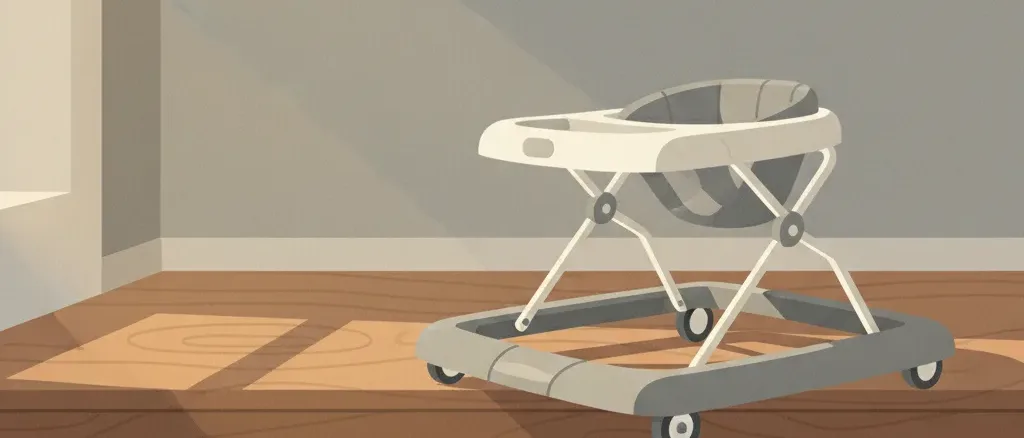
階段の上のウォーカーというイメージは、この危険の典型的な視覚像です:乳児を乗せた車輪付きの座席が、最上段に据えられている様子です。ほとんどの親は安全キャンペーンや警告ラベルでそれを見たことがありますが、認識としては、主要な負傷機序ではなく回避可能な例外だというものです。Sims et al.の25年間の米国データセットでは、それが主要な機序です:ウォーカー負傷のおよそ4件のうち3件が階段転落です。米国小児科学会とHealth Canadaはともに、階段転落を禁止勧告の具体的な理由として挙げています。
概算: ウォーカーを使う乳児1人あたり約10,000分の1の確率
出典: 編集部の直感(調査に基づかない)
実際のリスク
米国で2014年に15か月未満の子供のウォーカー階段転落ER受診が約1,482件(総数2,001件の74.1%)
ベビーウォーカーに曝露した15か月未満の米国乳児、2014年
計算を表示
Sims et al.(2018)は、ウォーカー負傷の74.1%が階段関連であると報告しています。2014年の総数2,001件のER受診に適用すると、2014年に米国で15か月未満の子供の階段転落ER受診がおよそ1,482件となります。925,000人のウォーカーを使う米国乳児という分母は、姉妹エントリー(baby-walker-injury-any)と同じ構成に従います:0-15か月帯の3.7 millionの乳児の約25%です。この恐怖の歴史における最大の単一の工学的介入は、階段転落防止ブレーキ、またはウォーカーが標準的なドアを通過しないようベース幅を36インチ超とすることのいずれかを要求した1997年のASTM F977自主基準です。2010年の連邦規則がこの基準を拘束力あるものにしました。1997年以前のウォーカーは、2010年以降の適合品のおよそ10倍の階段転落率を生み出しました。使用者あたりの分母が推定値であり、現代の基準への適合が(中古のウォーカー、輸入品により)異なるため、不確実性帯は広くなっています。
注意事項: 1,482という分子は導出値です:これは2014年のウォーカー負傷2,001件というSims 2018の数値の74.1%です。Simsは年別の階段転落固有の件数…
1,482という分子は導出値です:これは2014年のウォーカー負傷2,001件というSims 2018の数値の74.1%です。Simsは年別の階段転落固有の件数を公表していないため、この割合は25年間の期間全体で一定と仮定されています。925,000という分母は、姉妹エントリーで使われたのと同じ推定ウォーカー使用乳児人口です;実測値ではありません。この数値は、階段がまったくない住宅には当てはまらず、そこでは残余リスクが転倒とリーチ関連の負傷に収束します。またこれは、階段転落防止ブレーキや大型ベースによって主要な機序を設計上排除した適合ASTM F977ウォーカーについて、現代の米国リスクを過大に述べています。中古および輸入された1997年以前のウォーカーが依然として最大の残余リスクです;これらは2010年以降の基準の適用範囲外です。Petridou 1996の欧州ベースラインは基準改革以前のもので、1990年代半ばのウォーカー設計を反映しています。
関連するリスク
似たテーマの他のリスク — 関連する不安を探るために。








比較対象を選択
Sims らの 25 年分の NEISS データでは、米国のウォーカー関連負傷の 74.1% が階段転落である。2014 年の ER 治療件数 2,001 件に適用すると、その年の階段転落 ER 受診はおよそ 1,482 件となる。使用乳児を 925,000 人と概算すると、2 階建て以上の住宅でユーザー 1 人 1 年あたりおよそ 1/625 の発生率になる。仕組みはウォーカー事故の典型的なイメージそのもので、標準的なドアを通過できる車輪付き座席に、重心が車軸より遥かに上にある乳児を乗せ、わずかな注意の隙間に階段室へ進入させてしまう、というものだ。AAP と Health Canada はこの機序を名指しで挙げ、禁止勧告の根拠としている。
この項目で興味深いのは、リスクが行動ではなく工学で制御される点である。1997 年の ASTM F977 自主基準は、階段転落防止ブレーキを備えるか、標準的なドア(幅 36 インチ)を通過できないようベース幅を 36 インチ超とすることを求めた。2010 年の連邦規則化により、新製品の米国市場ではこれが義務化された。Sims のデータでは階段転落による負傷が 1990 年から 2003 年にかけておよそ 91% 減少しており、その大半は物理的に階段室へ到達できない、あるいは縁から転落しないウォーカーへの置き換えによるものだった。カナダは 2004 年に製品自体を禁止することでリスクをほぼゼロまで設計し直した。同じ部屋で見守るという行動的余地は意味を持つが、機序そのものを取り除く効果に比べれば小さい。
数値はすべての場所で等しく適用されるわけではない。平屋住宅、あるいは階段の上り口に正しく取り付けられた階段ゲートは、階段転落の経路をおよそ 20 分の 1 に抑える。1997 年以前のウォーカー(中古や輸入で入手されることが多い)は、ブレーキ要件もベース幅要件もない時代の設計のため、リスクをおよそ 10 倍に押し戻す。Petridou ら(1996)のアテネ研究では、ウォーカー使用者 1,000 人 1 年あたり 16 件の負傷が報告され、基準導入前の米国の数字に近く、ヨーロッパでも階段転落が主要機序であることが確認された。EU の家庭で EN 1273+A1:2024 適合品を使用していても、安定性は確保されるものの、米加式の階段転落防止ブレーキは備わっていない。
関連する豆知識
複数階の住宅で歩行器を使う乳児1人あたり、救急で処置される階段転落の確率はおよそ~1 in 625。2014年の米国における歩行器関連の救急受診2,001件のうち1,482件が階段転落で、その74.1%を占めた——まさに車輪が楽しくするはずだった危険そのものだ。
根拠台帳
以下の各数値は各出典が報告した内容であり、引用した原文の抜粋と算出方法を記載しています。リンクをクリックして直接確認できます。
3/4 件の出典が引用元と一字一句一致することを独立して検証済み
-
[1] Pediatrics (Sims, Chounthirath, Yang, Hodges, Smith) — Infant Walker-Related Injuries in the United States 検証済み
Infant Walker-Related Injuries in the United StatesSee all 2 Likelier entries citing this source →
- 統計値
230,676 walker-related ER visits in US children under 15 months over 1990-2014; 74.1% stair falls; 90.6% head/neck injuries; annual injuries fell 22.7% in the 4 years after the 2010 federal mandatory standard- 抜粋
“"An estimated 230,676 children <15 months of age were treated in US emergency departments for an infant walker-related injury from 1990 through 2014. Most of the children sustained head or neck injuries (90.6%) and 74.1% were injured by falling down the stairs in an infant walker. Among patients who were admitted to the hospital (4.5%), 37.8% had a skull fracture... The average annual number of injuries decreased by 22.7% during the 4-year period after the implementation of the federal mandatory safety standard compared with the 4-year period before the standard." ”
- 出典データ
- 2018-10-01
- アクセス日
- 2026-05-31 · アーカイブ版
- 検証
- グラウンディング監査の際、抜粋を引用元から独立して再取得し、原文と一字一句一致することを確認しました。
- 計算過程
- Sims 2018 is the source of the 74.1% stair-fall share. Applied to the 2014 total of 2,001 walker injuries this gives roughly 1,482 stair-fall ER visits for that year. The 22.7% post-standard decline is the abstract-verifiable headline; the stair-fall-specific decline is larger because the ASTM F977 standard targets the stair-fall mechanism specifically.
-
[2] Pediatrics (AAP Committee on Injury and Poison Prevention) — Injuries Associated With Infant Walkers 検証済み
Injuries Associated With Infant WalkersSee all 2 Likelier entries citing this source →
- 統計値
1999: 8,800 ER-treated walker injuries in US children under 15 months. 34 walker-related deaths reported 1973-1998. AAP recommends a ban on manufacture and sale of mobile infant walkers.- 抜粋
“"In 1999, an estimated 8800 children younger than 15 months were treated in hospital emergency departments in the United States for injuries associated with infant walkers. Thirty-four infant walker-related deaths were reported from 1973 through 1998... the American Academy of Pediatrics recommends a ban on the manufacture and sale of mobile infant walkers." ”
- 出典データ
- 2001-09-01
- アクセス日
- 2026-05-31 · アーカイブ版
- 検証
- グラウンディング監査の際、抜粋を引用元から独立して再取得し、原文と一字一句一致することを確認しました。
- 計算過程
- AAP 2001 cites stair falls as the dominant mechanism behind its ban recommendation. The 34 walker-related deaths over 1973-1998 are overwhelmingly stair-fall fatalities; this is the death-count anchor for stair-fall walker injuries as a class.
-
[3] Government of Canada (Health Canada) — Minister Pettigrew announces ban on baby walkers
Minister Pettigrew announces ban on baby walkersSee all 2 Likelier entries citing this source →
- 統計値
Canada banned sale, advertisement and importation of baby walkers effective April 2004; Health Canada cites stair-fall head injuries as the specific mechanism- 抜粋
“"Health Minister Pierre Pettigrew today announced the Government of Canada's immediate prohibition of the sale, advertisement and importation of baby walkers in Canada... 'Canada is the first country in the world to ban the sale of these products.'... Typically, incidents linked to baby walkers involve head injuries that result from falls down stairs." ”
- 出典データ
- 2004-04-07
- アクセス日
- 2026-05-31 · アーカイブ版
- 計算過程
- Health Canada explicitly names stair-fall head injuries as the cited mechanism for the ban. This is the regulatory anchor for treating the stair-fall pathway as the dominant hazard rather than one of several.
-
[4] Injury Prevention (Petridou, Simou, Skondras et al.) — Hazards of baby walkers in a European context 検証済み
Hazards of baby walkers in a European context- 統計値
Athens, May 1994-April 1995: walker-related injury rate of 16 per 1,000 person-years of walker use, equivalent to 3.5 per 1,000 babies per year; falls down stairs the dominant mechanism; peak at 9-10 months- 抜粋
“"Baby walkers impart a significant risk of injury from a consumer product that provides no clearly identifiable benefit. The injury rate was 16 per thousand person years of users, or 3.5 per thousand babies per year. The peak age of injury was 9-10 months." ”
- 出典データ
- 1996-06-01
- アクセス日
- 2026-05-31 · アーカイブ版
- 検証
- グラウンディング監査の際、抜粋を引用元から独立して再取得し、原文と一字一句一致することを確認しました。
- 計算過程
- Petridou 1996 is the canonical European empirical baseline. 16 per 1,000 person-years of walker users corresponds to roughly a 1.6% annual injury rate for active users, consistent with US-era data from the 1990s before standards reform. Useful for cross-Atlantic calibration and as a second authoritative source for the stair-fall mechanism claim.