証拠の質 4.25/5
8次元のレビュー評価。基準は 品質ルーブリック 。各次元は1〜5で評価。
- D1 出典への根拠
- 4/5
- D2 出典の権威性
- 5/5
- D3 算術
- 4/5
- D4 不確実性
- 4/5
- D5 範囲
- 4/5
- D6 文章
- 4/5
- D7 認識の誠実性
- 4/5
- D8 注意事項の完全性
- 5/5
● あなたの要因 — このリスクをクリック ▾ して表示
- あなたの要因
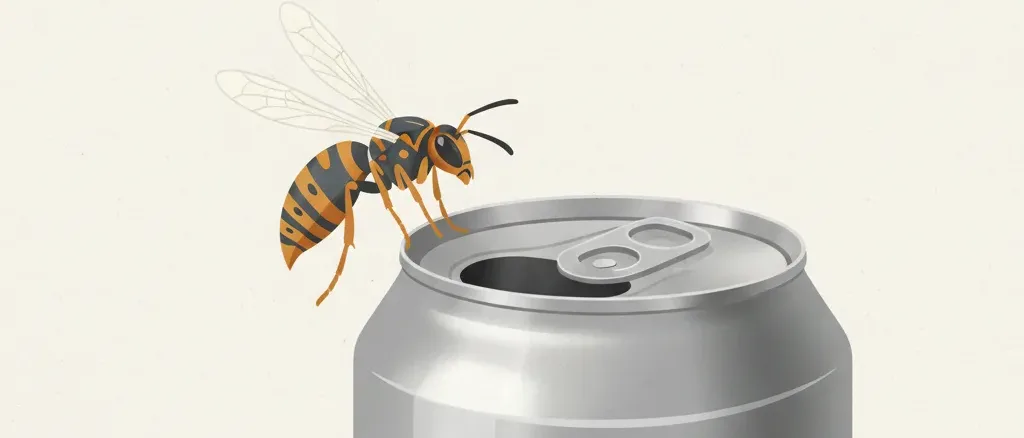
認知リスク
「ソーダの缶の中のハチ」というシナリオは、より鮮烈で広く出回っている屋外の危険譚の1つである。ソーシャルメディアは、昆虫を飲み込み、喉に刺傷を感じ、救急治療を要した人々の時折の症例報告を増幅させ、それが実際の率に比べて認知される頻度を大幅に膨らませる。夏に屋外で飲食して過ごしてきたほとんどの人は、これが悪い結末に至る頻度を過大評価している。
概算: 屋外で飲食するほとんどの人は、これが漠然と知っている誰かに年に数回起きると思い込んでいる
出典: 編集部の直感(調査に基づかない)
実際のリスク
米国で年間推定約195件の口咽頭(口・喉)刺傷による救急受診
米国の総人口
計算を表示
Huff, Phillips, Keith(Wilderness & Environmental Medicine, 2025)はNEISSデータ(2004~2023年)を用い、2004年から2023年の間に、ハチ、スズメバチ、キイロスズメバチ、またはアシナガバチによる口咽頭(口と喉)刺傷で米国の救急外来を受診した人が約3890人(95% CI、2458.55~5320.79)いたと直接推定した——20年間で年間約195人である。年間確率:195 / 335,000,000 ≈ 5.8 × 10^-7。成人としての残りの人生59年間で累積すると、1 − (1 − 5.8e-7)^59 ≈ 3.4 × 10^-5 ≈ 29,000分の1となる。不確実性の幅は、この研究自身の95% CIを同じ生涯累積を通して持ち込んでいる(20年間で2458.55~5320.79 → 年間約123~266人)。「口咽頭刺傷」は缶/瓶からの飲用という特定のシナリオよりも広いが、NEISS研究はこの経路を直接定量化している唯一の米国監視情報源である。
注意事項: ここでのメカニズムは機械的な窒息ではない——ハチやスズメバチは物理的な物体として気道を塞ぐには小さすぎる。危険は刺傷そのものである。口や喉の内部では、アレルギー…
ここでのメカニズムは機械的な窒息ではない——ハチやスズメバチは物理的な物体として気道を塞ぐには小さすぎる。危険は刺傷そのものである。口や喉の内部では、アレルギーのない人でも気道を狭めうる局所的な炎症性浮腫を引き起こし、毒アレルギーのある人では完全な全身性アナフィラキシーを引き起こしうる。年間約195件という数値は、2025年のNEISS研究自身による口咽頭刺傷の救急受診の全米推定値(2004~2023年で約3,890件)であり、「飲用中に昆虫を飲み込んだ」の直接的な件数ではなく、他の経路による口内刺傷(例:食事中)も含みうる。特に飲み込んだ昆虫による死亡は、別途追跡されていない。
関連するリスク
似たテーマの他のリスク — 関連する不安を探るために。



比較対象を選択
A bee or wasp inside a can or bottle is a genuine, if rare, hazard — and the mechanism is less obvious than most people assume. The danger is not that the insect physically blocks your airway; bees and wasps are small enough to swallow without obstruction. The danger is the sting: delivered inside the mouth, posterior pharynx, or esophagus, it triggers localized inflammatory edema in confined anatomy where even modest swelling can produce stridor, difficulty swallowing, and in severe cases airway compromise — even in people with no prior venom allergy. In those who do have venom allergy (roughly 3% of US adults), an oropharyngeal sting can trigger full systemic anaphylaxis.
A 2025 NEISS analysis by Huff, Phillips, and Keith directly estimated that between 2004 and 2023 approximately 3,890 people presented to US emergency departments with an oropharyngeal (mouth or throat) sting from a bee, hornet, yellow jacket, or wasp — about 195 per year, roughly 5% of all sting ED visits. Spread over 335 million people and 59 remaining adult years, that comes to roughly 1 in 29,000 over a lifetime. The large majority were minor: about 98% of oropharyngeal sting patients were not admitted to the hospital. Deaths from this specific route are not separately tracked in US surveillance; they are absorbed into the ICD-10 X23 “sting” category that averages ~72 per year from all mechanisms combined.
The fear is real but the framing matters: the scenario to worry about is not “the insect itself gets stuck” but “the sting triggers swelling or anaphylaxis in a place the body finds very hard to manage.” Practical risk reduction is simple — check the opening of outdoor cans and bottles before drinking, pour into a clear glass, or use a cup with a lid. These are low-friction habits that effectively eliminate the exposure route without any change to outdoor behavior otherwise.
関連する豆知識
口や喉の刺傷は、多くは食べ物や飲み物とともに昆虫を飲み込んで起こり、米国では年間推定11,000人が救急外来を受診する。生涯での確率は約1 in 500となる。
根拠台帳
以下の各数値は各出典が報告した内容であり、引用した原文の抜粋と算出方法を記載しています。リンクをクリックして直接確認できます。
4/4 件の出典が引用元と一字一句一致することを独立して検証済み
-
[1] Wilderness & Environmental Medicine (Huff, Phillips, Keith) — Oropharyngeal Bee, Hornet, Yellow Jacket, and Wasp Stings: A National Electronic Injury Surveillance System Analysis and Scoping Review 検証済み
Oropharyngeal Bee, Hornet, Yellow Jacket, and Wasp Stings: A National Electronic Injury Surveillance System Analysis and Scoping Review- 統計値
An estimated 3890 (95% CI, 2458.55–5320.79) oropharyngeal sting ED presentations in the US over 2004–2023 (~195/year); oropharyngeal stings were ~5.08% of all stings; 98.08% of oropharyngeal sting victims were not admitted- 抜粋
“"Between 2004 and 2023, there were an estimated 3890 (95% CI, 2458.55–5320.79) people with oropharyngeal stings from bees, hornets, yellow jackets, or wasps in the United States who presented to emergency departments." "Stings to the oropharyngeal region represented an estimated 5.08% (95% CI, 3.59–6.56) of all stings." "Overall, 98.08% (95% CI, 94.25–100.00) of victims of oropharyngeal stings were not admitted to the hospital." ”
- 出典データ
- 2025-03-01
- アクセス日
- 2026-05-04 · アーカイブ版
- 検証
- グラウンディング監査の際、抜粋を引用元から独立して再取得し、原文と一字一句一致することを確認しました。
- 計算過程
- Used for the direct national estimate: ~3890 oropharyngeal sting ED presentations over 2004–2023 = ~195/year. Annual probability 195/335,000,000 ≈ 5.8e-7; compounded over 59 years ≈ 3.4e-5 ≈ 1 in 29,000. The 95% CI (2458.55–5320.79 over 20 years) is carried through the same compounding for the uncertainty band. The ~1.92% hospitalization sub-fraction (98.08% not admitted) is a severity anchor.
- 独立性
- Based on NEISS (National Electronic Injury Surveillance System) consumer product injury data, methodologically independent of NCHS death-certificate mortality counts.
-
[2] Frontiers in Veterinary Science (Marinho & Soto-Blanco) — Toxicological Risk Assessment of the Accidental Ingestion of a Honeybee (Apis mellifera L.) Present in Food 検証済み
Toxicological Risk Assessment of the Accidental Ingestion of a Honeybee (Apis mellifera L.) Present in Food- 統計値
The actual number of accidental honeybee ingestion incidents remains unknown; though a rare condition, ingestion may induce an allergic reaction in sensitive individuals- 抜粋
“A number of anecdotal reports of accidental ingestion of insects are largely available, but the actual number remains unknown. Thus, although it is a rare condition, there is the risk that the ingestion of a honeybee may induce an allergic reaction to some venom components in sensitive individuals. ”
- 出典データ
- 2020-10-01
- アクセス日
- 2026-05-04 · アーカイブ版
- 検証
- グラウンディング監査の際、抜粋を引用元から独立して再取得し、原文と一字一句一致することを確認しました。
- 計算過程
- Supports the surveillance gap: the peer-reviewed toxicological assessment states that the actual number of accidental ingestion incidents remains unknown (reports are anecdotal). Used to justify the wide uncertainty band and to establish that the Huff 2025 oropharyngeal fraction is the best available approximation. Note: this source addresses honeybees only and does not itself quantify deaths or ER visits.
- 独立性
- Toxicological review drawing on venom-composition and clinical toxicology literature, independent of NEISS and NCHS data streams.
-
[3] American Family Physician (Golden DB) — Stinging Insect Allergy 検証済み
Stinging Insect AllergySee all 2 Likelier entries citing this source →
- 統計値
Systemic allergic reactions to insect stings are estimated to occur in about 3% of US adults (and about 1% of children)- 抜粋
“"Systemic allergic reactions to insect stings are estimated to occur in about 1 percent of children and 3 percent of adults." ”
- 出典データ
- 2003-06-15
- アクセス日
- 2026-07-03 · アーカイブ版
- 検証
- グラウンディング監査の際、抜粋を引用元から独立して再取得し、原文と一字一句一致することを確認しました。
- 計算過程
- Supports the body-prose reference to venom-allergy prevalence (~3% of US adults) used as context for anaphylaxis risk from an oropharyngeal sting. Not used in the native/normalized probability calculation, which is based on the Huff 2025 NEISS oropharyngeal-fraction analysis.
- 独立性
- Independent clinical epidemiology review (American Family Physician), methodologically distinct from the NEISS-based Huff 2025 analysis and the honeybee-ingestion toxicological review.
-
[4] Centers for Disease Control and Prevention — Morbidity and Mortality Weekly Report — QuickStats: Number of Deaths from Hornet, Wasp, and Bee Stings Among Males and Females — National Vital Statistics System, United States, 2011-2021 検証済み
QuickStats: Number of Deaths from Hornet, Wasp, and Bee Stings Among Males and Females — National Vital Statistics System, United States, 2011-2021- 統計値
788 total US deaths from hornet, wasp, and bee stings during 2011-2021, an average of 72 deaths per year; classified under ICD-10 code X23- 抜粋
“"During 2011-2021, a total of 788 deaths from hornet, wasp, and bee stings occurred (an average of 72 deaths per year). [...] Deaths from hornet, wasp, and bee sting as underlying cause of death were coded as X23, according to the International Classification of Diseases, Tenth Revision." ”
- 出典データ
- 2023-07-07
- アクセス日
- 2026-07-03 · アーカイブ版
- 検証
- グラウンディング監査の際、抜粋を引用元から独立して再取得し、原文と一字一句一致することを確認しました。
- 計算過程
- Supports the body-prose reference to overall Hymenoptera sting deaths (~72/year, ICD-10 X23) used as a severity anchor and to explain why deaths from the specific swallowed-insect/oropharyngeal route are not separately tracked in US surveillance. Not used in the native/normalized oropharyngeal-ED-visit calculation.
- 独立性
- NCHS death-certificate mortality data (National Vital Statistics System), methodologically independent of the NEISS-based Huff 2025 ED-visit analysis.