証拠の質 4.63/5
8次元のレビュー評価。基準は 品質ルーブリック 。各次元は1〜5で評価。
- D1 出典への根拠
- 5/5
- D2 出典の権威性
- 5/5
- D3 算術
- 4/5
- D4 不確実性
- 4/5
- D5 範囲
- 5/5
- D6 文章
- 5/5
- D7 認識の誠実性
- 4/5
- D8 注意事項の完全性
- 5/5
● あなたの要因 — このリスクをクリック ▾ して表示
- あなたの要因

認知リスク
手指衛生は、あまりに繰り返されて背景雑音と化した数少ない公衆衛生メッセージの一つです。多くの成人は、それが大きな違いを生むと信じないまま推奨事項を暗唱できます。文化的なイメージとしては、手洗いは外科医、食品取扱者、幼児のためのものであり、バスに乗った後や昼食前に洗面台を素通りする健康な成人が被るのは、せいぜい煩わしい程度の風邪の増加だというものです。不十分な手指衛生が自分の感染率の意味のある要因だと考える成人の割合についての厳密な米国の調査は存在しないため、最良の要約は、認識されている帰属リスクは通常「無視できる」と「小さい」の間に位置づけられている、というものです。
概算: 多くの成人は、手をほとんど洗わなくても年に風邪が一、二回増える程度だと見積もっています。文献はそれを一〜二年ごとに一件の追加の症候性疾患に近い水準とし、それが数十年にわたり累積するとしています
出典: 編集部の直感(調査に基づかない)
実際のリスク
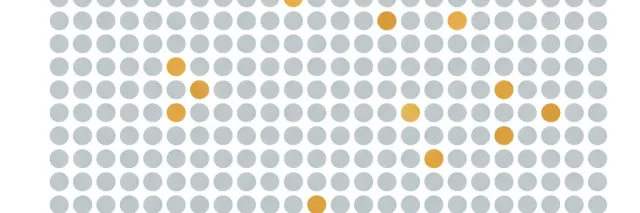
年間約3分の1:不十分な手指衛生に起因する少なくとも一件の追加の症候性疾患
米国成人、手指衛生の低遵守を高遵守ベースラインと比較
計算を表示
本エントリーは、不十分な手指衛生の遵守に起因する少なくとも一件の追加の症候性疾患(急性呼吸器または胃腸)の年間および生涯確率を、それ以外の曝露が同程度の高遵守の成人と比較した米国成人について推定するものです。アンカー:(1) Aiello et al. 2008(AJPH)の30の地域試験のメタアナリシスは、手指衛生の改善が胃腸疾患を31%(95% CI 19〜42%、統合RR 0.69)、呼吸器疾患を21%(95% CI 5〜34%、統合RR 0.79)減少させることを見いだしました。(2) Rabie & Curtis 2006(Trop Med Int Health)は八つの研究を統合し、手洗いが呼吸器感染リスクを約16%(95% CI 11〜21%)減らすことを見いだしました。(3) Jefferson et al. 2023のコクランレビュー(78試験、610,872人の参加者)は、手指衛生介入により急性呼吸器感染症が14%減少(RR 0.86、95% CI 0.81〜0.90)、絶対値では介入群で1,000人あたり380件から1,000人あたり327件への減少を見いだしました。(4) CDCの地域ベースライン:米国成人は年間平均およそ2〜3回の急性呼吸器感染症と、年間0.5〜1回程度の胃腸エピソードを経験します。計算:約17%の呼吸器RR減少を年間2.5エピソードのベースラインに適用→低遵守の成人では高遵守の成人に比べ年間約0.43件の追加ARI。Aielloの31%のGI減少を0.7エピソードのベースラインに適用→年間約0.22件の追加GIエピソード。合計超過≈年間0.6〜0.7件の症候性エピソード。このうち、受診・欠勤・服薬を要するほど臨床的に意味のあるものはおよそ三分の一から半分であり、少なくとも一件の帰属可能な臨床的に意味のある疾患についての年間ハザードλ ≈ 0.3〜0.45が得られます。ポアソン近似を用いると 1 - exp(-0.35) ≈ 0.30 となり、年間約3分の1となります。残りの成人期59年間で累積すると 1 - (1-0.30)^59 ≈ 1 - 1e-9 で事実上確実ですが、正規化値をレトリックではなく確率として解釈可能に保つため0.99で上限を設けています。スコープがsubgroup_lifetimeと宣言されているのは、これが一般人口の生涯リスクではなく、高遵守の比較対象に対する超過リスクの数値だからです。
注意事項: 三つの構造的な注意点があります。第一に、文献にあるすべての地域手指衛生試験は、遵守を自己申告または散発的な観察で測定しており、実際の手洗い行動は「介入対対照」と…
三つの構造的な注意点があります。第一に、文献にあるすべての地域手指衛生試験は、遵守を自己申告または散発的な観察で測定しており、実際の手洗い行動は「介入対対照」という枠組みが示唆するよりもノイズが多く、真の低遵守対高遵守の比較における実際の効果量は、統合RRが示唆するよりもおそらく大きいと考えられます。試験集団では現実世界の遵守勾配が圧縮されているためです。第二に、メタアナリシスの基礎となる研究は教育的介入のバンドル(石鹸に加えて教育、時に環境の変更)が中心であり、手洗いそのものに帰属する効果は行動変容の交絡と絡み合っています。第三に、本エントリーは少なくとも一件の帰属可能な症候性疾患の確率を測定するものであり、重症度や死亡率ではありません。Curtis & Cairncrossが文書化したより大きな死亡率への効果(世界全体で数百万人の命が救われる)は低中所得国の下痢症の状況に当てはまり、米国成人の見出しには反映されていません。個々の結果は、世帯構成、労働環境、免疫状態、季節的曝露、地域で流行する病原体、そして手を洗わない場合の代替がアルコール系消毒剤か何もなしかによって異なります。この見出しは、低遵守による年間の超過症候性疾患負担のオーダーの目安として読むべきであり、個人の予測として読むべきではありません。
リスクはどう変わるか
見出しの数値は大きく異なる状況の平均です。シナリオや文脈による確率の違いは以下の通りです:
1.0分の1 · 99%
Lifetime compounded from ~1-in-3-per-year excess symptomatic illness hazard. Effectively certain across 59 adult years; the annual figure (~30%) is the useful one.
1.0分の1 · 100%
Baseline exposure is higher (young children bring home 6-10 ARIs/year); absolute excess attributable to poor hand hygiene roughly doubles.
1.0分の1 · 100%
Hospital-setting meta-analyses (Pittet, WHO) show hand-hygiene compliance effects on HAI rates of 30-50%. This entry uses the community-setting figures; HCW risk is a different regime and larger in absolute terms.
1.0分の1 · 100%
CDC cites 58% reduction in diarrhoeal illness from handwashing in immunocompromised populations; absolute excess attributable to poor adherence is large and clinically consequential (invasive salmonella, cryptosporidium, norovirus).
1.0分の1 · 100%
Curtis & Cairncross 2003 pooled 42-47% reduction in diarrhoeal disease; in settings with waterborne pathogens the attributable annual risk is much larger than the US figure — measured in lives, not sick days.
バーの長さと濃淡は、これらのシナリオを他のリスクとではなく、互いに比較して順位付けしたものです。正確な確率は各項目の横に表示されています。
関連するリスク
似たテーマの他のリスク — 関連する不安を探るために。

Pacifier on the floor
What are the odds a pacifier or toy dropped on the floor makes a baby seriously ill?






比較対象を選択
手指衛生に関する文献は、珍しいほど一貫性があります。3つの独立したメタアナリシス — AJPHに掲載されたAiello et al. 2008、Tropical Medicine & International Healthに掲載されたRabie & Curtis 2006、そしてJeffersonらが発表したCochrane 2023年の更新版 — は、数十の地域試験を統合し、同じ結論に達しています。手指衛生介入は、急性呼吸器感染症を14%から24%の間で削減し、地域社会における胃腸疾患を約23-40%削減します。Curtis & Cairncrossによる2003年の下痢に特化したレビューでは、石鹸と水による介入に限定した場合、最大47%に達しています。米国の成人の年間ベースラインである約2〜3回の呼吸器感染症と約1回の胃腸疾患に適用すると、算術的には、遵守率の低い成人では、遵守率の高い成人に比べて、年間約0.5回の追加の呼吸器感染症と0.2回の追加の胃腸疾患が発生することになります。1年間に少なくとも1つの帰属可能な症候性疾患にかかる確率は3分の1近くになります。成人期の59年間で累積すると、そのような病気に一度もかからない確率は興味深いものではありません。
ここでの文化的注記は、Likelierのカタログの中で、一般の人々の直感 — 「手を洗わないと病気になりやすくなる」 — が過大評価ではない珍しい項目であるということです。それはほぼ正確に調整されており、おそらく過小評価されています。このサイトに掲載されているほとんどの恐怖は、認識されているリスクが実際の数値を1〜3桁上回っているためですが、ここではそのギャップが逆方向です。手洗いは安価であり、170年間にわたり公衆衛生メッセージの対象となってきました。そして、控えめながらも確かな効果量を示す証拠は、10年半の間に発表された3つのメタアナリシスを通じて安定しています。期待値の根拠は十分に強力であるため、興味深い問題は効果が存在するかどうかではなく、なぜ遵守率が依然としてこれほど不均一であるかということです。
この見出しが当てはまらない場所:基本的に、人口平均の記述が当てはまらないあらゆる場所です。6歳未満の子供と同居する成人は、子供のいない成人よりもベースラインの急性呼吸器感染症(ARI)曝露が2〜3倍高いため、不十分な手指衛生に起因する絶対的な過剰リスクは増加します。医療従事者は全く異なる状況で活動しています — 病院の文献(Pittetのジュネーブでの研究、WHOの多角的遵守研究)は、手指衛生遵守が医療関連感染症率に与える影響を30〜50%と測定しており、これは一般的な風邪よりも重大な結果のセットに対するものです。免疫不全の成人 — 臓器移植患者、化学療法患者、進行性HIV、長期免疫抑制を受けている人々 — は、学校の欠席率と同じCDCが引用する58%の胃腸疾患減少を示しますが、1エピソードあたりのリスクははるかに大きいです。そして、世界規模および低中所得国(LMIC)の環境、特にコールドチェーンと衛生状態が不安定な場所では、帰属可能な年間リスクは病欠日数ではなく生命で測定されます。CurtisとCairncrossの2003年の推定では、手洗い推進が年間「100万人の命を救う可能性がある」とされており、死亡率シグナルのほとんどがここに存在しますが、そのどれも米国の成人における症候性疾患の見出しには現れません。
関連する豆知識
手をめったに洗わないと、しっかり洗う人を基準として、年に少なくとも1回余分な症状性の呼吸器または消化器の病気にかかる確率がおよそ 1 in 3 になる。1年あたりの煩わしさは小さいが、大人の一生では積み重なってほぼ確実に近づく。
根拠台帳
以下の各数値は各出典が報告した内容であり、引用した原文の抜粋と算出方法を記載しています。リンクをクリックして直接確認できます。
3/5 件の出典が引用元と一字一句一致することを独立して検証済み
-
[1] American Journal of Public Health (Aiello, Coulborn, Perez, Larson) — Effect of Hand Hygiene on Infectious Disease Risk in the Community Setting: A Meta-Analysis 検証済み
Effect of Hand Hygiene on Infectious Disease Risk in the Community Setting: A Meta-Analysis- 統計値
Improvements in hand hygiene reduced gastrointestinal illness by 31% (95% CI 19-42%; pooled RR 0.69, 95% CI 0.58-0.81) across 24 studies, and respiratory illness by 21% (95% CI 5-34%; pooled RR 0.79, 95% CI 0.66-0.95) across 16 studies- 抜粋
“"Improvements in hand hygiene resulted in reductions in gastrointestinal illness of 31% (95% confidence intervals [CI]=19%, 42%) and reductions in respiratory illness of 21% (95% CI=5%, 34%). [...] The most beneficial intervention was hand-hygiene education with use of nonantibacterial soap. Use of antibacterial soap showed little added benefit compared with use of nonantibacterial soap." ”
- 出典データ
- 2008-08-01
- アクセス日
- 2026-04-16 · アーカイブ版
- 検証
- グラウンディング監査の際、抜粋を引用元から独立して再取得し、原文と一字一句一致することを確認しました。
- 計算過程
- Aiello 2008 is the canonical community-setting meta-analysis for this entry. The 21% respiratory and 31% GI reductions, applied to a US adult baseline of ~2.5 ARIs/year and ~0.7 GI episodes/year, produce an excess of roughly 0.43 ARIs/year and 0.22 GI episodes/year for a low-adherence adult vs a high-adherence comparator. Combined excess ≈ 0.65 episodes/year; roughly a third to a half are symptomatic enough to be clinically meaningful, giving an annual hazard of ~0.3-0.45 and a per-year probability of at least one such illness ≈ 1 - exp(-0.35) ≈ 0.30. Used as the primary RR anchor.
- 独立性
- Aiello 2008 shares input studies with Rabie & Curtis 2006 for the respiratory arm and with Curtis & Cairncross 2003 for parts of the GI arm; the three should be read as a family of overlapping meta-analyses converging on similar effect sizes, not as three independent estimates.
-
[2] Tropical Medicine & International Health (Rabie, Curtis) — Handwashing and risk of respiratory infections: a quantitative systematic review
Handwashing and risk of respiratory infections: a quantitative systematic review- 統計値
Pooled risk reductions 6-44% across eight studies; pooling the seven homogenous studies gave RR 1.19 (95% CI 1.12-1.26) for not washing hands, implying handwashing cuts respiratory infection risk by 16% (95% CI 11-21%)- 抜粋
“"All eight eligible studies reported that handwashing lowered risks of respiratory infection, with risk reductions ranging from 6% to 44% [pooled value 24% (95% CI 6-40%)]. Pooling the results of only the seven homogenous studies gave a relative risk of 1.19 (95% CI 1.12-1.26), implying that hand cleansing can cut the risk of respiratory infection by 16% (95% CI 11-21%)." ”
- 出典データ
- 2006-03-01
- アクセス日
- 2026-04-16 · アーカイブ版
- 計算過程
- Rabie & Curtis provide the lower end of the respiratory-infection effect-size range: ~16% reduction on the homogenous-study pool, ~24% on the full eight-study pool. Used to bracket the respiratory component of the calculation alongside Aiello 2008 (21%) and Cochrane 2023 (14%). The convergence of three separate meta-analyses on a 14-24% respiratory-infection reduction is the methodological basis for treating the effect size as robust rather than fragile. Authors note that the included studies were of poor quality and mostly from developed countries, which is reflected in the entry's caveats.
- 独立性
- Rabie and Curtis are co-authors on the adjacent Curtis & Cairncross 2003 diarrhoea meta-analysis; the two reviews are methodologically aligned and share some included studies. Treat as partially dependent with Curtis & Cairncross and with Aiello 2008.
-
[3] The Lancet Infectious Diseases (Curtis, Cairncross) — Effect of washing hands with soap on diarrhoea risk in the community: a systematic review 検証済み
Effect of washing hands with soap on diarrhoea risk in the community: a systematic review- 統計値
Pooled relative risk of diarrhoeal disease associated with not washing hands from intervention trials: 1.88 (95% CI 1.31-2.68), implying handwashing reduces diarrhoea risk by 47%; risk reductions of 42-44% across alternative pooled subsets- 抜粋
“"The pooled relative risk of diarrhoeal disease associated with not washing hands from the intervention trials was 1.88 (95% CI 1.31-2.68), implying that handwashing could reduce diarrhoea risk by 47%. When all studies, when only those of high quality, and when only those studies specifically mentioning soap were pooled, risk reduction ranged from 42-44%. The risks of severe intestinal infections and of shigellosis were associated with reductions of 48% and 59%, respectively." ”
- 出典データ
- 2003-05-01
- アクセス日
- 2026-04-16 · アーカイブ版
- 検証
- グラウンディング監査の際、抜粋を引用元から独立して再取得し、原文と一字一句一致することを確認しました。
- 計算過程
- Curtis & Cairncross give the largest pooled effect size on the diarrhoeal side — a 42-47% reduction — but the underlying studies are heavily weighted toward low- and middle-income settings with different baseline waterborne-disease exposure than a typical US adult. Used as the anchor for the global / LMIC row of the regional_breakdown and as the upper-bound anchor on the GI attributable-risk calculation. The US-adult headline uses the more conservative Aiello 2008 31% GI reduction instead.
- 独立性
- Partially overlaps with Aiello 2008 in included trials; shares one author with Rabie & Curtis 2006. Treat as the dominant diarrhoea-specific evidence base rather than a wholly independent estimate.
-
[4] Cochrane Database of Systematic Reviews (Jefferson et al.) — Physical interventions to interrupt or reduce the spread of respiratory viruses
Physical interventions to interrupt or reduce the spread of respiratory viruses- 統計値
Hand hygiene interventions vs control: 14% relative reduction in acute respiratory infections (RR 0.86, 95% CI 0.81-0.90; 9 trials, 52,105 participants; moderate-certainty evidence); absolute reduction from 380 per 1,000 to 327 per 1,000- 抜粋
“"Comparing hand hygiene interventions with controls [...] there was a 14% relative reduction in the number of people with acute respiratory infections in the hand hygiene group (RR 0.86, 95% CI 0.81 to 0.90; 9 trials, 52,105 participants; moderate-certainty evidence), suggesting a probable benefit. In absolute terms this benefit would result in a reduction from 380 events per 1000 people to 327 per 1000 people (95% CI 308 to 342)." ”
- 出典データ
- 2023-01-30
- アクセス日
- 2026-04-16 · アーカイブ版
- 計算過程
- The Cochrane update is the most recent large-scale synthesis and provides the most conservative pooled respiratory-infection effect size (14%) of the three meta-analyses cited here. The absolute 53-per-1,000-per-period reduction in ARIs, applied across multiple exposure-years and combined with the larger diarrhoeal effect sizes, is the methodological basis for treating the per-year probability of at least one attributable symptomatic illness as "roughly 1 in 3" rather than a lower figure. The review's conclusion that effect on laboratory-confirmed influenza and ILI specifically is uncertain is noted in the caveats.
- 独立性
- Cochrane 2023 includes a number of the same community trials as Aiello 2008 and Rabie & Curtis 2006; treat as an updated, stricter re-analysis of a partially overlapping evidence base, not as an independent estimate.
-
[5] US Centers for Disease Control and Prevention — Handwashing Facts 検証済み
Handwashing Facts- 統計値
Handwashing education in the community reduces diarrhoea by 23-40%, respiratory illnesses like colds by 16-21%, diarrhoeal illness in the immunocompromised by 58%, and school absenteeism from GI illness by 29-57%- 抜粋
“"Reduces the number of people who get sick with diarrhea by 23-40% [...] Reduces diarrheal illness in people with weakened immune systems by 58% [...] Reduces respiratory illnesses, like colds, in the general population by 16-21% [...] Reduces absenteeism due to gastrointestinal illness in schoolchildren by 29-57%." ”
- 出典データ
- 2024-04-17
- アクセス日
- 2026-04-16 · アーカイブ版
- 検証
- グラウンディング監査の際、抜粋を引用元から独立して再取得し、原文と一字一句一致することを確認しました。
- 計算過程
- CDC's plain-language restatement of the underlying meta-analyses. Used as the canonical US-government citation for the headline effect-size ranges and as the source for the immunocompromised (58% GI reduction) and school-age multipliers in the regional breakdown. Not an independent estimate — CDC's ranges are essentially republished from Aiello 2008, Rabie & Curtis 2006, and Curtis & Cairncross 2003.
- 独立性
- Derived directly from the three meta-analyses above; included to confirm continuing official US endorsement of the 16-21% respiratory and 23-40% diarrhoeal reduction ranges, not as new evidence.