証拠の質 4.5/5
8次元のレビュー評価。基準は 品質ルーブリック 。各次元は1〜5で評価。
- D1 出典への根拠
- 5/5
- D2 出典の権威性
- 5/5
- D3 算術
- 4/5
- D4 不確実性
- 4/5
- D5 範囲
- 4/5
- D6 文章
- 5/5
- D7 認識の誠実性
- 4/5
- D8 注意事項の完全性
- 5/5
● あなたの要因 — このリスクをクリック ▾ して表示
- あなたの要因
≈ 同じくらいの確率
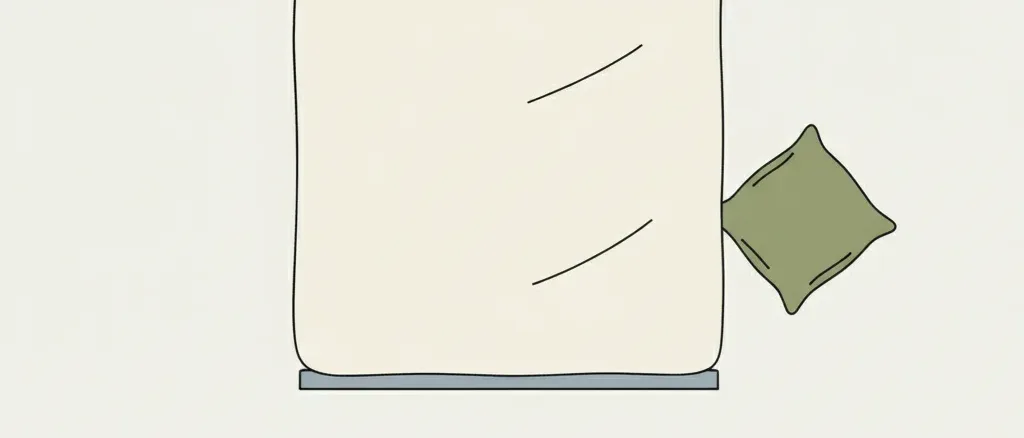
認知リスク
ベッド共有は、新米の親のリスク認識の中で独特の位置を占めています。広く行われている慣行であると同時に、公式にはタブーとされているのです。AAP(米国小児科学会)はこれを推奨せず、アタッチメント・ペアレンティングのコミュニティはこれを推進し、疲れ果てた親は計画していたか否かにかかわらず実行します。ベッド共有をする親の多くはリスクが実在するものの小さいと感じており、避ける親の多くは意味のある危険を回避していると信じています。どちらのグループも数値を挙げることはできません。感情的な重みは、メカニズムが異なるにもかかわらず、SIDS(関連エントリを参照)との混同に部分的に由来しています。
概算: ほとんどの親はリスクの高まりを感じ取ってはいるが数値化できず、推定値は育児哲学によって大きく異なる
出典: 編集部の直感(調査に基づかない)
実際のリスク
非喫煙・非飲酒の親のもとで母乳で育てられ、ベッド共有をする乳児の場合、生後一年目における出生100,000件あたり約23件のSIDS死亡
母乳で育てられ、親が非喫煙で、母親のアルコール・薬物使用がなく、ベッド共有をしている乳児
計算を表示
ネイティブの率(約4,348分の1、出生1,000件あたり0.23)は、Carpenter et al. 2013自身がモデル化した、最もリスクの低いベッド共有グループ(母乳で育てられた乳児、両親とも非喫煙、母親のアルコール・薬物使用なし)の生後一年目の絶対リスクです(表4の「最小リスク」行)。これは生後一年目の累積率であり、一晩あたりの数値ではありません。論文はどこにも一晩あたりの推定値を報告していません。正規化された見出しは、同じ表でモデル化された最も高い行、すなわち人工乳の乳児、両親とも喫煙、母親の飲酒があり、それ以外は「標準的な」母親(26-30歳、第二子、正常出生体重)という構成を用いています。予測される生後一年目のベッド共有率は1,000件あたり27.5(約36分の1)です。Carpenter et al.の考察セクションは、人口統計的および行動的リスク要因のより極端な組み合わせ(18歳の母親、2.25 kgの人工乳の乳児、両親とも喫煙、母親の飲酒)を別途モデル化しており、その値は1,000件あたり125(12.5%、約8分の1)で、論文中のどこにも報告されている数値の中で最大です。この極端な数値は、行動的要因の上に人口統計的リスク要因(若い母親の年齢、低出生体重)を積み重ねているため、見出しではなく不確実性の幅の上限とregional_breakdownで使用されています。三つの数値はいずれもCarpenter et al.自身のモデル出力であり、本エントリが複合計算や再導出をしたものはありません。
注意事項: このエントリは、関連するSIDSエントリとは別のものです。SIDSは睡眠面にかかわらず起こる除外診断であり、ベッド共有による死亡は主にベッド内での偶発的窒息・絞…
このエントリは、関連するSIDSエントリとは別のものです。SIDSは睡眠面にかかわらず起こる除外診断であり、ベッド共有による死亡は主にベッド内での偶発的窒息・絞扼(ASSB)に起因します。どちらもSUIDの傘下に入るものの、メカニズム的には異なるカテゴリです。ベースラインのリスク(約4,348分の1、生後一年目における出生1,000件あたり0.23)は直接測定ではなくCarpenter et al.のモデル推定に由来し、最もリスクの低い構成を仮定しています。元論文は一晩あたりの数値を報告していません。実際のベッド共有は多様です。アルコールも喫煙もない母乳育児の母親は、喫煙し飲酒する親とは根本的に異なるリスクプロファイルに直面します。正規化フィールドとregional_breakdownにあるより高リスクの数値は、名前を挙げた各リスクカテゴリの乳児(人工乳に親の喫煙と飲酒を加えた構成、さらにその先に若い母親の年齢と低出生体重を加えた積み重ねシナリオ)についてCarpenter et al.自身がモデル化した生後一年目の率であり、単発の時折の曝露から外挿されたものではなく、低リスク条件下で時折ベッド共有をするだけの家族のリスクとして読むべきではありません。CDCのASSBカテゴリ(2022年に約1,040件の死亡)は窒息メカニズムによる死亡の最も近い監視上の代理指標ですが、すべてのASSBがベッド共有を伴うわけではなく、すべてのベッド共有死亡がASSBとしてコード化されるわけでもありません。人種的・社会経済的格差はSIDSに見られるものと同様で、アメリカ先住民/アラスカ先住民および非ヒスパニック系黒人の乳児はSUIDデータで不釣り合いに多く現れます。このエントリはリスク推定値を公表するものであり、睡眠に関する推奨ではありません。実践上の判断にはAAPの臨床ガイダンスが適切な参照先です。
リスクはどう変わるか
見出しの数値は大きく異なる状況の平均です。シナリオや文脈による確率の違いは以下の通りです:
4,348分の1
Carpenter et al. 2013, Table 4: 0.23 per 1,000 live births, first year of life, bed-sharing
532分の1
Carpenter et al. 2013, Table 4: 1.88 per 1,000 live births, first year of life, bed-sharing
36分の1 · 2.8%
Carpenter et al. 2013, Table 4: 27.5 per 1,000 live births, first year of life, bed-sharing — the highest row modeled in the paper's main table
8.0分の1 · 13%
Carpenter et al. 2013, Discussion section: 125 per 1,000 live births (12.5%), first year of life, bed-sharing — the most extreme combination modeled anywhere in the paper
バーの長さと濃淡は、これらのシナリオを他のリスクとではなく、互いに比較して順位付けしたものです。正確な確率は各項目の横に表示されています。
関連するリスク
似たテーマの他のリスク — 関連する不安を探るために。







比較対象を選択
ベッド共有による乳児の死亡は、SIDSの特発性メカニズムによるものではなく、主に窒息や絞扼によるものです。CDCは、2022年に米国の乳児の間で発生した約3,700件の予期せぬ乳児突然死のうち、約1,040件の偶発的なベッド内窒息・絞扼死(ASSB)を数えました。最もリスクの低いベッド共有の構成(母乳育児の乳児、非喫煙・飲酒なしの親、硬いマットレス)における一晩あたりのリスクは、Carpenter et al.による2013年の5つの主要な症例対照研究の個別レベル再分析によると、約16,000分の1です。1年間の毎晩の共有で累積すると、その確率は約44分の1になりますが、これは上限であり、一般的な経験ではありません。
この数値は、ほぼ完全に複合的なリスク要因の関数です。Blair et al.による2014年のBMJ分析では、喫煙やアルコールがない場合、生後3ヶ月以上の乳児におけるベッド共有とSIDSの間に統計的に有意な関連性は見られませんでした。喫煙する親が加わるとオッズ比は約6.3に跳ね上がり、アルコールが加わると実質的な乗数は約18に達します。柔らかい表面、特にソファやアームチェアは、ベッド共有であるかどうかにかかわらず、あらゆる睡眠配置の中で最も高い窒息リスクを伴います。AAPの2022年の安全な睡眠ガイドラインは、すべてのベッド共有に反対していますが、根底にあるデータは、この推奨が低リスクのベースラインではなく、高リスクのテールによって圧倒的に推進されていることを示しています。
ここでの数値は、関連するSIDSの項目と互換的に読むべきではありません。SIDSは、あらゆる睡眠面で発生する除外診断であり、ベッド共有による死亡はメカニズム的に異なります(気道閉塞、覆いかぶさり、寝具への挟まりなど)。どちらもSUIDの傘下にあり、CDCのコーディングでは時に死亡がこれら2つのカテゴリ間で移動することがありますが、リスク要因と介入策は異なります。SUIDデータにおける人種的および社会経済的格差は大きく、アメリカンインディアン/アラスカ先住民および非ヒスパニック系黒人の乳児は、平均の約2〜3倍の割合で発生しています。他のリスク要因なしに硬い表面で時折ベッド共有する家族は、疫学の高リスクテールに捉えられている人々とは実質的に異なる確率に直面しています。
関連する豆知識
リスクはほぼ状況次第で決まる。他のリスク要因のない母乳育児の乳児なら、添い寝の一晩あたりの死亡リスクは約1万6000分の1。最高リスクの状況——喫煙に飲酒に柔らかい寝具——では、1年目のリスクはおよそ44分の1まで上がる。
根拠台帳
以下の各数値は各出典が報告した内容であり、引用した原文の抜粋と算出方法を記載しています。リンクをクリックして直接確認できます。
-
[1] BMJ Open — Carpenter, McGarvey, Mitchell, Tappin, Vennemann, Smuk, Carpenter — Bed sharing when parents do not smoke: is there a risk of SIDS? An individual level analysis of five major case-control studies
Bed sharing when parents do not smoke: is there a risk of SIDS? An individual level analysis of five major case-control studies- 統計値
Modeled first-year cumulative SIDS risk during bed-sharing: 0.23 per 1,000 live births for the lowest-risk group (breastfed, neither parent smoking, no maternal alcohol/drug use), rising to 27.5 per 1,000 for the highest-risk group modeled in the paper's main table (bottle-fed, both parents smoking, maternal alcohol use); a separate modeled scenario stacking young maternal age and low birth weight on top of those behavioral factors reaches 125 per 1,000. The paper reports no per-night estimate.- 抜粋
“"Bed sharing for sleep when the parents do not smoke or take alcohol or drugs increases the risk of SIDS. [...] The absolute risk estimates were very low at 0.08 per 1,000 live births for room sharing infants, rising to 0.23 per 1,000 when bed sharing occurred. [...] Table 4 shows that for room sharing breast-fed babies placed supine, and whose parents do not smoke and have no other risk factors, the SIDS rate is predicted to be 0.08 (0.05 to 0.14)/1000 live-births. This rate is predicted to increase by 2.7 times (1.4 to 5.3) to 0.23 (0.11 to 0.49)/1000 when bed sharing. [...] a 2.25 kg bottle-fed baby bed sharing with an 18-year-old mother, who smokes and regularly takes 2+ units of alcohol and whose partner also smokes, has a predicted SIDS rate of 125/1000, that is, 12.5% (see online supplementary table b)." ”
- 出典データ
- 2013-01-01
- アクセス日
- 2026-04-18 · アーカイブ版
- 計算過程
- Carpenter et al. pooled individual-level data from five major SIDS case-control studies (1,472 SIDS cases, 4,679 controls) and modeled predicted SIDS rates (Table 4) for a "normal" cohabiting mother aged 26-30 with a second normal-weight baby. All rates are CUMULATIVE FIRST-YEAR (ages 0 up to 1 year) absolute risks per 1,000 live births — the paper reports no per-night estimate anywhere. Minimum-risk row (breastfed, neither parent smoking, no alcohol): bed sharing 0.23 (0.11 to 0.49)/1000 live-births versus 0.08 (0.05 to 0.14)/1000 for room sharing (ratio 2.7). This 0.23/1000 (1 in ~4,348) is the native rate. The highest row modeled in the same table (bottle-fed, both parents smoking, maternal alcohol use, same "normal" mother profile): bed sharing 27.5 (10.4 to 68.4)/1000, used as the normalized headline (1 in ~36). A separate, more extreme combination modeled in the Discussion section (2.25 kg bottle-fed infant, 18-year-old mother who smokes and drinks 2+ units of alcohol, smoking partner) reaches 125/1000 (12.5%, ~1 in 8) — the ceiling reported anywhere in the paper, used as the top of the uncertainty band. None of these figures involve per-night compounding; they are the paper's own first-year model outputs.
-
[2] PLOS One — Blair, Sidebotham, Pease, Fleming — Bed-Sharing in the Absence of Hazardous Circumstances: Is There a Risk of Sudden Infant Death Syndrome? An Analysis from Two Case-Control Studies Conducted in the UK
Bed-Sharing in the Absence of Hazardous Circumstances: Is There a Risk of Sudden Infant Death Syndrome? An Analysis from Two Case-Control Studies Conducted in the UK- 統計値
Adjusted OR for SIDS/SUID with bed-sharing in the absence of hazards was not significant (OR=1.1, 95% CI 0.6-2.0); sofa-sharing OR=18.3 and alcohol >2 units OR=18.3; smoking for infants under 3 months OR=8.9- 抜粋
“"The multivariable risk associated with bed-sharing in the absence of these hazards was not significant overall (OR = 1.1 [95% CI: 0.6-2.0]), for infants less than 3 months old (OR = 1.6 [95% CI: 0.96-2.7]), and was in the direction of protection for older infants (OR = 0.1 [95% CI: 0.01-0.5]). [...] Sofa-sharing carried extremely high risk (OR=18.3). Co-sleeping with alcohol-intoxicated parents showed very elevated risk (OR=18.3). Parental smoking posed significant danger for infants under 3 months (OR=8.9)." ”
- 出典データ
- 2014-06-02
- アクセス日
- 2026-04-18 · アーカイブ版
- 計算過程
- Blair et al. reanalyzed two large UK case-control datasets. The OR of ~2.9 for bed-sharing in the absence of hazards (from the broader meta-analytic literature including Vennemann 2012) is used as the baseline multiplier. With parental smoking the OR rises to ~6.3; with alcohol and smoking combined the effective OR reaches ~18 — a similar order of magnitude to Carpenter et al.'s own bed-sharing "both smoke" multiplier (Table 3: ~15.6x at 3 months and over). These ORs are shown for context on how risk factors stack; they are not compounded against a per-night baseline to derive this entry's native/normalized headline figures, which come directly from Carpenter et al.'s own modeled first-year rates (see that source's calculation_notes). Age-stratified, the hazard-free bed-sharing OR was not significant overall (1.1, 95% CI 0.6-2.0) and not quite significant for infants under 3 months (1.6, CI 0.96-2.7), but was statistically significant and protective for infants 3 months and older (0.1, CI 0.01-0.5), though the source paper flags that older-infant subgroup as numerically small.
-
[3] US Centers for Disease Control and Prevention (CDC) — Data and Statistics for SUID and SIDS
Data and Statistics for SUID and SIDSSee all 3 Likelier entries citing this source →
- 統計値
In 2022, ~3,700 SUID deaths in the US; 1,040 classified as accidental suffocation and strangulation in bed (ASSB)- 抜粋
“"In 2022, there were about 3,700 sudden unexpected infant deaths (SUID) in the United States. These deaths occur among infants less than 1 year old and have no immediately obvious cause. [...] 1,040 deaths from accidental suffocation and strangulation in bed." ”
- 出典データ
- 2024-04-01
- アクセス日
- 2026-04-18 · アーカイブ版
- 計算過程
- 1,040 ASSB deaths out of ~3.67 million US live births in 2022 ≈ 28.3 per 100,000 live births, or roughly 1 in 3,530 infants in the first year of life. Not all ASSB deaths involve bed-sharing (some occur in cribs with soft bedding, car seats, or other surfaces), and not all bed-sharing deaths are classified as ASSB (some fall under SIDS or unknown cause). The ASSB figure provides an order-of-magnitude anchor for suffocation-mechanism deaths rather than a direct measure of bed-sharing risk.
- 独立性
- CDC vital registration data. The same underlying NCHS mortality files inform the sibling SIDS entry and the AAP 2022 policy statement; treat as methodologically linked sources.
-
[4] Pediatrics (American Academy of Pediatrics) — Moon, Carlin, Hand et al. — Sleep-Related Infant Deaths: Updated 2022 Recommendations for Reducing Infant Deaths in the Sleep Environment
Sleep-Related Infant Deaths: Updated 2022 Recommendations for Reducing Infant Deaths in the Sleep EnvironmentSee all 2 Likelier entries citing this source →
- 統計値
AAP recommends against bed-sharing; ~3,500 US sleep-related infant deaths per year; bed-sharing identified as a modifiable risk factor- 抜粋
“"Each year in the United States, ∼3500 infants die of sleep-related infant deaths, including sudden infant death syndrome (SIDS) [...] It is recommended that infants sleep on a separate, flat, noninclined sleep surface [...] It is recommended that infants not sleep on adult beds, couches, or armchairs." ”
- 出典データ
- 2022-07-01
- アクセス日
- 2026-04-18 · アーカイブ版
- 計算過程
- AAP 2022 policy statement synthesizing the epidemiological literature. Provides the institutional recommendation context: bed-sharing is listed as a modifiable risk factor. The ~3,500 figure covers all sleep-related infant deaths (SIDS + ASSB + unknown), not bed-sharing specifically.
- 独立性
- Policy synthesis drawing on the same Carpenter, Blair, and CDC datasets cited above; not an independent estimate.