証拠の質 4.25/5
8次元のレビュー評価。基準は 品質ルーブリック 。各次元は1〜5で評価。
- D1 出典への根拠
- 4/5
- D2 出典の権威性
- 5/5
- D3 算術
- 4/5
- D4 不確実性
- 4/5
- D5 範囲
- 4/5
- D6 文章
- 4/5
- D7 認識の誠実性
- 4/5
- D8 注意事項の完全性
- 5/5
認知リスク
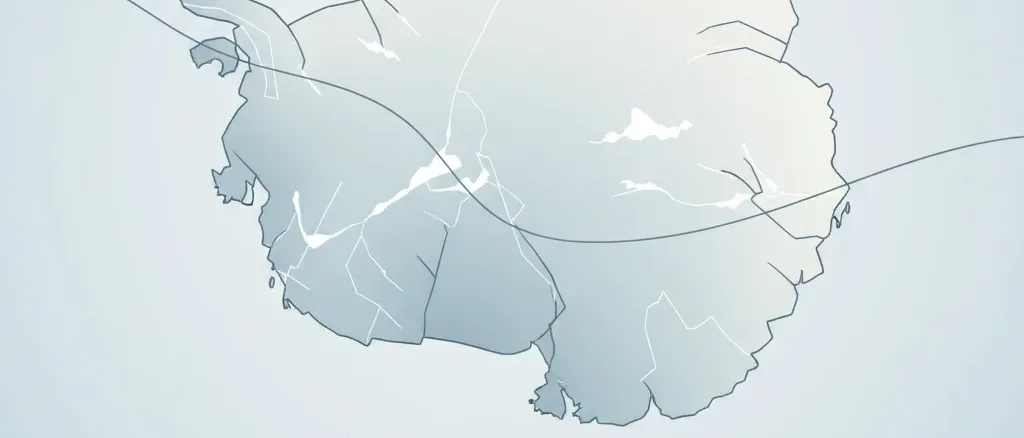
西南極氷床の不安定性は科学文献や気候政策の界隈で議論されているが、洪水に見舞われる都市や森林火災のように固定した文化的イメージをまだ獲得していない。それについて聞いたことがある人の大半は、崩壊すれば相当な海面上昇を意味すること、そして南極が融解していることをおおよそ知っている。広く理解されていないのは、ティッピングポイントの科学が、不可逆的な閾値を超えること(ティッピングポイントの引き金)と、数世紀を要しうる海面上昇の完全な発現とを区別している点である。また、現在の排出軌道の下で、複数の独立したモデル研究が2100年より前の引き金確率を90%超と割り当てていることも広くは理解されていない。このリスクは一般の意識の中で大幅に過小評価されており、南極の氷の喪失を、潜在的にすでに約束づけられた問題としてではなく、緩慢で遠い問題として枠づける傾向がある。
概算: 米国成人の約47.7%が地球温暖化と気候変動全般を「恐れている」または「非常に恐れている」と回答している(チャップマン大学調査、Wave 10、2024年)――WAIS固有の調査は存在しない
実際のリスク
2100年より前にWAISのティッピング閾値を超える確率90%超(現在の排出量、SSP2-4.5)
全世界――WAISのティッピングポイントを超えることは特定の集団に固有ではなく、地球規模の事象である
計算を表示
Wunderlingら(2025年、Earth System Dynamics)は、観測で制約されたパラメータを持つ結合ティッピング要素モデルを用いて、さまざまな排出シナリオの下で16の気候ティッピングポイントを引き起こす確率をモデル化した。SSP2-4.5(現在の世界の政策公約に最も近く、2100年までに約2.6〜2.8°Cの温暖化を予測するシナリオ)の下では、WAISの引き金確率は90%を超えた。これは引き金確率――地球温暖化が、それを超えるとWAISの後退が自己持続的になる温度閾値を超える確率――であり、人間の一生のうちに完全な崩壊が起きる確率ではない。WAISの完全な崩壊は約3.3〜5.3メートルの海面上昇をもたらすが、それは強制シナリオとフィードバックの動態に応じて数十年から数千年の時間スケールにわたる。ティッピング閾値を超えることは、世界をその最終的な結末へと約束づけるが、海面上昇の大半は対象となる成人の一生をはるかに超えて起きる。Armstrong McKayら(2022年、Science)は、中心閾値を産業革命前より約1.5°C高い水準と推定し、その範囲は1〜3°C――現在の軌道では2030年代に超えうると示唆される水準――とした。IPCC AR6 WG1(2021年)は、氷床の不安定性によって2100年より前に1メートルを超える追加的な海面上昇をもたらす過程について「低確率・高影響」のストーリーラインを用いつつ、時期については「深い不確実性」を認めている。不確実性の範囲(30〜99%)は、積極的な緩和シナリオ(SSP1-1.9、引き金確率はより低いが依然として相当)から成り行き任せの経路までの広い範囲を捉えている。
注意事項: 90%超という数字は、現在の排出量(SSP2-4.5)の下でのティッピングポイントの引き金確率であり、WAISの完全な崩壊や、人間の一生のうちに海面上昇が壊滅的…
90%超という数字は、現在の排出量(SSP2-4.5)の下でのティッピングポイントの引き金確率であり、WAISの完全な崩壊や、人間の一生のうちに海面上昇が壊滅的な水準に達する確率ではない。WAISの完全な崩壊は、ティッピング閾値を超えた後、数十年から数千年を要する――海面への影響は、大半のシナリオで対象となる成人の一生をはるかに超えて展開する。約1.5°Cという中心閾値(Armstrong McKay 2022)は、すでに一時的に超えられた可能性がある。世界平均気温は2023〜2024年に産業革命前より1.5°Cを短期間超えたが、WAISにとって関連する指標は年間ピークの異常値ではなく、持続的な数十年平均である。IPCC AR6のより慎重な枠組みは、Wunderling 2025の90%超の引き金確率とは異なる。両者は異なるものを測定しているからである。IPCCは海洋氷床不安定性の急激な発現をその可能性範囲の予測から明示的に除外し、それを「深い不確実性」/低確率・高影響のストーリーラインとして扱い、WAISの不安定性をシミュレートしないCMIPモデルで評価している。一方、Wunderlingは、最終的な崩壊を約束づける閾値を超えることをティッピング要素の枠組みでモデル化している。これらは異なる過程についての、矛盾ではなく両立する評価である。WAISの崩壊を劇的に加速させうるメカニズムである海洋氷崖不安定性(MICI)は依然として論争があり、IPCCの主要な予測からは除外されている。
関連するリスク
似たテーマの他のリスク — 関連する不安を探るために。






比較対象を選択
The West Antarctic Ice Sheet contains enough ice to raise global sea levels by 3.3 to 5.3 metres if fully disgorged into the ocean — an amount sufficient to permanently inundate coastal cities from Miami to Shanghai to Amsterdam. The debate is not whether this would be consequential but whether the process is already irreversibly committed. Wunderling et al. (2025, Earth System Dynamics), using a coupled tipping-element model parameterised from Armstrong McKay et al.’s (2022, Science) threshold synthesis, found that under SSP2-4.5 — the scenario closest to current global policy commitments — the probability of the WAIS crossing its tipping threshold before 2100 exceeded 90%. Armstrong McKay estimated the central threshold at roughly 1.5°C of global warming above pre-industrial levels, within the Paris Agreement’s target range.
The critical distinction is between triggering and completing. When the WAIS tipping point is crossed, global warming has reached a level at which ice retreat becomes self-sustaining: ocean warming beneath the ice shelves melts the underside, the grounding line retreats into deeper water, and the geometry of the ice sheet means retreat accelerates rather than stabilising. But this process unfolds over decades to millennia, not years. Naughten et al. (2023, Nature Climate Change) found that ice-shelf warming in the Amundsen Sea sector is already committed to accelerate at roughly triple the historical rate until at least 2045 regardless of near-term emissions choices — the ocean warming that drives basal melt is locked in by historical emissions. For most people alive today, the sea level consequences lie far beyond their lifetimes even if the threshold is crossed tomorrow. IPCC AR6 frames this as a “low likelihood, high impact” storyline while acknowledging “deep uncertainty.”
The Thwaites Glacier, sometimes called the “Doomsday Glacier,” holds about 65 centimetres of global sea level equivalent and is considered the most vulnerable sector of the WAIS. Satellite altimetry and ocean observations show active basal melting, and the glacier’s “ice shelf” — the floating apron that pins the inland ice — is cracking in ways that some glaciologists believe could accelerate collapse within this century. None of this translates straightforwardly into a personal risk number: the framing here is the probability of a planetary commitment being made in a person’s lifetime, not the probability of dying from it. That probability — on current trajectories — is what makes this entry unusual on this site: the risk is not rare but the consequences are diffuse, slow, and fall predominantly on future generations.
関連する豆知識
現在の排出量のもとで、モデルは2100年までに西南極の転換閾値を越える確率を90%超と見積もっている。一般の人々がこれをどれほど起こりうると考えているかを測る調査すら存在しない。
根拠台帳
以下の各数値は各出典が報告した内容であり、引用した原文の抜粋と算出方法を記載しています。リンクをクリックして直接確認できます。
1/5 件の出典が引用元と一字一句一致することを独立して検証済み
-
[1] Earth System Dynamics — Wunderling, Sakschewski, Rockström, Flores, Hirota, Staal, 2025 — High probability of triggering climate tipping points under current policies modestly amplified by Amazon dieback and permafrost thaw
High probability of triggering climate tipping points under current policies modestly amplified by Amazon dieback and permafrost thaw- 統計値
WAIS triggering probability >90% under SSP2-4.5 (current policy scenario); all sixteen tipping elements analyzed show elevated triggering probabilities under policies as of 2025- 抜粋
“"Under SSP2-4.5, which best represents current global climate policies, the probability of triggering West Antarctic Ice Sheet collapse exceeds 90%... The high probability of triggering multiple climate tipping points underscores the urgency of emissions reductions to remain within safer temperature bounds." ”
- 出典データ
- 2025-05-01
- アクセス日
- 2026-05-09 · アーカイブ版
- 計算過程
- Wunderling et al. 2025 is the primary quantitative source for the >90% headline. SSP2-4.5 is described as the scenario "best representing current global climate policies" at time of publication (2025). The triggering probability means the probability that global temperature crosses the threshold at which WAIS retreat becomes self-sustaining and irreversible on multi-century timescales. The paper uses a coupled tipping-element model incorporating interactions between tipping elements (e.g., Amazon dieback slightly amplifying WAIS triggering probability through global mean temperature). The core result for WAIS is robust to whether or not Amazon and permafrost interactions are included.
- 独立性
- Wunderling et al. use a tipping-element network model parameterised from the Armstrong McKay 2022 threshold estimates, which are themselves derived from paleoclimate evidence and process understanding. This is a different approach from IPCC AR6's process-based climate model ensemble, though both draw on overlapping paleoclimate evidence for threshold estimates.
-
[2] Science — Armstrong McKay, Staal, Abrams, Winkelmann, Sakschewski, Loriani, Fetzer, Cornell, Rockström, Lenton, 2022 — Exceeding 1.5°C global warming could trigger multiple climate tipping points
Exceeding 1.5°C global warming could trigger multiple climate tipping points- 統計値
WAIS central temperature threshold ~1.5°C (range 1-3°C); 'likely' to be triggered above 1.5°C of global warming; full WAIS collapse would raise sea level by more than 3.3 metres over centuries- 抜粋
“"The West Antarctic Ice Sheet has a central threshold of approximately 1.5°C of global warming above pre-industrial levels, with a range of 1 to 3°C... Above 1.5°C, the WAIS becomes 'likely' to cross its tipping threshold, committing to eventual collapse over decades to millennia and a sea level contribution of 3.3-5.3 metres." ”
- 出典データ
- 2022-09-09
- アクセス日
- 2026-05-09 · アーカイブ版
- 計算過程
- Armstrong McKay et al. 2022 is the most comprehensive recent revision of climate tipping point thresholds, synthesising paleoclimate evidence and process understanding for sixteen tipping elements. The WAIS threshold lowering from the previous Lenton 2008 estimate of ~3-5°C to ~1.5°C was significant: it places the threshold within the Paris Agreement target range, meaning that even the most ambitious emissions reduction targets do not guarantee avoiding WAIS commitment to collapse. The 1-3°C range captures deep uncertainty in the threshold itself.
- 独立性
- Armstrong McKay et al. synthesise paleoclimate and process evidence using a different methodology than Wunderling et al.'s probabilistic network model. Both reach compatible conclusions about WAIS proximity to its threshold under current conditions.
-
[3] Nature Climate Change — Naughten et al., 2023 — Unavoidable future increase in West Antarctic ice-shelf melting over the twenty-first century
Unavoidable future increase in West Antarctic ice-shelf melting over the twenty-first century- 統計値
All four tested emissions scenarios produce similar accelerated Amundsen Sea warming until at least 2045; ice-shelf warming projected at ~triple the historical rate regardless of near-term mitigation- 抜粋
“"These results suggest that mitigation of greenhouse gases now has limited power to prevent ocean warming that could lead to the collapse of the West Antarctic Ice Sheet... Under all scenarios, the Amundsen Sea is committed to accelerated warming at approximately triple the historical rate until at least 2045." ”
- 出典データ
- 2023-10-23
- アクセス日
- 2026-05-09 · アーカイブ版
- 計算過程
- Naughten et al. 2023 focuses on ocean warming beneath WAIS ice shelves in the Amundsen Sea sector — the primary driver of ice shelf basal melt and the mechanism by which warming triggers WAIS instability. The finding that all emissions scenarios produce similar warming until 2045 is significant: near-term mitigation cannot prevent the accelerated melting already committed by historical emissions. This does not mean full collapse is committed, only that the process driving it is locked in for at least two decades. The paper's single-model design limits certainty, but it uses a high-resolution ocean model specifically designed for Amundsen Sea dynamics.
- 独立性
- Naughten et al. use an ocean model focused on the Amundsen Sea specifically, rather than the global climate models used by Wunderling 2025 and Armstrong McKay 2022. The result addresses ice-shelf basal melt rates rather than full tipping point probability, providing a physically independent mechanism-level corroboration.
-
[4] Intergovernmental Panel on Climate Change (IPCC), Working Group I, Sixth Assessment Report — Climate Change 2021: The Physical Science Basis — Chapter 9: Ocean, Cryosphere and Sea Level Change
Climate Change 2021: The Physical Science Basis — Chapter 9: Ocean, Cryosphere and Sea Level ChangeSee all 2 Likelier entries citing this source →
- 統計値
Antarctic Ice Sheet 'likely' to keep losing mass all century; MISI/MICI excluded from likely-range projections as 'deep uncertainty'; 'low likelihood, high impact' storyline for >1m additional SLR from these instability processes by 2100- 抜粋
“"Both the Greenland Ice Sheet (virtually certain) and the Antarctic Ice Sheet (likely) will continue to lose mass throughout this century under all considered SSP scenarios... Under high-emissions scenarios, poorly understood processes related to marine ice sheet instability and marine ice cliff instability, characterized by deep uncertainty, have the potential to strongly increase Antarctic mass loss on century to multi-century time scales... These likely range projections do not include those ice-sheet-related processes that are characterized by deep uncertainty... In a low-likelihood, high-impact storyline, under high emissions such processes could in combination contribute more than one additional metre of sea level rise by 2100." ”
- 出典データ
- 2021-08-09
- アクセス日
- 2026-05-09 · アーカイブ版
- 計算過程
- IPCC AR6 does not assign a numerical probability to WAIS collapse before 2100. Instead it explicitly excludes the abrupt, widespread onset of marine ice sheet instability (MISI) and marine ice cliff instability (MICI) from its likely-range projections because those processes are "characterized by deep uncertainty arising from limited process understanding." It does assess that the Antarctic Ice Sheet is likely to keep losing mass throughout this century, and treats a >1 m additional sea-level-rise contribution from these instability processes by 2100 as a low-likelihood, high-impact storyline under high emissions. The Bamber et al. 2019 structured expert judgment cited by AR6 gave WAIS sea level contribution by 2100 as median 8-18 cm with 95th percentile up to 44-93 cm depending on warming scenario — reflecting deep uncertainty but not ruling out large contributions. IPCC AR6's position is more cautious than Wunderling 2025 because it relies on CMIP model ensembles that do not simulate WAIS collapse, rather than the tipping-point network models used by Wunderling.
-
[5] Columbia Climate School — State of the Planet — Crucial Antarctic Glacier Likely to Collapse Much Earlier than Expected 検証済み
Crucial Antarctic Glacier Likely to Collapse Much Earlier than Expected- 統計値
Thwaites Glacier alone holds approximately 65 centimetres of global sea-level-rise equivalent if it melted entirely; identified as the most vulnerable, structurally unstable sector of the West Antarctic Ice Sheet.- 抜粋
“"If the entire glacier were to melt then global sea levels would rise by 65 centimeters, or about two feet." ”
- 出典データ
- 2021-12-17
- アクセス日
- 2026-07-03 · アーカイブ版
- 検証
- グラウンディング監査の際、抜粋を引用元から独立して再取得し、原文と一字一句一致することを確認しました。
- 計算過程
- Supplies the Thwaites-specific sea-level-equivalent figure used in the body prose (65 cm). This is a subset of, and consistent with, the 3.3-5.3 m full-WAIS collapse range from Armstrong McKay et al. 2022 (source above) — Thwaites is one glacier within the broader ice sheet. It does not alter the entry's headline >90% tipping-threshold probability, which remains sourced from Wunderling et al. 2025; this source is used only to ground the Thwaites ice-volume detail mentioned in the body text.
- 独立性
- Science journalism from a university climate research center, reporting on glaciological modelling distinct from the tipping-point probability studies (Wunderling 2025, Armstrong McKay 2022) and the ocean-forcing study (Naughten 2023) cited above; used only for the Thwaites-specific ice-volume figure, not for probability estimates.