証拠の質 4.5/5
8次元のレビュー評価。基準は 品質ルーブリック 。各次元は1〜5で評価。
- D1 出典への根拠
- 4/5
- D2 出典の権威性
- 5/5
- D3 算術
- 5/5
- D4 不確実性
- 4/5
- D5 範囲
- 4/5
- D6 文章
- 5/5
- D7 認識の誠実性
- 4/5
- D8 注意事項の完全性
- 5/5
認知リスク
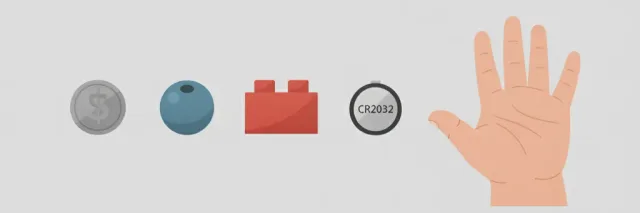
おもちゃの磁石セットや装飾用の強力磁石は、大人向けのデスクトイやストレス解消製品として販売されてきたが、子供が複数の磁石を飲み込んだときの危険は、ほとんどの親には十分に理解されていない。支配的な一般の心的モデルは、磁石の誤飲を硬貨の飲み込み——不快だが自然に解決する——のように扱う。広く知られていないのは、二個以上の強力磁石ではメカニズムが根本的に異なることだ:それらは腸の異なるループを越えて互いに引き合い、数時間以内に虚血、穿孔、腸捻転、腸壊死を引き起こしうる圧力点を作り出す。Middelbergと同僚(2022)は、強力磁石による傷害で子供が治療を受けた保護者のほぼ半数が、強力磁石を子供のおもちゃだと信じており、その磁石が以前CPSCによって市場から撤去されたことを知っていたのはわずか7%だったことを見出した。この危険は、子供をおよそ20倍の率で入院させているにもかかわらず、ボタン電池と比べて大幅に過小評価されている。
概算: ほとんどの親はこの危険について数字を持っていない。事故後調査ではほぼ半数が強力磁石を子供のおもちゃだと信じていた(Middelberg 2022)。
出典: 編集部の直感(調査に基づかない)
実際のリスク
複数の強力磁石の誤飲による米国の子供の年間約300~400件の入院
複数の強力磁石の誤飲による入院、米国の0~14歳の子供
計算を表示
CPSCは、2010-2021年にかけて全年齢0-17歳で磁石関連のED受診を26,600件と推定した(Federal Register、2022年9月)。規則が無効化された後の2017-2020年、強力磁石に特化した年間ED受診は年間およそ2,300-2,400件だった。最大の臨床コホート研究であるMiddelberg et al.(2022, Pediatrics)(25の小児病院にわたる596件の確認された強力磁石症例、2017-2019年)は、55.7%が入院を要し、症例の95%が14歳未満の子供だったことを見出した。56%の入院率を年間約2,400件の強力磁石ED受診に適用すると、再流入後の期間について年間およそ300-400件の入院となる。米国の0-14歳の子供は約61 million人である(国勢調査)。15年の期間にわたる累積リスク:年間300-400件の入院 × 15年 / 61,000,000 ≈ 7.4-9.8 × 10⁻⁵、すなわちおよそ10,000分の1から14,000分の1。見出しは中央値として12,000分の1を用いている。Strickland et al.(2020, JPGN)は、複数磁石の「ケアのエスカレーション」を2017-2019年にわたって独立して約1,094件見出しており(NEISS加重推定)、年間350-400件の重篤な転帰と整合する。新しいCPSC規則(16 CFR Part 1262)は2022年10月に発効した。症例率へのその影響は、公表データからはまだ定量化できない。
注意事項: 12,000分の1という見出しは、0-14歳の子供時代の期間における複数の強力磁石の誤飲による入院を指す。死亡転帰はおおよそ二桁まれで——子供あたり約13 mi…
12,000分の1という見出しは、0-14歳の子供時代の期間における複数の強力磁石の誤飲による入院を指す。死亡転帰はおおよそ二桁まれで——子供あたり約13 million分の1である(0-14歳の子供61 millionの人口に対し、約17年間で5件の確認された米国の死亡)。この危険は具体的には複数の磁石(または一個の磁石+金属物体)に関するものである:単一の磁石の誤飲は、ほぼ普遍的に自然に解決する。この区別は、臨床管理と親へのリスクコミュニケーションの両方にとって決定的に重要である。 確率の範囲は規制サイクルに敏感である:症例は2014年のCPSC規則より前は年間約2,300件で、規則期間中(2015-2016年)に減少し、2016年に規則が無効化された後に年間約2,300-2,400件に急増した。そして新しい2022年の連邦規則(16 CFR Part 1262)は、将来の症例率に対して未知だが潜在的に大きな影響を持つ。300-400件の入院推定は、規則無効化後・新規則前の期間(2017-2022年)を反映している。新規則が無効化された規則より良い遵守を達成すれば、2022年以降の率はより低くなる可能性がある。 磁石の危険は、このサイトの他の項目と比べて異例の位置にある:入院率(約12,000分の1)は、ボタン電池が実質的により多くの公衆衛生コミュニケーションと規制上の注目を受けているにもかかわらず、ボタン電池の重傷率(約250,000分の1)のおよそ20倍である。この可用性のギャップは、部分的には磁石の危険の平均患者年齢の高さ(7.5歳、Middelberg)と、ボタン電池の主として幼児である集団との対比によって説明される。
関連するリスク
似たテーマの他のリスク — 関連する不安を探るために。



比較対象を選択
A single swallowed magnet is almost never a serious emergency. Two or more high-powered magnets swallowed at different times — or a magnet swallowed separately from a metal object — are a different problem entirely. When two neodymium magnets are in different loops of intestine, they attract each other strongly across the bowel wall, creating a pressure point that can cause ischemia, perforation, volvulus, and bowel necrosis within hours. Middelberg et al. (2022, Pediatrics), the largest clinical cohort of high-powered magnet injuries — 596 confirmed cases across 25 children’s hospitals over 2017-2019 — found that 55.7% required hospitalization, 46.3% required endoscopy, surgery, or both, and 9.6% had life-threatening morbidity including bowel obstruction, perforation, fistulae, and volvulus. The first documented US pediatric death from high-powered magnet ingestion occurred in a 20-month-old child in 2005/2006; CPSC has confirmed five US deaths since then.
The regulatory history is a study in how consumer product safety can fail at the enforcement stage. CPSC documented 20 serious cases between 2003 and 2006, including 15 bowel perforations and one death. Case counts climbed sharply over the following decade as high-powered neodymium magnet sets (marketed as “Buckyballs,” “Zen Magnets,” and dozens of similar brands) became popular adult desk toys. CPSC published a federal safety rule in 2014 limiting the flux strength of consumer magnets. The rule took effect in 2015, and annual ED visit rates fell. In 2016, the US Court of Appeals for the Tenth Circuit vacated the rule, finding the CPSC’s supporting findings inadequately explained. High-powered magnets returned to market in 2017. By 2017-2019, Strickland and colleagues (2020, JPGN) documented a five-fold increase in multiple-magnet escalation of care and a hospitalization rate of 37.7%. A new federal rule (16 CFR Part 1262) was unanimously adopted by CPSC in September 2022 with a broader product scope than the vacated rule, but post-enforcement case data are not yet published.
The counter-intuitive finding from comparing magnet and button-battery entries is worth stating directly. Button batteries receive substantially more public-health communication and regulatory attention than high-powered magnets. Yet the hospitalization rate for the magnet hazard — roughly 1 in 12,000 children over the 0-14 window — is approximately 20 times higher than the severe-injury rate for button batteries (1 in 250,000 over the 0-6 window). The difference is explained partly by the older age distribution for magnets (median 7.5 years, Middelberg) relative to button batteries (peak age 2 years), which means magnet exposure is more likely to occur in older children who appear less at-risk, and partly by the complexity of the mechanism, which is not intuitive to parents or to emergency physicians who may initially interpret an X-ray showing two overlapping metallic densities as a coin swallowing rather than a two-magnet emergency.
関連する豆知識
根拠台帳
以下の各数値は各出典が報告した内容であり、引用した原文の抜粋と算出方法を記載しています。リンクをクリックして直接確認できます。
-
[1] Pediatrics — Middelberg et al. (IMPACT of Magnets Research Collaborative), Nationwide Children's Hospital, 2022 — High-Powered Magnet Exposures in Children: A Multi-Center Cohort Study
High-Powered Magnet Exposures in Children: A Multi-Center Cohort Study- 統計値
596 patients confirmed high-powered magnet exposure (25 children's hospitals, 2017-2019); 55.7% hospitalized; 46.3% required endoscopy/surgery; 9.6% had life-threatening morbidity; 95% of care was for children under 14; median age 7.5 years; nearly half of caregivers believed high-powered magnets were children's toys- 抜粋
“"Nearly 600 cases of high-powered magnet-related injuries in the three years after high-powered magnets re-entered the US market (2017 to 2019)... the majority (56%) of children being treated for high-powered magnet-related injuries required hospitalization... nearly one in ten had a potentially life-threatening injury such as bowel obstruction, perforation, infection, bleeding, fistulae or volvulus... 95% of care in this study was for children under 14 years of age... almost half of caregivers believed high-powered magnets were children's toys." ”
- 出典データ
- 2022-02-01
- アクセス日
- 2026-05-09 · アーカイブ版
- 計算過程
- The 56% hospitalization rate from 596 confirmed cases across 25 children's hospitals is the primary clinical outcome rate. Applying this to the CPSC's nationally estimated ~600/yr high-powered magnet ED visits gives ~336 hospitalizations/yr. The 9.6% life-threatening morbidity rate (57/596) translates to approximately 57 life-threatening events per year nationally from high-powered magnet ingestion alone.
- 独立性
- Middelberg et al. use a prospective multi-center cohort design distinct from the NEISS-based population estimates of Strickland 2020 and the CPSC product-incident database. The clinical outcome rates (hospitalization, surgical intervention, life-threatening morbidity) are empirically measured rather than derived from administrative codes.
-
[2] Journal of Pediatric Gastroenterology and Nutrition — Strickland, Reeves, Krishnamurthy, Bhatt, Mahajan, Abbas, 2020 — Magnet Ingestions in Children Presenting to Emergency Departments in the United States, 2009–2019: A Problem in Flux
Magnet Ingestions in Children Presenting to Emergency Departments in the United States, 2009–2019: A Problem in Flux- 統計値
23,756 weighted NEISS-estimated pediatric magnet-ingestion ED visits 2009-2019; hospitalization rate rose to 37.7% in 2017-2019 (post-rule-vacated period); 5-fold increase in multiple-magnet escalation of care (estimated 1,094 cases) over 2017-2019; annual case increase averaged 6.1%- 抜粋
“"An estimated 23,756 children (59% males, 42% < 5 years old) presented with a [suspected magnet ingestion] from 2009 to 2019 with an average annual case increase of 6.1%... From 2017 to 2019, there was a greater proportion of small/round type magnet ingestions and multiple magnet ingestions, and... a 5-fold increase in the escalation of care for multiple magnet ingestions (estimated n = 1,094; CI 505-1,686)." ”
- 出典データ
- 2020-12-01
- アクセス日
- 2026-05-09 · アーカイブ版
- 計算過程
- 1,094 escalation-of-care multiple-magnet cases over 2017-2019 (3 years) ≈ 365/yr — consistent with the ~300-400 hospitalization estimate derived from Middelberg's clinical hospitalization rate applied to CPSC's annual ED visit count. Strickland's NEISS-based approach provides an independent population-level estimate that corroborates the Middelberg clinical-cohort approach.
- 独立性
- Strickland et al. use NEISS (National Electronic Injury Surveillance System), a statistically representative sample of US EDs maintained by CPSC, yielding nationally weighted estimates. This is methodologically independent of the Middelberg multi-center clinical cohort and of the CPSC product-incident administrative database.
-
[3] CDC Morbidity and Mortality Weekly Report, December 8, 2006, Vol. 55, No. 48 — Gastrointestinal Injuries from Magnet Ingestion in Children — United States, 2003–2006
Gastrointestinal Injuries from Magnet Ingestion in Children — United States, 2003–2006- 統計値
20 CPSC-identified serious magnet GI injury cases (2003-2006); 19 required surgery; 75% had bowel perforation; 1 death (first documented US fatality); all cases involved multiple magnets attracting through intestinal loops- 抜粋
“"Since 2003, CPSC has identified one death and 19 other serious cases involving magnets with this type of unusual strength, representing a range of injuries including intestinal perforations (15 cases), obstruction (4), volvulus (3), and peritonitis (4)... The magnets had magnetically joined across two loops of intestine, causing a volvulus that compromised the blood supply to the bowel and led to necrosis, perforation, and sepsis." ”
- 出典データ
- 2006-12-08
- アクセス日
- 2026-05-09 · アーカイブ版
- 計算過程
- This MMWR report established the mechanism: all 20 serious cases involved multiple magnets (or magnets plus a metal object) attracted through the bowel wall. Single-magnet ingestion was not represented in the serious-outcome cases. The 75% bowel-perforation rate in this early clinical case series is consistent with the 9.6% life-threatening morbidity rate in Middelberg 2022 — both measure the outcome rate in cases reaching surgical review, which is a selected severe subset. The first US death (a 20-month-old child, 2005/2006) is documented in this report.
-
[4] US Consumer Product Safety Commission, Federal Register, September 21, 2022 — Safety Standard for Magnets, 16 CFR Part 1262
Safety Standard for Magnets, 16 CFR Part 1262- 統計値
26,600 magnet-related ED visits 2010-2021 (NEISS estimate); 7-8 deaths involving hazardous magnets since 2005 (5 confirmed US deaths); 124 documented surgical cases (2010-2020); new rule requires flux index <50 kG²mm² for all consumer magnet products fitting small-parts cylinder- 抜粋
“"CPSC estimates 26,600 magnet ingestions were treated in hospital ERs from 2010 through 2021, and cases have been rising annually since 2018. CPSC is aware of seven deaths involving the ingestion of hazardous magnets (including two outside of the United States)." ”
- 出典データ
- 2022-09-21
- アクセス日
- 2026-05-09 · アーカイブ版
- 計算過程
- 26,600 ED visits / 12 years ≈ 2,217/yr on average. Five confirmed US deaths across ~17 years (2005-2022) ≈ 0.3/yr — a low annual fatality rate that translates to approximately 1 in 13 million per child over the 0-14 window. The new federal rule (effective October 2022) applies to all consumer products with separable magnets fitting the small-parts cylinder, not just the "magnet sets" definition that the vacated 2014 rule covered. Post-enforcement case data are not yet available in peer-reviewed literature.