証拠の質 4.88/5
8次元のレビュー評価。基準は 品質ルーブリック 。各次元は1〜5で評価。
- D1 出典への根拠
- 5/5
- D2 出典の権威性
- 5/5
- D3 算術
- 5/5
- D4 不確実性
- 5/5
- D5 範囲
- 5/5
- D6 文章
- 5/5
- D7 認識の誠実性
- 4/5
- D8 注意事項の完全性
- 5/5
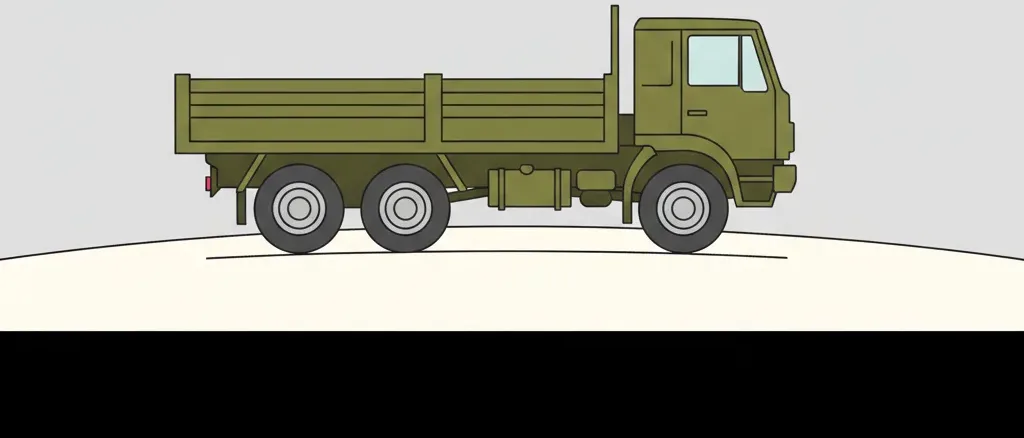
The intuition that military support and logistics roles are substantially safer than frontline infantry is directionally correct but less reliable than it once was. In the 1982 Lebanon War, a peer-reviewed military medicine analysis found support units accounted for 16-21% of total casualties while infantry accounted for 43-56%, a ratio of approximately 2-3:1 in favor of support troops. This distribution shows that support roles carried meaningfully lower risk than direct-combat roles in conventional warfare — but “lower” is not “negligible,” particularly in high-intensity conflicts.
The Ukraine conflict has introduced a specific complication: FPV drones, long-range precision rockets, and ballistic missiles with reported ranges of 50-200 kilometers have specifically targeted logistics depots, fuel dumps, railway hubs, repair facilities, and supply convoys throughout the conflict. The geographic assumption underlying the historical infantry-to-support differential — that rear-area personnel are physically separated from the battlefield — has been partially eroded. Ukraine’s own National Security and Defense Council reported in January 2026 that drone strikes account for roughly 60% of all Russian battlefield losses — further evidence that no rear-area role is as geographically insulated from precision weapons as the historical infantry-to-support ratios assume. Whether this has fundamentally shifted per-capita support casualty rates to match frontline rates, or has merely nudged them upward, cannot be determined from currently available disaggregated casualty data.
No reliable per-capita casualty rate for support and logistics roles in the Ukraine conflict is publicly available. Ukrainian casualty data is classified as a state secret and is not disaggregated by military occupational specialty. Applying 1982 Lebanon War or WWII-era infantry-to-support ratios to the current conflict would produce a number without meaningful empirical grounding in modern drone warfare conditions. The honest conclusion is that support-role risk in a Ukraine-scale conflict is: substantially lower than frontline infantry, materially higher than the near-zero conventional assumptions, and not currently quantifiable from public data with sufficient precision to report as a single probability.
関連する豆知識
ウクライナ規模の戦争で後方支援兵が死亡または重傷を負う確率について、信頼できる数字は存在しない。ドローンや長距離打撃兵器が従来の後方の安全を損なったが、支援任務と戦闘任務を分けるデータは公表されていない。
根拠台帳
以下の各数値は各出典が報告した内容であり、引用した原文の抜粋と算出方法を記載しています。リンクをクリックして直接確認できます。
2/3 件の出典が引用元と一字一句一致することを独立して検証済み
-
[1] Military Medicine (Oxford Academic / PMC) — Review of Military Casualties in Modern Conflicts -- The Re-emergence of Casualties From Armored Warfare 検証済み
Review of Military Casualties in Modern Conflicts -- The Re-emergence of Casualties From Armored Warfare- 統計値
In the 1982 Lebanon War, support units accounted for 21.1% of casualties in urban combat and 16.6% in non-urban combat, compared to infantry at 56% and 43% respectively.- 抜粋
“"In the 1982 Lebanon War, infantry suffered the highest fraction of battlefield injuries in both urban and non-urban combat, at 56% and 43% respectively, followed by armor divisions at 17.1% and 34.8%, and support units at 21.1% and 16.6%." ”
- 出典データ
- 2022-01-01
- アクセス日
- 2026-05-09 · アーカイブ版
- 検証
- グラウンディング監査の際、抜粋を引用元から独立して再取得し、原文と一字一句一致することを確認しました。
- 計算過程
- This study provides share-of-total-casualties data by role category, not per-capita rates. The support-unit share (16-21%) relative to infantry share (43-56%) shows that support troops were somewhat less likely to be casualties, but the ratio is much less favorable than civilian intuition would suggest. The paper cannot be used to derive a per-capita support-troop rate for Ukraine because: (a) the 1982 Lebanon War used different doctrine and technology, (b) the troop mix was different, and (c) the rise of long-range precision weapons and FPV drones in Ukraine has specifically targeted logistics and support infrastructure. This source establishes the historical baseline but does not provide a reliable modern estimate.
- 独立性
- Military Medicine is a peer-reviewed journal of the Association of Military Surgeons of the United States; the study is independent of Ukrainian or Russian government data.
-
[2] Wikipedia (citing military doctrine and historical analysis) — Tooth-to-tail ratio
Tooth-to-tail ratio- 統計値
In the 2005 Iraq deployment, combat troops comprised only 11% of personnel (a tooth-to-tail ratio of 1:8.1), down from 19% in WWII (1:4.3) -- the large majority of a modern force is logistics and support.- 抜粋
“"The tooth-to-tail ratio (T3R), in military jargon, is the number of military personnel it takes to supply and support ('tail') each combat soldier ('tooth'). [...] WW2: 19% combat proportion, ratio 1 : 4.3 [...] Iraq 2005: 11% combat proportion, ratio 1 : 8.1." ”
- 出典データ
- 2024-01-01
- アクセス日
- 2026-05-09 · アーカイブ版
- 計算過程
- The tooth-to-tail ratio documents the relative size of support versus combat forces but does not provide per-capita casualty rates for support troops in high-intensity peer-on-peer warfare. Ukraine is understood to operate with a much lower tooth-to-tail ratio than the modern US military (Ukraine's acute manpower shortage has pushed more personnel toward direct combat roles), making US-derived support/combat troop ratios even less applicable to the Ukraine context. Cited as structural context, not as a basis for a numeric estimate.
- 独立性
- Sourced from military doctrine and historical records; independent of the PMC military medicine study.
-
[3] National Security and Defense Council of Ukraine (RNBO) — Results of Ukraine's Defense Industry in 2025: FPV Drones 検証済み
Results of Ukraine's Defense Industry in 2025: FPV DronesSee all 2 Likelier entries citing this source →
- 統計値
60% of Russian army losses are inflicted through the use of FPV drones (stated January 2026)- 抜粋
“"Today, 60% of the losses of the Russian army are inflicted precisely through the use of FPV drones." ”
- 出典データ
- 2026-01-23
- アクセス日
- 2026-07-04 · アーカイブ版
- 検証
- グラウンディング監査の際、抜粋を引用元から独立して再取得し、原文と一字一句一致することを確認しました。
- 計算過程
- Cited as evidence that long-range and FPV drone strikes have become the dominant casualty mechanism in the conflict, supporting the body's point that rear-area and logistics targets are no longer geographically insulated the way historical infantry-to-support ratios assume. This is a Russian-side casualty-attribution figure (Ukrainian casualty data broken down by role or mechanism is not published), used as the best available public evidence for the general trend; it is not used to derive a per-capita support-troop rate, which this entry flags as unquantifiable from public data.
- 独立性
- RNBO is an official Ukrainian government body; this is Kyiv's own assessment of Russian losses, independent of the PMC military-medicine study and the tooth-to-tail source above.