Evidenzqualität 4.75/5
Bewertungsergebnis nach acht Dimensionen gemäß der Qualitätsrubrik . Jede Dimension wird mit 1–5 bewertet.
- D1 Quellenverankerung
- 5/5
- D2 Quellenautorität
- 5/5
- D3 Arithmetik
- 3/5
- D4 Unsicherheit
- 5/5
- D5 Geltungsbereich
- 5/5
- D6 Prosa
- 5/5
- D7 Ehrlichkeit zur Wahrnehmung
- 5/5
- D8 Vollständigkeit der Einschränkungen
- 5/5
≈ Genauso wahrscheinlich wie
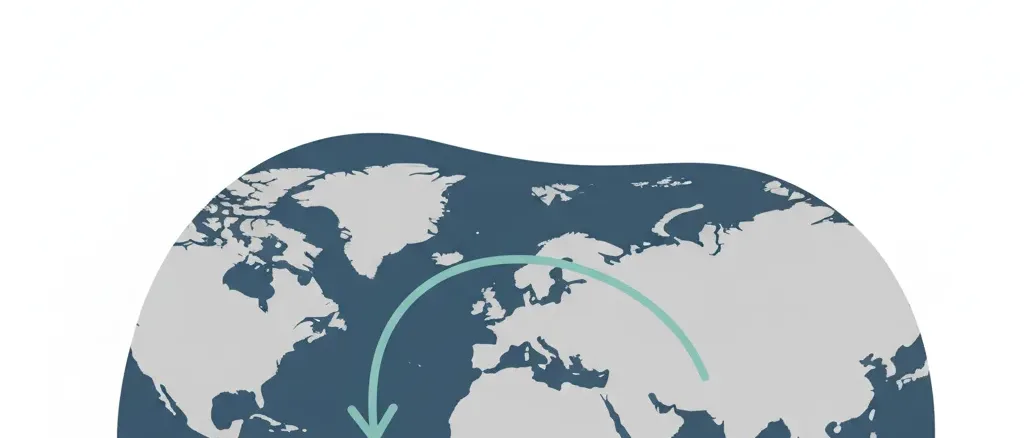
Wahrgenommen
Die Atlantische Meridionale Umwälzzirkulation (AMOC) ist kein Alltagsbegriff, und ihr möglicher Kollaps hat erst kürzlich breitere Sichtbarkeit erlangt. Die populäre Berichterstattung schwankt zwischen Abwiegelung („Wissenschaftler sagen, das ozeanische Förderband verlangsame sich") und Katastrophismus (Schlagzeilen, die den Film „The Day After Tomorrow" heraufbeschwören, dessen Darstellung eines augenblicklichen Gefrierens wissenschaftliche Fiktion war). Das Konzept von Kipppunkten der Ozeanzirkulation gelangte nach dem IPCC-Bericht von 2021 und erneut nach einer umstrittenen Arbeit von 2023, die einen Kollaps möglicherweise um die Jahrhundertmitte vorhersagte, in ein breiteres öffentliches Bewusstsein. Die Umfrage der Chapman University zu den Ängsten der Amerikaner erfasst das AMOC-Bewusstsein nicht gezielt; breitere Daten zur Klimaangst deuten darauf hin, dass etwa 48 % der Amerikaner angeben, Angst oder große Angst vor der globalen Erwärmung und dem Klimawandel zu haben (Chapman 2024), aber spezifische Kipppunkte wie die AMOC werden nicht einzeln aufgeschlüsselt. Das Risiko liegt irgendwo zwischen aktiv gefürchtet und weitgehend unerkannt.
Grobe Schätzung: ~47,7 % der US-Erwachsenen geben an, „Angst" oder „große Angst" vor der globalen Erwärmung und dem Klimawandel im weiteren Sinne zu haben (Chapman University Survey, Wave 10, 2024) — es existieren keine AMOC-spezifischen Umfragedaten
Tatsächlich
~5 % Wahrscheinlichkeit eines abrupten AMOC-Kollapses vor 2100 (IPCC „sehr unwahrscheinlich" = 0–10 %, SROCC 2019 / AR6 konsistent)
Weltbevölkerung — der AMOC-Kollaps ist ein Ereignis von planetarem Ausmaß ohne bevölkerungsspezifische Wahrscheinlichkeit
Berechnung anzeigen
Das IPCC AR6 WG1 (2021) bewertete, dass die AMOC im 21. Jahrhundert „sehr wahrscheinlich" zurückgehen wird, mit „mittlerer Zuversicht, dass der Rückgang keinen abrupten Kollaps vor 2100 umfasst." Der IPCC SROCC (2019) SPM (B.2.7) ist die Bewertung, die den kalibrierten Wahrscheinlichkeitsbegriff „sehr unwahrscheinlich (mittlere Zuversicht)" auf einen AMOC-Kollaps anwendet. Kalibrierte IPCC-Sprache: „sehr unwahrscheinlich" = 0–10 % Wahrscheinlichkeit. Nimmt man 5 % als Mittelwert dieser Spanne, ergibt sich die Schlagzeilenzahl. Dies ist eine Wahrscheinlichkeit für ein zivilisatorisches Ereignis, keine persönliche Sterbewahrscheinlichkeit: Ein AMOC-Kollaps würde niemanden sofort töten, aber eine Kaskade von Folgen auslösen (Rückgänge der europäischen Wintertemperaturen um 5–15 °C, beschleunigter Meeresspiegelanstieg an der US-Ostküste, Störung des tropischen Regengürtels), deren indirekte Sterblichkeit über Jahrzehnte erheblich wäre. Beobachtungsbasierte Studien liefern deutlich höhere Schätzungen: Ditlevsen und Ditlevsen (2023, Nature Communications) leiteten aus statistischen Frühwarnsignalen in Meeresoberflächentemperatur-Proxys ein zentrales Kollapsdatum von 2057 mit einem 95-%-Konfidenzintervall von 2025–2095 ab, was eine Wahrscheinlichkeit von >50 % innerhalb einer 50-jährigen Erwachsenenlebenszeit impliziert. Smolders et al. (2024) schätzten die Wahrscheinlichkeit eines AMOC-Kollapses vor 2050 anhand physikbasierter Salzgehaltsindikatoren auf 59 ± 17 %. Beide Ansätze werden von mehreren führenden Ozeanographen aus methodischen Gründen bestritten, und eine 34-Modell-Ensemblestudie von 2025 (Baker et al., Nature) fand die AMOC unter allen getesteten Antriebsszenarien als kollapsresistent. Das weite Unsicherheitsband (1–40 %) spiegelt diese echte wissenschaftliche Uneinigkeit wider, nicht bloß statistische Unsicherheit um eine bekannte Verteilung. Verfeinerungen von 2025 (hinzugefügt am 2026-06-14) schärfen die Frage des ZEITPUNKTS, ohne die Wahrscheinlichkeit aufzulösen: van Westen et al. (2025, JGR Oceans) verorten den Kollapsbeginn nahe 2063 (2026–2095, 25.–57. Perzentil) unter SSP2-4.5 mit einer Kippschwelle nahe ~2,5 °C, während Drijfhout et al. (2025, ERL) feststellen, dass in CMIP6-Erweiterungen ein vollständiger Zusammenbruch der nördlichen Umwälzung nach 2100 über 50–100 Jahre hinweg erfolgt, selbst wenn er früher festgelegt wurde. Diese verengen die zentrale Beginn-Schätzung und untermauern die Unterscheidung zwischen Beginn und Realisierung, aber keine davon ist eine Neubewertung durch eine offizielle Behörde, sodass die IPCC-gestützte Schlagzeile von 5 % und das Band von 1–40 % unverändert beibehalten werden.
Einschränkungen: Die Schlagzeile von 5 % folgt der kalibrierten Sprache des IPCC für „sehr unwahr…
Die Schlagzeile von 5 % folgt der kalibrierten Sprache des IPCC für „sehr unwahrscheinlich" (0–10 % Wahrscheinlichkeit, mittlere Zuversicht) — der Begriff „sehr unwahrscheinlich (mittlere Zuversicht)" für einen AMOC-Kollaps stammt aus dem IPCC SROCC (2019) SPM (B.2.7), wobei AR6 WG1 (2021) dies als „mittlere Zuversicht, dass der Rückgang keinen abrupten Kollaps vor 2100 umfasst" neu formuliert. Die Schlagzeile stellt den wissenschaftlichen Konsensanker dar, nicht die volle Spanne der veröffentlichten Schätzungen. Beobachtungsbasierte Studien (Ditlevsen 2023; Smolders et al. 2024) ergeben deutlich höhere Schätzungen — 50–60 % Kollapswahrscheinlichkeit bis zur Jahrhundertmitte —, aber diese Methoden werden hinsichtlich Proxy-Repräsentativität, Zeitreihenlänge und Modellannahmen bestritten. Die 34-Modell-Ensemblestudie von Baker et al. 2025 argumentiert für eine AMOC-Resilienz unter allen getesteten Szenarien und stützt die Bewertung des IPCC als „sehr unwahrscheinlich". Die wissenschaftliche Debatte ist wirklich ungelöst; das Unsicherheitsband (1–40 %) spiegelt dies wider und nicht bloß statistische Unsicherheit um einen bekannten Parameter. Ein AMOC-„Kollaps" bedeutet in diesem Eintrag eine abrupte, selbsterhaltende Reduktion auf einen dramatisch geschwächten Zustand — nicht die allmähliche Abschwächung (derzeit als „sehr wahrscheinlich" bewertet), die bereits im Gange ist. Die Folgen eines Kollapses würden sich über Jahre bis Jahrzehnte entfalten, nicht über Nacht: Die europäischen Wintertemperaturen könnten über Zeiträume von 10–30 Jahren um 5–15 °C fallen, der Meeresspiegel an der US-Ostküste würde um zusätzliche 10–50 cm über die Basisprojektionen hinaus ansteigen, und die tropischen Niederschlagsmuster würden sich erheblich verschieben. Die Lebenszeitzahl ist eine Wahrscheinlichkeit dafür, dass das Ereignis ausgelöst wird, nicht dafür, dass seine Folgen innerhalb der Lebenszeit des betrachteten Erwachsenen vollständig eintreten. Zwei Studien von 2025 schärfen den Zeitpunkt, ohne die Schlagzeile zu verschieben. Van Westen et al. (2025, JGR Oceans), die 25 Klimamodelle analysieren, schätzen, dass ein AMOC-Kollaps unter einem Szenario mittlerer Emissionen bis 2063 (Spanne 2026–2095) und unter hohen Emissionen bis 2055 beginnen könnte, mit der Kippschwelle nahe ~2,5 °C globaler Erwärmung — betonen aber, dass das Erreichen eines wesentlich schwächeren Zustands nach dem Beginn mehr als 100 Jahre dauert. Drijfhout et al. (2025, Environmental Research Letters), die über 2100 hinaus verlängerte CMIP6-Simulationen untersuchen, finden, dass ein vollständiger Zusammenbruch der nördlichen Tiefenumwälzung nach 2100 in allen so weit gerechneten Hochemissionsmodellen (SSP5-8.5) und in 37 % der Modelle mittlerer Emissionen bis 2300 auftritt. Diese verfeinern die zentrale Beginn-Schätzung gegenüber dem Einzelstudien-Alarm von 2023, untermauern jedoch die obige Rahmung, statt sie umzustoßen: Ein Beginn um die Jahrhundertmitte wäre eine Festlegung, kein vollzogener Kollaps innerhalb der Lebenszeit eines heute lebenden Erwachsenen.
Verwandte Risiken
Andere Risiken zu ähnlichen Themen — zum Erkunden verwandter Ängste.
Kipppunkt WAIS
Wie hoch ist die Wahrscheinlichkeit, dass der Kipppunkt des Westantarktischen Eisschilds in Ihrer Lebenszeit überschritten wird?

Extremistische Regierungs-Katastrophe
Wie hoch ist die Wahrscheinlichkeit, dass eine politisch extremistische Regierung Ihr Land katastrophal ruiniert?

Klimawandel-Todesfälle
Wie hoch ist die Wahrscheinlichkeit, an den Folgen des Klimawandels zu sterben?

Hurrikan
Wie hoch ist die Wahrscheinlichkeit, durch einen Hurrikan (tropischen Wirbelsturm) getötet zu werden?


Asteroideneinschlag
Wie hoch ist die Wahrscheinlichkeit, durch einen Asteroiden- oder Kometeneinschlag zu sterben?


Schneesturmtod
Wie hoch ist die Wahrscheinlichkeit, in einem schweren Wintersturm oder Schneesturm zu sterben?
Vergleichsrisiko wählen
The Atlantic Meridional Overturning Circulation is the vast network of ocean currents that transports warm surface water northward through the Atlantic and returns cold, deep water southward — the system responsible for northwestern Europe’s mild climate relative to its latitude. IPCC AR6 (2021) assessed that AMOC will “very likely” decline over the 21st century, with “medium confidence that the decline will not involve an abrupt collapse before 2100.” The earlier IPCC SROCC (2019) is the assessment that applied the calibrated “very unlikely (medium confidence)” likelihood term to an AMOC collapse — where “very unlikely” denotes a 0-10% probability. Using the midpoint of that calibrated range gives a ~5% lifetime probability of abrupt collapse before 2100. Caesar and colleagues (2018, Nature) documented that AMOC has already weakened by approximately 15% since the mid-twentieth century, using an independent sea-surface temperature fingerprinting approach that is consistent with RAPID array direct measurements begun in 2004.
The scientific debate is unusually polarised. Observation-based early-warning studies (Boers 2021, Nature Climate Change; Ditlevsen 2023, Nature Communications; van Westen 2024, Science Advances) identify statistical and physical signals consistent with AMOC approaching a tipping threshold, with Ditlevsen’s contested analysis predicting collapse most likely between 2025 and 2095. These findings imply a much higher probability than the IPCC consensus — in some estimates, 50-60% before mid-century. The counterargument came in February 2025 from Baker et al. (Nature), whose 34-model ensemble found AMOC resilient to collapse under all tested forcing scenarios, with Southern Ocean wind-driven upwelling sustaining the circulation even under extreme greenhouse gas concentrations. The IPCC’s “very unlikely” assessment rests primarily on this model-ensemble evidence. Both camps are publishing in leading peer-reviewed journals; the discrepancy is not a matter of one side being wrong in an obvious way.
Should AMOC collapse occur, the consequences within the following few decades would be substantial. Van Westen et al.’s consequence modelling projects European winter temperature drops of 5-15°C across northwestern Europe, with London’s average winter temperature falling from roughly 7°C to near 2°C and Oslo’s to well below -10°C. Sea level on the US East Coast would rise by an additional 10-50 cm above baseline sea level rise projections, as the ocean surface that AMOC currently depresses would rebound northward. The Amazon rainforest would face additional drying as tropical rainfall patterns shift. These are not immediate effects but decadal-to-century timescale consequences of a threshold crossing that, if it occurs, would likely be irreversible on any timescale relevant to human planning.
Verwandte Fakten
Der IPCC AR6 stuft einen abrupten AMOC-Kollaps vor 2100 als "sehr unwahrscheinlich" ein, eine Wahrscheinlichkeit von rund 5 Prozent. Mehrere beobachtungsbasierte Studien argumentieren, die Chancen seien höher, und die Unsicherheitsspanne ist breit.
Quellenregister
Jede Zahl unten ist das, was die jeweilige Quelle berichtet hat — mit dem wörtlichen Zitat, auf das wir uns stützen, und wie wir zu unserer Zahl gelangt sind. Klicke auf einen Link, um direkt zu prüfen.
-
[1] Intergovernmental Panel on Climate Change (IPCC), Working Group I, Sixth Assessment Report — Climate Change 2021: The Physical Science Basis — Chapter 9: Ocean, Cryosphere and Sea Level Change
Climate Change 2021: The Physical Science Basis — Chapter 9: Ocean, Cryosphere and Sea Level ChangeSee all 2 Likelier entries citing this source →
- Statistik
AMOC will 'very likely' decline over the 21st century for all SSP scenarios; there is 'medium confidence' that the decline will not involve an abrupt collapse before 2100- Auszug
“"The Atlantic Meridional Overturning Circulation (AMOC) will very likely decline over the 21st century for all SSP scenarios. There is medium confidence that the decline will not involve an abrupt collapse before 2100." ”
- Quelldaten von
- 2021-08-09
- Abgerufen
- 2026-05-09 · archivierte Kopie
- Berechnung
- AR6 WG1 Ch9 does not itself assign a numerical probability, nor does it use the "very unlikely" likelihood term for AMOC collapse — it states only "medium confidence that the decline will not involve an abrupt collapse before 2100." The "very unlikely (medium confidence)" characterization of an AMOC collapse is the IPCC SROCC (2019) SPM B.2.7 assessment (see the SROCC source below), which AR6 Ch9 is consistent with. Under the IPCC calibrated-language scale "very unlikely" = 0-10% probability; 5% is taken as the midpoint of that SROCC-defined range for the headline. The IPCC does not give a numerical probability; 5% is the author's interpretation of the calibrated-language midpoint. The 59-year adult lifetime window (age 18 to 77) maps roughly onto the "before 2100" horizon.
-
[2] Intergovernmental Panel on Climate Change (IPCC), SROCC 2019 — Special Report on the Ocean and Cryosphere in a Changing Climate — Summary for Policymakers (section B.2.7)
Special Report on the Ocean and Cryosphere in a Changing Climate — Summary for Policymakers (section B.2.7)- Statistik
AMOC is projected to weaken in the 21st century under all RCPs ('very likely'), although a collapse is 'very unlikely' (medium confidence)- Auszug
“"The AMOC is projected to weaken in the 21st century under all RCPs (very likely), although a collapse is very unlikely (medium confidence)." ”
- Quelldaten von
- 2019-09-25
- Abgerufen
- 2026-07-11 · archivierte Kopie
- Berechnung
- This SROCC SPM statement (B.2.7) is the IPCC assessment that actually applies the "very unlikely (medium confidence)" likelihood term to an AMOC collapse. It is the grounding for the headline: under IPCC calibrated language "very unlikely" = 0-10% probability, and 5% is taken as the midpoint of that range. AR6 WG1 Ch9 (2021) restated this as "medium confidence that the decline will not involve an abrupt collapse before 2100," consistent with SROCC but without repeating the "very unlikely" term. Neither report gives a numerical probability; the 5% midpoint is the author's interpretation of the SROCC-stated calibrated-language range.
-
[3] Nature — Caesar, Rahmstorf et al., 2018 — Observed fingerprint of a weakening Atlantic Ocean overturning circulation
Observed fingerprint of a weakening Atlantic Ocean overturning circulation- Statistik
AMOC has weakened by approximately 3 ± 1 sverdrups (around 15%) since the mid-20th century, revealed by characteristic sea-surface temperature fingerprint- Auszug
“"The AMOC has weakened by about 3 ± 1 sverdrups (around 15 per cent) since the mid-twentieth century, revealed by a characteristic spatial and seasonal sea-surface temperature 'fingerprint' — consisting of a pattern of cooling in the subpolar Atlantic Ocean and warming in the Gulf Stream region." ”
- Quelldaten von
- 2018-04-11
- Abgerufen
- 2026-05-09 · archivierte Kopie
- Berechnung
- Caesar et al. 2018 is the observational foundation for the AMOC weakening narrative. The 15% weakening since the mid-20th century is separate from the collapse-probability question — weakening and collapse are different states, and the IPCC projects continued weakening with high confidence even while assessing collapse as very unlikely. This source establishes that AMOC is not stable at its current state, providing the background against which collapse probability must be assessed.
- Unabhängigkeit
- Caesar et al. use an independent SST-based fingerprinting approach developed separately from the RAPID array direct measurements (which began in 2004) and from the statistical early-warning methods of Boers 2021 and Ditlevsen 2023. The three methodologies corroborate each other on the weakening trend.
-
[4] Nature Communications — Ditlevsen and Ditlevsen, 2023 — Warning of a forthcoming collapse of the Atlantic meridional overturning circulation
Warning of a forthcoming collapse of the Atlantic meridional overturning circulation- Statistik
Statistical early-warning signals in SST proxies predict central AMOC collapse in 2057 (95% CI: 2025-2095); method is contested by multiple senior oceanographers- Auszug
“"Data-driven estimators for the time of tipping predict a potential AMOC collapse mid-century under the current emission scenario, with a 95% confidence interval of 2025–2095." ”
- Quelldaten von
- 2023-07-25
- Abgerufen
- 2026-05-09 · archivierte Kopie
- Berechnung
- Ditlevsen 2023 derives its estimate from statistical early-warning signals (variance and autocorrelation growth) in North Atlantic SST proxies interpreted as fingerprints of approaching instability. The method is contested: Prof. Penny Holliday (National Oceanography Centre) stated "sea surface temperature of the North Atlantic subpolar gyre is not a clear indicator of the state of the AMOC"; Prof. Niklas Boers (TU Munich) argued "uncertainties in the heavily oversimplified model assumptions... are too high"; Dr. Levke Caesar (Univ. Bremen) stated "the resulting time series are too short." This source represents the upper bound of the scientific plausibility range and is not the headline figure, but it anchors the upper end of the uncertainty band.
- Unabhängigkeit
- Ditlevsen 2023 is methodologically distinct from the IPCC's model-ensemble approach and from Caesar 2018's SST fingerprinting. It is included to represent the range of scientific opinion rather than as an independent confirmation of any single estimate.
-
[5] Science Advances — van Westen, Kliphuis and Dijkstra, 2024 — Physics-based early warning signal shows that AMOC is on tipping course
Physics-based early warning signal shows that AMOC is on tipping course- Statistik
Freshwater transport indicator (F_ovS) shows significant negative trend over past 40 years, consistent with AMOC approaching tipping point; European temperature drops of 5-15°C projected in collapse scenario- Auszug
“"Reanalysis products indicate that the present-day AMOC is on route to tipping... Temperature trends exceed 1°C per decade across northwestern Europe during collapse." ”
- Quelldaten von
- 2024-02-09
- Abgerufen
- 2026-05-09 · archivierte Kopie
- Berechnung
- Van Westen 2024 uses a physics-based indicator (minimum of AMOC-induced freshwater transport, F_ovS) rather than statistical proxies. It finds a statistically significant negative trend of -1.20 mSv/year over the past 40 years, consistent with approach to tipping, but explicitly states inability to determine when tipping would occur. The consequence model run shows London's average winter temperature falling to ~1.9°C (from ~7°C today) and Oslo's to -16.5°C. These are consequences of full collapse, not of the current trajectory in isolation.
- Unabhängigkeit
- Van Westen et al. use a different indicator (F_ovS from ocean reanalysis products) than Ditlevsen 2023 (SST statistical signals) or Caesar 2018 (SST fingerprinting), providing genuinely independent physics-based evidence for AMOC approaching instability.
-
[6] Nature — Baker et al. (Met Office and University of Exeter), 2025 — Continued Atlantic overturning circulation even under climate extremes
Continued Atlantic overturning circulation even under climate extremes- Statistik
34-model ensemble finds AMOC resilient to collapse under all tested greenhouse gas and freshwater forcing scenarios; Southern Ocean wind-driven upwelling sustains circulation- Auszug
“"The AMOC is resilient to extreme greenhouse gas and North Atlantic freshwater forcings across 34 climate models." ”
- Quelldaten von
- 2025-02-19
- Abgerufen
- 2026-05-09 · archivierte Kopie
- Berechnung
- Baker et al. 2025 is the primary model-based counterargument. The 34-model ensemble finds that Southern Ocean upwelling — not captured in the observation-based early-warning studies — sustains AMOC circulation even under extreme forcing. This mechanism explains why most CMIP climate models do not show AMOC collapse this century, which IPCC AR6 uses as the primary basis for its "very unlikely" assessment. Baker 2025 is cited here as a materially important dissenting view that anchors the lower end of the uncertainty range. The discrepancy between the observation-based (Ditlevsen, Boers, van Westen) and model-based (Baker, IPCC) views is the fundamental unresolved debate in AMOC science.
- Unabhängigkeit
- Baker et al. is methodologically opposed to the observation-based early-warning literature — it uses fully coupled climate models rather than statistical signals — and its conclusion directly contradicts the observation-based studies. Both methodologies are active areas of peer-reviewed research; neither has been refuted.
-
[7] Journal of Geophysical Research: Oceans — van Westen, Kliphuis and Dijkstra, 2025 — Physics-Based Indicators for the Onset of an AMOC Collapse Under Climate Change
Physics-Based Indicators for the Onset of an AMOC Collapse Under Climate Change- Statistik
25-model analysis estimates AMOC collapse could begin by 2063 (2026-2095, 25th-57th percentiles) under SSP2-4.5, or by 2055 (2023-2076) under SSP5-8.5; tipping threshold near ~2.5C global warming- Auszug
“"An analysis consisting of 25 different climate models shows that the AMOC could begin to collapse by 2063 (from 2026 to 2095, 25th to 57th percentiles) under an intermediate emission scenario (SSP2-4.5), or by 2055 (from 2023 to 2076, 25th to 75th percentiles) under a high-end emission scenario (SSP5-8.5). When the AMOC collapses, the Northwestern European climate changes drastically and this will likely induce severe societal impacts." ”
- Quelldaten von
- 2025-08-24
- Abgerufen
- 2026-06-14 · archivierte Kopie
- Berechnung
- Van Westen et al. 2025 (JGR Oceans, Vol 130 Issue 8) develops a buoyancy-flux physics-based indicator for the ONSET of AMOC tipping — the moment the system becomes committed, not the moment a weakened state is reached. The paper's body places the multimodel-mean tipping threshold near ~2.5C of global warming above pre-industrial (the abstract states the onset years; the 2.5C / +2.48C figure is in the results text, paraphrased here, not in the verbatim excerpt). Critically, the paper states that once collapse begins it "takes more than 100 years to reach a substantially weaker state" — so a ~2063 onset under SSP2-4.5 describes a committed trajectory, not consequences realised within a focal adult's lifetime. This refines collapse TIMING relative to the contested 2023 single-study alarm but does not itself yield a numerical lifetime probability, so the 5% headline is unchanged; the result is recorded as a caveat and an assumptions addendum.
- Unabhängigkeit
- Van Westen 2025 (JGR) uses a buoyancy-flux onset indicator across 25 CMIP-class models — distinct from both the SSP-extension shutdown framing of the 2025 ERL CMIP6 study and the F_ovS reanalysis indicator of van Westen 2024 (Science Advances). It sits between the observation-based alarm and the model-based resilience views.