Evidenzqualität 4.88/5
Bewertungsergebnis nach acht Dimensionen gemäß der Qualitätsrubrik . Jede Dimension wird mit 1–5 bewertet.
- D1 Quellenverankerung
- 4/5
- D2 Quellenautorität
- 5/5
- D3 Arithmetik
- 5/5
- D4 Unsicherheit
- 5/5
- D5 Geltungsbereich
- 5/5
- D6 Prosa
- 5/5
- D7 Ehrlichkeit zur Wahrnehmung
- 5/5
- D8 Vollständigkeit der Einschränkungen
- 5/5
● Ihre Faktoren — auf dieses Risiko ▾ klicken zum Anzeigen
- Deine Faktoren
≈ Genauso wahrscheinlich wie
Wahrgenommen
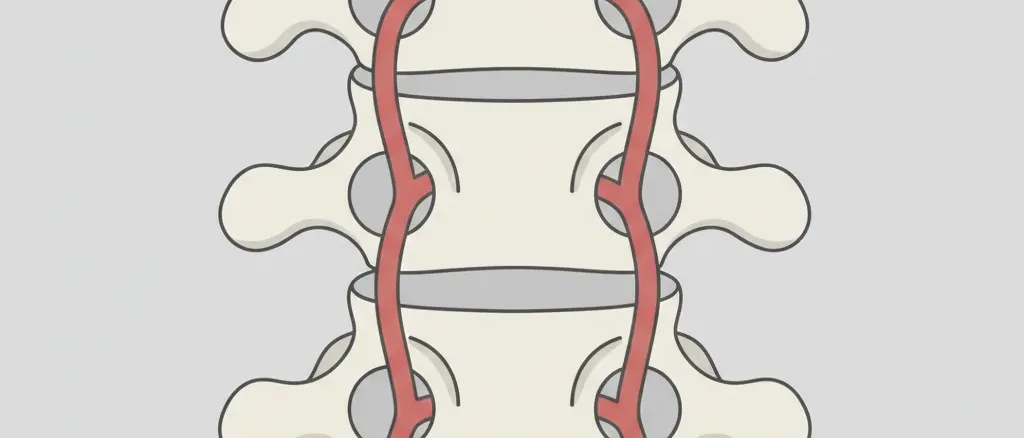
Der Zusammenhang zwischen zervikaler Manipulation und Schlaganfall hat seit Jahrzehnten Schlagzeilen, Klagen und eine polarisierte Fachdebatte hervorgebracht. Fallberichte über Dissektionen der Vertebralarterie nach chiropraktischer Nackeneinrenkung haben die Wahrnehmung geschaffen, dass der Eingriff ein bedeutsames Schlaganfallrisiko birgt. Die chiropraktische Profession argumentiert, dass der Zusammenhang durch Störfaktoren verzerrt ist – Patienten mit einer vorbestehenden Arteriendissektion suchen wegen Nackenschmerzen vor ihrem Schlaganfall Hilfe auf, was eine zeitliche, aber keine kausale Verbindung schafft. Kritiker wenden ein, dass das absolute Risiko zwar klein, aber nicht null ist und dass zervikale Manipulation keine nachgewiesene Überlegenheit gegenüber Physiotherapie bei Nacken- oder Rückenschmerzen bietet, was jedes Schlaganfallrisiko aus Risiko-Nutzen-Sicht inakzeptabel macht.
Grobe Schätzung: Weithin als mit einem kleinen, aber realen Schlaganfallrisiko behaftet wahrgenommen; manche Patienten meiden chiropraktische Behandlung ganz
Quelle: redaktionelle Einschätzung, nicht erhoben
Tatsächlich
~1-3 vertebrobasiläre Ereignisse pro Million zervikaler Manipulationen
Patienten, die eine Manipulation der Halswirbelsäule durch Chiropraktiker erhalten
Berechnung anzeigen
Veröffentlichte Schätzungen für vertebrobasiläre Schlaganfälle nach zervikaler Manipulation reichen von 1 pro 400.000 bis 1 pro 5,85 Millionen Manipulationen, wobei die meisten Übersichtsarbeiten auf etwa 1-3 pro Million konvergieren. Als zentrale Schätzung werden 2 pro Million verwendet. Die Lebenszeitschätzung hängt stark von den Expositionsannahmen ab. Ein »regelmäßiger Chiropraktik-Nutzer«, der etwa 20 zervikale Manipulationen pro Jahr über 30 Jahre erhält (600 Manipulationen im Leben), hätte ein kumulatives Risiko von: 1 − (1 − 0,000002)^600 ≈ 0,0012, oder rund 1 zu 830. Der durchschnittliche Amerikaner erhält jedoch weit weniger zervikale Manipulationen im Leben. Etwa 10 % der US-Erwachsenen besuchen in einem gegebenen Jahr einen Chiropraktiker, und nicht alle Besuche umfassen eine zervikale Manipulation. Eine repräsentativere Lebenszeitexposition für die Allgemeinbevölkerung könnten 30 zervikale Manipulationen sein. Bei 2 pro Million pro Sitzung: 1 − (1 − 0,000002)^30 ≈ 0,00006, oder rund 1 zu 17.000. Die Fall-Kontroll-Studie von Cassidy et al. 2008 fand kein erhöhtes Risiko für einen vertebrobasilären Schlaganfall nach einem chiropraktischen Besuch im Vergleich zu einem Hausarztbesuch, was darauf hindeutet, dass der Zusammenhang vollständig durch eine vorbestehende Dissektion verzerrt sein könnte. Wenn diese Interpretation korrekt ist, liegt das kausale Risiko näher bei null.
Einschränkungen: Die Risikoschätzung in diesem Eintrag ist bedingt durch den Erhalt einer zervika…
Die Risikoschätzung in diesem Eintrag ist bedingt durch den Erhalt einer zervikalen Manipulation. Für Menschen, die nie eine zervikale Manipulation erhalten, ist das Risiko per Definition null. Die Einordnung als »überbewertet« bezieht sich auf die Wahrnehmung, dass chiropraktische Nackenmanipulation ein hohes Schlaganfallrisiko birgt – das absolute Risiko pro Sitzung liegt, falls kausal, im Bereich von 1 zu einer Million. Der entscheidende Kontext ist jedoch die Risiko-Nutzen-Betrachtung: Wenn zervikale Manipulation keinen Nutzen gegenüber Physiotherapie oder Bewegung bei Nackenschmerzen bietet (wie mehrere Cochrane-Übersichtsarbeiten nahelegen), dann verschiebt jedes von null verschiedene Schlaganfallrisiko – selbst ein sehr kleines – das Risiko-Nutzen-Verhältnis ungünstig. Der Eintrag behandelt keine lumbale oder thorakale Manipulation, die nicht dasselbe vaskuläre Risiko tragen. Die Befunde von Cassidy 2008 und Church 2016, wonach kein erhöhtes Risiko im Vergleich zu Hausarztbesuchen besteht, bleiben methodisch umstritten und sollten nicht als Beweis dafür interpretiert werden, dass das Risiko null ist.
Verwandte Risiken
Andere Risiken zu ähnlichen Themen — zum Erkunden verwandter Ängste.

Anaphylaxie
Wie hoch ist die Wahrscheinlichkeit, an einer schweren allergischen Reaktion zu sterben?

CO-Vergiftung
Wie hoch ist die Wahrscheinlichkeit, an einer Kohlenmonoxidvergiftung zu sterben?
Chagas-Krankheit
Wie hoch ist die Wahrscheinlichkeit, sich in Lateinamerika mit der Chagas-Krankheit anzustecken?

Hund stirbt im heißen Auto
Wie hoch ist die Wahrscheinlichkeit, dass ein Hund in einem heißen Auto stirbt?

Narkosetod
Wie hoch ist die Wahrscheinlichkeit, während einer Operation an einer Vollnarkose zu sterben?

Hepatitis A (Reise)
Wie hoch ist die Wahrscheinlichkeit, sich als ungeimpfter Reisender in eine endemische Region mit Hepatitis A anzustecken?

Malaria (Reise)
Wie hoch ist das Risiko, als Reisender in ein endemisches Land an Malaria zu erkranken?

Schistosomiasis
Wie hoch ist die Wahrscheinlichkeit, sich durch Süßwasserkontakt eine schwere Parasiteninfektion zuzuziehen?
Vergleichsrisiko wählen
The risk of vertebrobasilar stroke following cervical spine manipulation has been estimated at approximately 1-3 per million sessions across multiple studies using different methodologies — malpractice claims analysis, practitioner surveys, and population-based case-control designs. The range spans from Haldeman’s estimate of 1 per 5.85 million manipulations (based on Canadian malpractice data) to roughly 1 per 400,000 from a Swiss survey. The most cited population study, Cassidy et al. 2008, found no excess risk of vertebrobasilar stroke after a chiropractic visit compared with a primary care physician visit, leading the authors to conclude that the association is confounded: patients with undiagnosed vertebral artery dissection seek care for the neck pain and headache that precede their stroke, visiting either a chiropractor or a doctor before the event.
The causation question remains unresolved. A 2016 systematic review and meta-analysis (Church et al.) found a small but statistically significant association between chiropractic care and cervical artery dissection (odds ratio ~1.74) — but concluded there is no evidence for causation, noting the association was no greater than that seen for visits to a primary-care physician. A 2024 narrative review acknowledged plausible biomechanical mechanisms — rotational forces on the vertebral artery during high-velocity cervical thrust — but concluded that epidemiological studies do not support a causal link at the population level. The difficulty is structural: vertebral artery dissection is rare, and the temporal association between a chiropractic visit and a stroke is expected even without causation, because neck pain is both a symptom of dissection and a reason to visit a chiropractor. Distinguishing causation from confounding in this scenario would require an impractically large randomized trial.
The more productive question is not whether cervical manipulation causes stroke (probably sometimes, though possibly never), but whether its benefits justify any non-zero risk. Multiple Cochrane reviews have found no evidence that spinal manipulation is superior to physiotherapy, exercise, or standard medical care for neck or back pain. If the benefit is equivalent to that of a physiotherapy session — which carries no plausible stroke risk — then the risk-benefit calculus for cervical manipulation is unfavorable regardless of whether the stroke risk is 1 in 400,000 or 1 in 5 million. The absolute risk per session is low enough that fear of a single chiropractic visit is disproportionate, but the decision to undergo repeated cervical manipulations over years, when equally effective alternatives exist, is where the numbers become worth examining.
Verwandte Fakten
Das lebenslange Schlaganfallrisiko durch zervikale Manipulation liegt bei etwa 1 in 17,000 für einen regelmäßigen Chiropraktik-Patienten, mit rund 1-3 vertebrobasilären Ereignissen pro Million Manipulationen.
Quellenregister
Jede Zahl unten ist das, was die jeweilige Quelle berichtet hat — mit dem wörtlichen Zitat, auf das wir uns stützen, und wie wir zu unserer Zahl gelangt sind. Klicke auf einen Link, um direkt zu prüfen.
3/4 Quellen unabhängig wortwörtlich mit der zitierten Quelle abgeglichen
-
[1] Chiropractic & Manual Therapies (PMC) — Current understanding of the relationship between cervical manipulation and stroke: what does it mean for the chiropractic profession? Verifiziert
Current understanding of the relationship between cervical manipulation and stroke: what does it mean for the chiropractic profession?- Statistik
Published incidence estimates diverge widely: a Swiss survey put 'important complications' at 1:400,000, while Danish chiropractors estimated one case per 1.3 million cervical treatment sessions- Auszug
“"From these data they estimated an incidence of one case per 362 chiropractor years and one case per 1.3 million cervical treatment sessions." ”
- Quelldaten von
- 2010-06-16
- Abgerufen
- 2026-04-18 · archivierte Kopie
- Verifizierung
- Der Auszug wurde bei unserer Grounding-Prüfung unabhängig erneut abgerufen und Wort für Wort mit der zitierten Quelle abgeglichen.
- Berechnung
- This review surveys the range of published risk estimates, which diverge widely by methodology (malpractice claims, practitioner surveys, population studies): a Swiss survey put "important complications" at 1:400,000, while Danish chiropractors estimated one case per 1.3 million cervical treatment sessions. The paper does not claim a consensus figure; the spread is roughly two orders of magnitude, so only the order of magnitude (about 1 per million) is reasonably well supported. The review also notes the Cassidy 2008 finding of no excess risk compared to PCP visits, which, if accepted, would move the causal estimate toward zero.
-
[2] Cureus (PMC) — Systematic Review and Meta-analysis of Chiropractic Care and Cervical Artery Dissection: No Evidence for Causation Verifiziert
Systematic Review and Meta-analysis of Chiropractic Care and Cervical Artery Dissection: No Evidence for Causation- Statistik
Meta-analysis found no evidence that chiropractic care causes cervical artery dissection; similar associations found for PCP visits- Auszug
“"The meta-analysis revealed a small association between chiropractic care and dissection ... The association for chiropractor visit was not greater than for PCP visit. ... There is no convincing evidence to support a causal link between chiropractic manipulation and CAD." ”
- Quelldaten von
- 2016-02-16
- Abgerufen
- 2026-04-18 · archivierte Kopie
- Verifizierung
- Der Auszug wurde bei unserer Grounding-Prüfung unabhängig erneut abgerufen und Wort für Wort mit der zitierten Quelle abgeglichen.
- Berechnung
- Church et al. 2016 is the most comprehensive meta-analysis to date. The finding of "no evidence for causation" does not mean the risk is zero — absence of evidence is not evidence of absence, and case reports of temporal association are plentiful. The methodological debate centers on whether case-control studies adequately control for the confounding of pre-existing dissection driving both the chiropractic visit (neck pain) and the subsequent stroke. The conservative interpretation: the causal contribution of cervical manipulation, if any, is too small to detect in population-level studies.
-
[3] Cureus (PMC) — Plausible Mechanisms of Causation of Immediate Stroke by Cervical Spine Manipulation: A Narrative Review
Plausible Mechanisms of Causation of Immediate Stroke by Cervical Spine Manipulation: A Narrative Review- Statistik
Biomechanical analysis identifies plausible mechanisms by which cervical manipulation could cause vertebral artery injury- Auszug
“"The findings of Cassidy et al. support that CSM does not cause cervical artery dissection in cases of post-manipulative stroke and that cervical artery dissection is likely pre-existing to the CSM." ”
- Quelldaten von
- 2024-03-18
- Abgerufen
- 2026-04-18 · archivierte Kopie
- Berechnung
- This 2024 narrative review examines the biomechanical plausibility of cervical manipulation causing arterial injury. While it acknowledges plausible mechanisms exist, it also notes that the epidemiological evidence (Cassidy 2008, Church 2016) does not support a causal relationship at the population level. The review highlights the fundamental difficulty: case reports demonstrate temporal association, but controlled studies do not show excess risk compared to other healthcare encounters. The risk-benefit question is therefore not about whether cervical manipulation causes stroke (unclear), but whether it offers benefits superior to alternatives with no plausible stroke mechanism (physiotherapy, exercise).
-
[4] CMAJ (Canadian Medical Association Journal) — Haldeman S, Carey P, Townsend M, Papadopoulos C — Arterial dissections following cervical manipulation: the chiropractic experience Verifiziert
Arterial dissections following cervical manipulation: the chiropractic experience- Statistik
Canadian Chiropractic Protective Association malpractice-claims data (1988-1997, ~134.5 million estimated cervical manipulations): 23 reported cases of stroke or vertebral artery dissection, yielding an estimated rate of 1 per 5.85 million cervical manipulations (1 per 8.06 million office visits)- Auszug
“"The likelihood that a chiropractor will be made aware of an arterial dissection following cervical manipulation is approximately 1:8.06 million office visits, 1:5.85 million cervical manipulations, 1:1430 chiropractic practice years and 1:48 chiropractic practice careers." ”
- Quelldaten von
- 2001-10-02
- Abgerufen
- 2026-07-03 · archivierte Kopie
- Verifizierung
- Der Auszug wurde bei unserer Grounding-Prüfung unabhängig erneut abgerufen und Wort für Wort mit der zitierten Quelle abgeglichen.
- Berechnung
- Haldeman et al. analyzed malpractice-claims data from the Canadian Chiropractic Protective Association covering 1988-1997: 23 confirmed cases of stroke or vertebral artery dissection following cervical manipulation, against an estimated 134.5 million cervical manipulations performed over the period (derived from a survey of a 10% sample of practicing Canadian chiropractors, 77.8% response rate). This yields the 1-per-5.85-million-manipulations figure cited in the body text as the low end of the published risk-estimate range, alongside the Swiss 1:400,000 "important complications" estimate from the first source above. The authors note this insurance-claims-based rate is substantially lower than estimates calculated from surveys of neurologists (1:500,000-1,000,000), a discrepancy attributed to underreporting to malpractice insurers versus recall in physician surveys.