Evidenzqualität 4.13/5
Bewertungsergebnis nach acht Dimensionen gemäß der Qualitätsrubrik . Jede Dimension wird mit 1–5 bewertet.
- D1 Quellenverankerung
- 4/5
- D2 Quellenautorität
- 5/5
- D3 Arithmetik
- 3/5
- D4 Unsicherheit
- 4/5
- D5 Geltungsbereich
- 3/5
- D6 Prosa
- 5/5
- D7 Ehrlichkeit zur Wahrnehmung
- 4/5
- D8 Vollständigkeit der Einschränkungen
- 5/5
● Ihre Faktoren — auf dieses Risiko ▾ klicken zum Anzeigen
- Deine Faktoren
≈ Genauso wahrscheinlich wie
Wahrgenommen
Die Verbindung zwischen Ballaststoffen und Darmkrebs bewegt sich in einem seltsamen Mittelfeld des öffentlichen Bewusstseins. Die meisten Erwachsenen haben ein vages Gefühl, dass Ballaststoffe »gut für die Verdauung« sind, aber nur wenige könnten Darmkrebs als spezifische Folge einer geringen Zufuhr benennen. Die Burkitt-Hypothese — dass ballaststoffreiche afrikanische Ernährungsweisen die niedrigen Darmkrebsraten erklärten — stammt aus den 1970er Jahren und wurde in der Ernährungsliteratur breit diskutiert, erreichte aber nie die kulturelle Bedeutung etwa des Zusammenhangs zwischen Fett und Herzerkrankungen. Ballaststoffe bleiben im Verhältnis zur Stärke der dahinterstehenden epidemiologischen Evidenz als Krebspräventionsfaktor unterschätzt.
Grobe Schätzung: Die meisten Erwachsenen betrachten eine geringe Ballaststoffzufuhr nicht als bedeutsamen Krebsrisikofaktor
Quelle: redaktionelle Einschätzung, nicht erhoben
Tatsächlich
~10 % Risikoreduktion pro Anstieg der Ballaststoffzufuhr um 10 g/Tag
US-Erwachsene, Darmkrebsinzidenz
Berechnung anzeigen
Verwendet die SEER-Lebenszeitinzidenz von Darmkrebs in den USA: etwa 3,9 % für Männer und Frauen zusammen (~1 zu 26), gemäß SEER Cancer Stat Facts (Daten 2021-2023). Dies ist die Darmkrebs-Basisinzidenz der Gesamtbevölkerung, kein ballaststoffzurechenbarer Anteil — die Frage ist um Ballaststoffe als modifizierbaren Faktor herum formuliert, und der Ballaststoffeffekt wird von den nachstehenden Dosis-Wirkungs-Werten und den personal_factor_multipliers getragen, nicht durch Aufblähen der Basisrate. Das WCRF/AICR Continuous Update Project und die Dosis-Wirkungs-Metaanalyse von Aune et al. 2011 fanden beide ein zusammengefasstes relatives Risiko von 0,90 (95 % KI 0,86-0,94) pro Anstieg der gesamten Ballaststoffzufuhr um 10 g/Tag. Der durchschnittliche US-Erwachsene konsumiert ~16 g/Tag Ballaststoffe gegenüber den empfohlenen 25-30 g/Tag, was bedeutet, dass die meisten Amerikaner im ballaststoffarmen Bereich liegen. Bingham et al. 2003 (EPIC, n=519.978) fanden, dass Populationen mit geringer Ballaststoffzufuhr ihr Darmkrebsrisiko um ~40 % senken könnten, indem sie ihre Zufuhr verdoppeln. Die Unsicherheit spiegelt die Schwierigkeit wider, Ballaststoffe von anderen Ernährungsbestandteilen zu isolieren, sowie die geringe jährliche Schwankung der SEER-Schätzung.
Einschränkungen: Der Schlagzeilenwert ist die US-Lebenszeitinzidenz von Darmkrebs (~3,9 %, ~1 zu …
Der Schlagzeilenwert ist die US-Lebenszeitinzidenz von Darmkrebs (~3,9 %, ~1 zu 26), nicht die Mortalität und kein ballaststoffzurechenbarer Anteil — es ist die Basisrate der Gesamtbevölkerung, wobei der Effekt der Ballaststoffe über die Dosis-Wirkungs-Werte und Multiplikatoren ausgedrückt wird, statt in die Schlagzeile eingebacken zu sein. Das 5-Jahres-Überleben bei Darmkrebs liegt insgesamt bei ~65 % und bei lokalisierter Erkrankung bei >90 %, sodass der Sterbewert niedriger ist (~1,5-2 %). Der Zusammenhang zwischen Ballaststoffen und Darmkrebs stammt aus der Beobachtungs-Epidemiologie und kann eine Störgrößenverzerrung durch andere Ernährungs- und Lebensstilfaktoren, die mit hoher Ballaststoffzufuhr korrelieren, nicht vollständig ausschließen (z. B. höherer Gemüsekonsum, weniger rotes Fleisch, mehr körperliche Aktivität, niedrigerer BMI). Keine große RCT hat getestet, ob eine erhöhte Ballaststoffzufuhr die Darmkrebsinzidenz über eine mehrere Jahrzehnte umfassende Nachbeobachtung reduziert. Die Einstufung »überzeugend« des WCRF spiegelt die Konsistenz und biologische Plausibilität des Zusammenhangs wider, nicht einen Beweis aus experimenteller Intervention.
Verwandte Risiken
Andere Risiken zu ähnlichen Themen — zum Erkunden verwandter Ängste.

Rotes Fleisch & Darmkrebs
Wie stark erhöht der tägliche Konsum von rotem oder verarbeitetem Fleisch tatsächlich das Darmkrebsrisiko?

Verkohltes Fleisch und Krebs
Wie stark erhöht der Verzehr von verkohltem oder durchgebratenem Grillfleisch das Krebsrisiko tatsächlich?


Melanom (UV)
Wie hoch ist die Wahrscheinlichkeit, durch regelmässige ungeschützte Sonnenexposition ein Melanom zu bekommen?




Vergleichsrisiko wählen
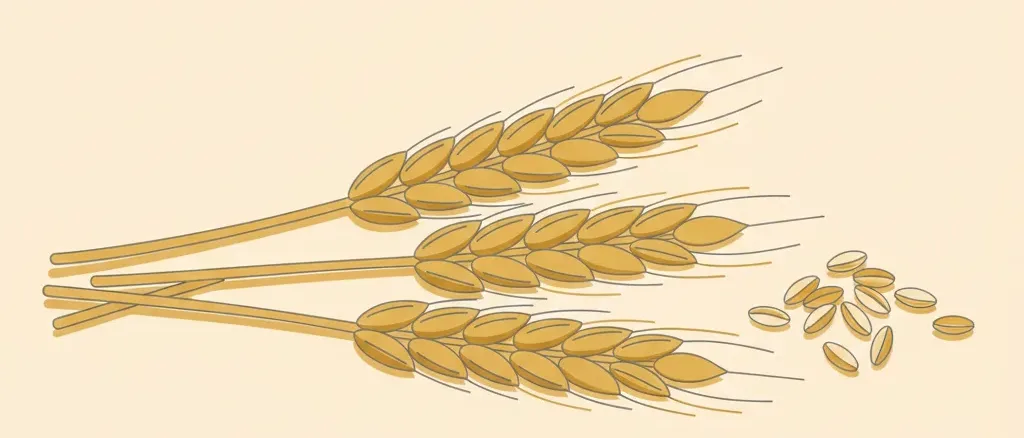
The evidence linking dietary fiber to colorectal cancer protection is among the strongest in nutritional epidemiology — strong enough that the World Cancer Research Fund rates it “convincing,” the highest grade in their evidence hierarchy. The Bingham et al. 2003 EPIC study, covering 519,978 participants across ten European countries, found that populations with low fiber intake could reduce their CRC risk by roughly 40% by doubling their consumption. The Aune et al. 2011 dose-response meta-analysis, pooling 16 prospective cohort studies, quantified the relationship more precisely: a 10% reduction in CRC risk per 10 grams per day of additional dietary fiber, with the dose-response curve approximately linear and showing no threshold below which fiber stops helping.
The average American consumes about 16 grams of fiber per day — roughly half the recommended 25-30 grams. That gap matters because the dose-response relationship means most of the US population is sitting on the low end of the fiber-CRC curve. The WCRF estimates that roughly 12% of colorectal cancer cases in high-income countries could be prevented by adequate fiber intake alone, which would make fiber a larger preventable-fraction contributor than most individual dietary factors. Lifetime CRC incidence in the US is approximately 1 in 26 (~3.9%, per SEER), making it the third most common cancer. That baseline is whole-population incidence, not a fiber-attributable figure — fiber shifts the odds around it rather than setting it. The fiber connection is tagged here as underrated because most adults who worry about cancer focus on genetics, screening, and red meat while paying little attention to the protective side of the dietary equation.
The usual caveats apply: this is observational epidemiology, not a randomised trial of fiber supplementation over 20 years. High-fiber diets correlate with other protective behaviours (more vegetables, less processed food, lower BMI, higher physical activity), and disentangling fiber’s independent contribution is difficult. Cereal fiber and whole grains show the strongest associations, which aligns with biological mechanisms involving butyrate production, reduced transit time, and dilution of carcinogens in the colonic lumen. The practical takeaway is narrower than the headline: eating more whole grains and vegetables is associated with meaningfully lower CRC risk, but “fiber” is a dietary pattern marker as much as a single causal agent.
Verwandte Fakten
Die Lebenszeit-Inzidenz von Darmkrebs bei einem US-Erwachsenen liegt bei rund ~1 von 23 (US-Erwachsener, Darmkrebs-Inzidenz). Die meisten halten Ballaststoffe für eine Verdauungs-Randnotiz, doch jede zusätzliche 10 g pro Tag geht mit einem rund 10% geringeren Risiko einher.
Quellenregister
Jede Zahl unten ist das, was die jeweilige Quelle berichtet hat — mit dem wörtlichen Zitat, auf das wir uns stützen, und wie wir zu unserer Zahl gelangt sind. Klicke auf einen Link, um direkt zu prüfen.
1/3 Quellen unabhängig wortwörtlich mit der zitierten Quelle abgeglichen
-
[1] The Lancet / Bingham SA, Day NE, Luben R, et al. — Dietary fibre in food and protection against colorectal cancer in the European Prospective Investigation into Cancer and Nutrition (EPIC): an observational study Verifiziert
Dietary fibre in food and protection against colorectal cancer in the European Prospective Investigation into Cancer and Nutrition (EPIC): an observational study- Statistik
In EPIC cohort (n=519,978), highest quintile of fiber intake had ~40% lower CRC risk than lowest quintile; doubling fiber intake from low levels could reduce CRC risk by 40%- Auszug
“"In populations with low average intake of dietary fibre, an approximate doubling of total fibre intake from foods could reduce the risk of colorectal cancer by 40%." ”
- Quelldaten von
- 2003-05-03
- Abgerufen
- 2026-04-18 · archivierte Kopie
- Verifizierung
- Der Auszug wurde bei unserer Grounding-Prüfung unabhängig erneut abgerufen und Wort für Wort mit der zitierten Quelle abgeglichen.
- Berechnung
- Bingham et al. 2003 is the landmark EPIC analysis — the largest prospective study of fiber and CRC at the time of publication, covering 519,978 participants across 10 European countries with dietary assessment by 7-day food diary (considered more accurate than FFQ). The ~40% reduction for doubling fiber intake from low levels is the headline finding. This is an observational association, not a causal estimate from an RCT, and cannot fully exclude confounding by other dietary and lifestyle factors. However, the dose-response relationship was consistent across countries with very different dietary patterns, strengthening the case for a real biological effect.
- Unabhängigkeit
- EPIC is methodologically independent of the US-based cohort studies (PLCO, NHS/HPFS) and the WCRF meta-analysis cited below, though the WCRF analysis includes EPIC data.
-
[2] BMJ / Aune D, Chan DSM, Lau R, et al. — Dietary fibre, whole grains, and risk of colorectal cancer: systematic review and dose-response meta-analysis of prospective studies
Dietary fibre, whole grains, and risk of colorectal cancer: systematic review and dose-response meta-analysis of prospective studies- Statistik
Summary RR for CRC per 10 g/day of total dietary fiber: 0.90 (95% CI 0.86-0.94) across 16 prospective studies- Auszug
“"The summary relative risk of developing colorectal cancer for 10 g daily of total dietary fibre was 0.90 (95% confidence interval 0.86 to 0.94)." ”
- Quelldaten von
- 2011-11-10
- Abgerufen
- 2026-04-18 · archivierte Kopie
- Berechnung
- Aune et al. 2011 is the dose-response meta-analysis conducted for the WCRF/AICR Continuous Update Project. Pooled 16 prospective cohort studies and found a consistent 10% reduction in CRC risk per 10 g/day increase in fiber intake. The dose-response curve was approximately linear with no threshold, suggesting benefit even at modest increases. Cereal fiber and whole grains showed the strongest associations. This is the basis for the WCRF's "convincing" evidence rating for fiber and CRC prevention.
- Unabhängigkeit
- Meta-analysis pooling multiple independent cohort studies; includes EPIC data but also NIH-AARP, PLCO, and several European cohorts.
-
[3] World Cancer Research Fund / American Institute for Cancer Research — Diet, Nutrition, Physical Activity and Colorectal Cancer
Diet, Nutrition, Physical Activity and Colorectal Cancer- Statistik
WCRF Panel judges foods containing dietary fiber as having 'convincing' evidence for decreasing colorectal cancer risk- Auszug
“"The Panel judges that consumption of foods containing dietary fibre decreases the risk of colorectal cancer." ”
- Quelldaten von
- 2024-10-01
- Abgerufen
- 2026-04-18 · archivierte Kopie
- Berechnung
- The WCRF/AICR Continuous Update Project is the most comprehensive ongoing review of diet and cancer evidence. The "convincing" grade is the highest evidence level, reserved for associations with consistent results across multiple study designs, biological plausibility, and evidence of a dose-response. For fiber and CRC, this grade has been maintained through multiple update cycles. The report estimates that roughly 12% of CRC cases in high-income countries could be prevented by adequate fiber intake alone — a population-attributable fraction that is larger than most dietary factors.
- Unabhängigkeit
- WCRF/AICR panel review synthesises global evidence independently; uses the Aune et al. meta-analysis as one input but evaluates biological plausibility and experimental evidence separately.