Evidenzqualität 4.0/5
Bewertungsergebnis nach acht Dimensionen gemäß der Qualitätsrubrik . Jede Dimension wird mit 1–5 bewertet.
- D1 Quellenverankerung
- 4/5
- D2 Quellenautorität
- 5/5
- D3 Arithmetik
- 4/5
- D4 Unsicherheit
- 3/5
- D5 Geltungsbereich
- 4/5
- D6 Prosa
- 4/5
- D7 Ehrlichkeit zur Wahrnehmung
- 4/5
- D8 Vollständigkeit der Einschränkungen
- 4/5
≈ Genauso wahrscheinlich wie
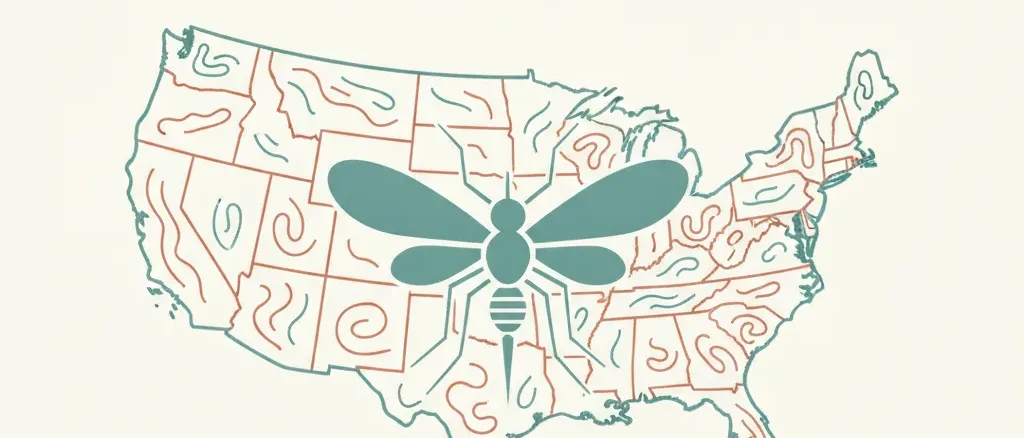
Wahrgenommen
Die meisten US-Einwohner ordnen Dengue unter »tropische Reisekrankheit« ein und nehmen zu Hause null Risiko an. Keine veröffentlichte Umfrage misst die Angst, sich Dengue im Inland einzufangen, daher ist dies eine intuitive Einschätzung: Das wahrgenommene inländische Risiko ist für nahezu jeden praktisch null, was das kleine, aber steigende Risiko lokaler Übertragung in einigen Südstaaten unterschätzt und das nahezu null betragende Risiko überall sonst überschätzt. Die Diskrepanz ist eher ein Kategorienfehler als eine Frage der Größenordnung.
Grobe Schätzung: ≈ 0 (angenommen als reine Reisekrankheit)
Quelle: redaktionelle Einschätzung, nicht erhoben
Tatsächlich
105 lokal erworbene Fälle unter ~338 Millionen Einwohnern des US-Festlands im Jahr 2024
Einwohner der 48 zusammenhängenden US-Bundesstaaten + DC, 2024
Berechnung anzeigen
Untergruppe = eine im US-Festland ansässige Person (48 Staaten + DC); Horizont = 59 Jahre verbleibendes Erwachsenenleben (Site-Standard ab Alter 18). Die Schlagzeile zählt einen DIAGNOSTIZIERTEN klinischen Denguefall, nicht eine Infektion (40-80 % der Dengue-Infektionen verlaufen asymptomatisch und viele symptomatische Fälle werden nicht getestet, das wahre Infektionsrisiko ist also höher — das drückt die obere Grenze nach oben). Jährliche Basisrate aus CDC MMWR 2024: 105 lokal erworbene Fälle (Florida 85, Kalifornien 18, Texas 2) / ~338 Mio. Einwohner des US-Festlands = 3.1e-7 pro Person-Jahr. Über 59 Jahre aufaddiert: 1-(1-3.1e-7)^59 = 1.83e-5 (~1 zu 54.600), was die REKORDJAHR-Rate von 2024 ist. 2024 war ein Höchststand von +359 %; vor 2023 war die lokale Übertragung auf dem Festland in den meisten Jahren nahezu null. Der Punktschätzwert liegt leicht UNTER der reinen 2024-Zahl bei 1.5e-5 (~1 zu 67.000), um den jüngsten Höchststand gegen die viel niedrigere historische Basislinie zu mitteln, wobei er zur Persistenz neigt, weil die ganze Prämisse des Eintrags — Ausbreitung des Aedes-Verbreitungsgebiets und Erwärmung — ein Aufwärtstrend ist. Untere Grenze 1.5e-6 spiegelt die Jahre nahezu null lokaler Übertragung vor 2023 wider (~10x unter 2024). Obere Grenze 1.5e-4 spiegelt die klinische Untererfassung plus ein Szenario sich verschlechternder Übertragung wider (~10x über 2024). Das Band über zwei Größenordnungen ist ehrlich in Bezug auf ein volatiles, geografisch konzentriertes, expandierendes Risiko statt fälschlich präzise.
Einschränkungen: Dies ist eine Momentaufnahme eines volatilen, geografisch konzentrierten und off…
Dies ist eine Momentaufnahme eines volatilen, geografisch konzentrierten und offenbar expandierenden Risikos, keine stabile Lebenszeitkonstante. Der Punktschätzwert beruht auf einem einzigen Rekordjahr (2024, +359 % über dem Durchschnitt von 2010–2023), und diese Rate über einen 59-Jahre-Horizont zu projizieren, setzt voraus, dass die lokale Übertragung auf dem Niveau von 2024 anhält — eine bewusste Neigung zum aufwärts gerichteten Aedes-Verbreitungs- und Erwärmungstrend, den der Eintrag beschreibt. Das Unsicherheitsband erstreckt sich über zwei Größenordnungen (~1 zu 670.000 bis ~1 zu 6.700), gerade weil die lokalen Fallzahlen von Jahr zu Jahr stark schwanken und die wahre Infektionsrate untererfasst wird: 40-80 % der Dengue-Infektionen verlaufen asymptomatisch und viele symptomatische Fälle werden nicht getestet, sodass die »diagnostizierte Fälle«-Schlagzahl eine Untergrenze der tatsächlichen Exposition ist. Das Risiko ist überwältigend ein Phänomen Floridas (insbes. Miami-Dade) und des punktuellen Kaliforniens; für einen Einwohner des größten Teils des US-Festlands liegt es nahe der unteren Grenze. Keine veröffentlichte Umfrage misst die Angst, sich Dengue im Inland einzufangen, daher ist die Wahrnehmungseinschätzung eine Intuition, keine Umfrage. Weil das Band breit ist und der Nenner national ist, während das Risiko lokal ist, sind D4 (Unsicherheit) und D5 (Umfang) die schwächsten Dimensionen; beide werden explizit über den Untergruppen-Umfang und ein regional_breakdown behandelt statt über eine einzige irreführende nationale Schlagzeile. Der Eintrag behauptet nicht, dass Dengue irgendwo im US-Festland endemisch ist — keine US-Gerichtsbarkeit ist offiziell als endemisch eingestuft.
Wie das Risiko variiert
Die Hauptzahl mittelt über sehr unterschiedliche Situationen. So variiert die Wahrscheinlichkeit nach Szenario oder Kontext:
1 zu 4.545
85 of the 105 continental locally-acquired cases in 2024 (81%) were in Florida, across 10 counties but concentrated in the Miami-Dade area. 85 / ~23M Florida residents = 3.7e-6/yr → ~2.2e-4 (~1 in 4,600) over 59 yr; the Miami-Dade sub-rate is higher still. Florida is not officially endemic but reports local cases every year.
1 zu 50.000
18 local cases statewide in 2024; LA County had 14 of them, all clustered within small radii consistent with focal outbreaks (some within a 1-mile radius over 7 weeks). 18 / ~39M = 4.6e-7/yr → ~2.7e-5 over 59 yr, but risk is concentrated in a few neighborhoods, not statewide.
1 zu 666.667
Northern and interior states reported zero locally-acquired cases in 2024. Risk there is driven by occasional vector spread and remains near the lower bound.
Balkenlänge und Schattierung ordnen diese Szenarien untereinander ein, nicht gegenüber anderen Risiken. Die genauen Wahrscheinlichkeiten stehen jeweils daneben.
Verwandte Risiken
Andere Risiken zu ähnlichen Themen — zum Erkunden verwandter Ängste.

Vibrio-vulnificus-Wundinfektion
Wie hoch ist die Wahrscheinlichkeit, dass ein erwachsener US-Bürger nach Kontakt mit warmem Küstenwasser eine fleischfressende Vibrio-vulnificus-Infektion bekommt?
Aluminium und Alzheimer
Wie hoch ist die Wahrscheinlichkeit, durch Kochen mit Aluminiumtöpfen oder -folie an Alzheimer zu erkranken?

Gasleck im Wohnhaus
Wie hoch ist die Wahrscheinlichkeit, bei einer Explosion oder einem Brand durch ein Gasleck im Wohnhaus zu sterben?

Hirnschwellung bei Kind durch Grippe
Wie wahrscheinlich ist es, dass ein Kind mit Grippe eine plötzliche Hirnschwellung entwickelt (influenza-assoziierte Enzephalopathie oder akute nekrotisierende Enzephalopathie)?

Anaphylaxie
Wie hoch ist die Wahrscheinlichkeit, an einer schweren allergischen Reaktion zu sterben?

Kindstod im heißen Auto
Wie hoch ist die Wahrscheinlichkeit, dass ein Kind in einem heißen Auto stirbt?

Hund stirbt im heißen Auto
Wie hoch ist die Wahrscheinlichkeit, dass ein Hund in einem heißen Auto stirbt?
Vergleichsrisiko wählen
For most of the country, dengue is filed under tropical travel: a fever you bring back from Southeast Asia or the Caribbean, not something the mosquito on your own patio can give you. That filing is mostly correct and slowly going stale. In 2024 the United States recorded 3,798 dengue cases, a 359 percent jump above the 2010–2023 average. The headline number is dominated by travelers (97.2 percent), but 2.8 percent — 105 cases in the contiguous states — were locally acquired, meaning the patient had not left the reporting jurisdiction in the two weeks before symptoms began. Florida accounted for 85 of those, California 18, and Texas 2. The mosquito did the importing.
The national per-resident rate is small. Spread 105 cases across roughly 338 million continental residents and the annual odds are about 3 in 10 million; compounded over a typical adult lifetime, that lands near 1 in 67,000, in the same neighborhood as dying in a plane crash and a few times above being struck by lightning. The number is also nearly meaningless as a national figure, because the cases are not spread out. Eighty-one percent were in Florida, clustered around Miami-Dade, and California’s were not statewide but focal: a Los Angeles County investigation found 14 local cases between August and November 2024, several within a one-mile radius over seven weeks. For a resident of Miami the lifetime odds run into the low thousands; for a resident of Minnesota they sit at the floor.
Two things make the lifetime figure soft rather than firm. First, 2024 was a record year, and projecting a peak across 59 years assumes the surge holds — a bet the underlying trend supports, since Aedes aegypti and albopictus are established across the southeastern and southwestern US and continue to spread as temperatures climb. Second, the count undercounts: 40 to 80 percent of dengue infections produce no symptoms, and many that do are never tested, so 105 diagnosed cases is a floor on actual local exposure, not a ceiling. No US jurisdiction is officially endemic, and Florida’s health department still reports cases as locally acquired rather than expected. The honest summary is a wide band around a rising number, concentrated in a handful of southern counties, for a disease that no longer requires a passport.
Verwandte Fakten
Dengue gilt meist als reine Reisekrankheit, doch im Land ist sie nicht null. 2024 gab es 105 lokal erworbene Fälle in den kontinentalen USA, was das Lebenszeitrisiko auf etwa 1 von 67.000 bringt. Selten, geografisch begrenzt und nicht mehr rein importiert.
Quellenregister
Jede Zahl unten ist das, was die jeweilige Quelle berichtet hat — mit dem wörtlichen Zitat, auf das wir uns stützen, und wie wir zu unserer Zahl gelangt sind. Klicke auf einen Link, um direkt zu prüfen.
2/5 Quellen unabhängig wortwörtlich mit der zitierten Quelle abgeglichen
-
[1] CDC Morbidity and Mortality Weekly Report (MMWR) — Increase in Travel-Associated and Locally Acquired Dengue Cases — United States, 2024
Increase in Travel-Associated and Locally Acquired Dengue Cases — United States, 2024See all 2 Likelier entries citing this source →
- Statistik
3,798 total US dengue cases in 2024 (+359% above the 2010–2023 average); 97.2% travel-associated, 2.8% locally acquired; continental US locally-acquired cases: Florida 85 (10 counties), California 18 (3 counties), Texas 2 (2 counties) = 105.- Auszug
“During 2024, a record 3,798 dengue cases were reported [...] a 359% increase above the 2010–2023 annual average. Among these 3,798 cases, 97.2% were associated with travel outside the reporting jurisdiction during the 2 weeks preceding symptom onset; the remaining 2.8% were locally acquired. [...] Three jurisdictions reported locally acquired cases, including Florida (85 cases reported from 10 counties), California (18 from three counties), and Texas (two from two counties).”
- Quelldaten von
- 2026-05-14
- Abgerufen
- 2026-06-13 · archivierte Kopie
- Berechnung
- Locally-acquired continental total = 85+18+2 = 105. Annual rate = 105 / 338,000,000 continental residents = 3.1e-7/person-year. 59-year compounded = 1-(1-3.1e-7)^59 = 1.83e-5. This is the authoritative FINAL count; an earlier CDC HAN (March 2025) listed Florida as 91 preliminarily — the MMWR's 85 supersedes it.
-
[2] CDC Emerging Infectious Diseases — Investigation of and Response to Autochthonous Dengue, Los Angeles County, California, USA, August–November 2024 Verifiziert
Investigation of and Response to Autochthonous Dengue, Los Angeles County, California, USA, August–November 2024- Statistik
14 locally-acquired dengue cases in LA County Aug–Nov 2024, geographically clustered (some within a 1-mile radius over 7 weeks), consistent with focal local transmission rather than diffuse community spread.- Auszug
“During August–November 2024, a total of 14 locally acquired cases of dengue were identified in Los Angeles County, California, USA. [...] All 6 cases were identified within a 1-mile radius over a 7-week period, consistent with an outbreak involving ongoing local transmission.”
- Quelldaten von
- 2026-05-06
- Abgerufen
- 2026-06-13 · archivierte Kopie
- Verifizierung
- Der Auszug wurde bei unserer Grounding-Prüfung unabhängig erneut abgerufen und Wort für Wort mit der zitierten Quelle abgeglichen.
- Berechnung
- Grounds the regional_breakdown claim that California's 18 cases were not statewide-uniform but concentrated in a few LA-area clusters. Supports treating local dengue as a focal/neighborhood risk, not a flat per-capita state rate.
- Unabhängigkeit
- Same publisher family (CDC) as the MMWR source but a distinct peer-reviewed field investigation with separate authors and data.
-
[3] CDC Health Alert Network (HAN) — Ongoing Risk of Dengue Virus Infections and Updated Testing Recommendations in the United States
Ongoing Risk of Dengue Virus Infections and Updated Testing Recommendations in the United States- Statistik
CDC advisory that dengue activity remained high into 2025 and that spring/summer raise both travel-associated and locally-acquired risk; 2024 local cases listed as Florida 91 (preliminary), California 18, Texas 1.- Auszug
“Dengue activity remains high in some parts of the United States [...] Spring and summer travel coincide with the peak season for dengue in many countries, increasing the risk of both travel-associated and locally acquired cases.”
- Quelldaten von
- 2025-03-18
- Abgerufen
- 2026-06-13 · archivierte Kopie
- Berechnung
- Used to establish that the risk is ongoing/elevated rather than a one-off 2024 spike, supporting the upward-trend framing. Its preliminary Florida count (91) differs from the MMWR final (85); the entry uses the MMWR figure and flags the discrepancy in assumptions.
-
[4] CIDRAP, University of Minnesota — US dengue cases jumped 359% in 2024 amid global surge Verifiziert
US dengue cases jumped 359% in 2024 amid global surge- Statistik
Confirms 3,798 total cases, 359% increase, 2.8% locally acquired, 105 locally-acquired nationwide with Florida 85 (81%); notes Aedes aegypti and albopictus are established across the southeastern/southwestern US and continue to spread as temperatures rise.- Auszug
“Florida accounting for 85 of the 105 locally acquired cases (81%) reported nationwide [...] Ae aegypti and albopictus mosquitoes are found throughout large areas of the southeastern and southwestern United States and continue to spread to other regions [...] Vector presence and distribution might be further affected by increasing temperatures, which can expand the range of mosquitoes that spread dengue.”
- Quelldaten von
- 2026-05-15
- Abgerufen
- 2026-06-13 · archivierte Kopie
- Verifizierung
- Der Auszug wurde bei unserer Grounding-Prüfung unabhängig erneut abgerufen und Wort für Wort mit der zitierten Quelle abgeglichen.
- Berechnung
- Independent confirmation of the MMWR 85/105 split and the vector-range-expansion premise that motivates the entry. Used for the Aedes-range and warming framing in the prose.
- Unabhängigkeit
- Independent academic center summarizing the MMWR; not a CDC publication.
-
[5] University of Florida Emerging Pathogens Institute — Dengue in Florida: What to know
Dengue in Florida: What to know- Statistik
Florida reported 1,044 local + travel-associated dengue cases in 2024 (most in the continental US); local cases concentrate in Miami-Dade County; no part of the US is officially endemic for dengue despite recurring local transmission.- Auszug
“Although no part of the United States is officially labeled as endemic for dengue, Florida's health department continues to report cases acquired locally or linked to travel in 2025. [...] one case of locally acquired dengue in Miami-Dade County”
- Quelldaten von
- 2025-06-24
- Abgerufen
- 2026-06-13 · archivierte Kopie
- Berechnung
- Grounds the Florida/Miami-Dade concentration in the regional_breakdown and the 'not endemic' caveat. The 1,044 figure is local+travel combined (most are travel-associated); only the locally-acquired subset (85) feeds the native rate.