Evidenzqualität 4.25/5
Bewertungsergebnis nach acht Dimensionen gemäß der Qualitätsrubrik . Jede Dimension wird mit 1–5 bewertet.
- D1 Quellenverankerung
- 4/5
- D2 Quellenautorität
- 5/5
- D3 Arithmetik
- 4/5
- D4 Unsicherheit
- 4/5
- D5 Geltungsbereich
- 4/5
- D6 Prosa
- 4/5
- D7 Ehrlichkeit zur Wahrnehmung
- 4/5
- D8 Vollständigkeit der Einschränkungen
- 5/5
≈ Genauso wahrscheinlich wie
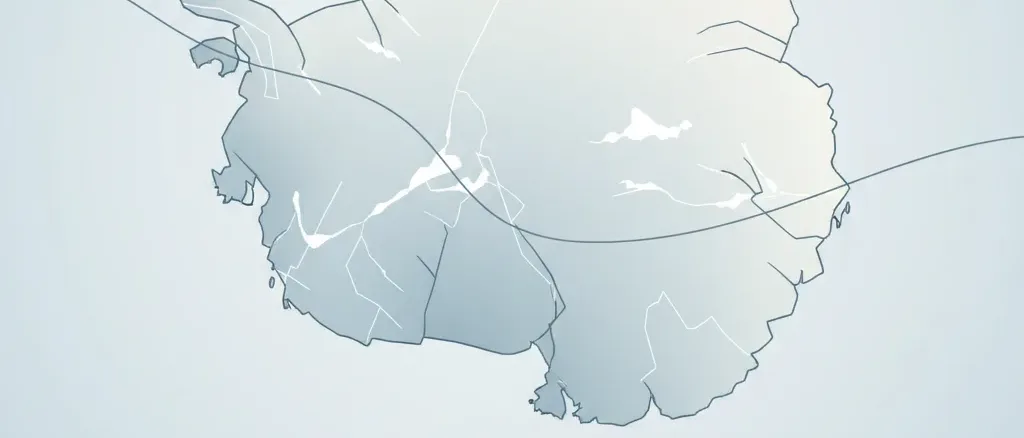
Wahrgenommen
Die Instabilität des Westantarktischen Eisschilds wird in der wissenschaftlichen Literatur und in klimapolitischen Kreisen diskutiert, hat aber noch kein festes kulturelles Bild erlangt, wie es überflutete Städte oder Waldbrände haben. Die meisten Menschen, die davon gehört haben, wissen ungefähr, dass es einen erheblichen Meeresspiegelanstieg bedeuten würde, wenn er kollabierte, und dass die Antarktis schmilzt. Was nicht weithin verstanden wird, ist, dass die Wissenschaft der Kipppunkte zwischen der Überschreitung einer irreversiblen Schwelle (dem Kipppunkt-Auslöser) und der vollständigen Ausprägung des Meeresspiegelanstiegs unterscheidet — was Jahrhunderte dauern könnte. Ebenso wenig ist weithin bekannt, dass unter den aktuellen Emissionspfaden mehrere unabhängige Modellstudien Auslösewahrscheinlichkeiten von über 90 % vor 2100 zuweisen. Das Risiko wird im öffentlichen Bewusstsein erheblich unterschätzt, das dazu neigt, den Eisverlust der Antarktis als langsames und fernes Problem darzustellen statt als ein möglicherweise bereits festgelegtes.
Grobe Schätzung: ~47,7 % der US-Erwachsenen geben an, vor globaler Erwärmung und Klimawandel im weiteren Sinne »Angst« oder »große Angst« zu haben (Chapman University Survey, Wave 10, 2024) — es existiert keine WAIS-spezifische Umfrage
Tatsächlich
>90 % Wahrscheinlichkeit, die WAIS-Kippschwelle vor 2100 zu überschreiten (aktuelle Emissionen, SSP2-4.5)
Global — die Überschreitung des WAIS-Kipppunkts ist ein Ereignis von planetarem Ausmaß, nicht bevölkerungsspezifisch
Berechnung anzeigen
Deutloff et al. (2025, Earth System Dynamics) modellierten die Wahrscheinlichkeit, sechzehn Klima-Kipppunkte unter verschiedenen Emissionsszenarien auszulösen, mithilfe eines gekoppelten Kippelement-Modells mit beobachtungsbasiert eingeschränkten Parametern. Unter SSP2-4.5 (das Szenario, das den aktuellen globalen politischen Verpflichtungen am nächsten kommt und eine Erwärmung von ~2,6-2,8 °C bis 2100 projiziert) überschritt die WAIS-Auslösewahrscheinlichkeit 90 %. Dies ist eine Auslösewahrscheinlichkeit — die Wahrscheinlichkeit, dass die globale Erwärmung die Temperaturschwelle überschreitet, jenseits derer der WAIS-Rückzug sich selbst erhält — nicht die Wahrscheinlichkeit eines vollständigen Kollapses innerhalb einer menschlichen Lebenszeit. In einem Modellexperiment, in dem alle antarktischen Schelfeise entfernt werden (und sich nicht neu bilden können), trägt ein Kollaps des WAIS nach 500 Jahren etwa 2-5 Meter zum Meeresspiegelanstieg bei (IPCC AR6, Kap. 9). Das ist keine Projektion für dieses Jahrhundert, und der Verlauf erstreckt sich über Jahrzehnte bis Jahrtausende, abhängig vom Antriebsszenario und der Feedback-Dynamik. Die Überschreitung der Kippschwelle legt die Welt auf dieses letztendliche Ergebnis fest, aber der größte Teil des Meeresspiegelanstiegs würde weit jenseits der Lebenszeit des fokalen Erwachsenen eintreten. Armstrong McKay et al. (2022, Science) schätzten die zentrale Schwelle auf ~1,5 °C über dem vorindustriellen Niveau, mit einer Spanne von 1-3 °C — ein Niveau, das die aktuellen Verläufe in den 2030er Jahren überschreiten könnten. Der IPCC AR6 WG1 (2021) verwendet ein »geringe Wahrscheinlichkeit, hohe Auswirkung«-Szenario für Prozesse, die vor 2100 mehr als 1 Meter zusätzlichen Meeresspiegelanstieg durch Eisschild-Instabilität beitragen, während er »tiefe Unsicherheit« hinsichtlich des Zeitpunkts einräumt. Die Unsicherheitsspanne (30-99 %) erfasst die breite Spanne von aggressiven Minderungsszenarien (SSP1-1.9, wo die Auslösewahrscheinlichkeit geringer, aber immer noch erheblich ist) bis zu Business-as-usual-Pfaden.
Einschränkungen: Die >90 %-Zahl ist eine Kipppunkt-Auslösewahrscheinlichkeit unter den aktuellen …
Die >90 %-Zahl ist eine Kipppunkt-Auslösewahrscheinlichkeit unter den aktuellen Emissionen (SSP2-4.5), keine Wahrscheinlichkeit eines vollständigen WAIS-Kollapses oder eines Meeresspiegelanstiegs, der innerhalb einer menschlichen Lebenszeit katastrophale Ausmaße erreicht. Ein vollständiger Kollaps des WAIS würde nach der Überschreitung der Kippschwelle Jahrzehnte bis Jahrtausende dauern — die Meeresspiegelfolgen entfalten sich in den meisten Szenarien weit jenseits der Lebenszeit des fokalen Erwachsenen. Die zentrale Schwelle von ~1,5 °C (Armstrong McKay 2022) könnte bereits vorübergehend überschritten worden sein: Die globale Mitteltemperatur überschritt 2023-2024 kurzzeitig 1,5 °C über dem vorindustriellen Niveau, obwohl die für den WAIS relevante Kennzahl der anhaltende mehrdekadische Durchschnitt und nicht die maximale jährliche Anomalie ist. Die vorsichtigere Einordnung des IPCC AR6 unterscheidet sich von Deutloffs >90 %-Auslösewahrscheinlichkeit von 2025, weil die beiden Bewertungen Verschiedenes messen: Der IPCC schließt das abrupte Einsetzen der marinen Eisschild-Instabilität ausdrücklich aus seinen Wahrscheinlichkeitsbereich-Projektionen aus und behandelt es als »tiefe Unsicherheit« / Szenario mit geringer Wahrscheinlichkeit und hoher Auswirkung, bewertet in CMIP-Modellen, die die WAIS-Instabilität nicht simulieren; Deutloff modelliert die Überschreitung der Schwelle, die den letztendlichen Kollaps festlegt, in einem Kippelement-Rahmen. Dies sind kompatible statt widersprüchliche Bewertungen unterschiedlicher Prozesse. Die marine Eiskliff-Instabilität (MICI), ein Mechanismus, der den WAIS-Zerfall dramatisch beschleunigen könnte, bleibt umstritten und ist aus den Hauptprojektionen des IPCC ausgeschlossen.
Verwandte Risiken
Andere Risiken zu ähnlichen Themen — zum Erkunden verwandter Ängste.
AMOC-Kollaps
Wie hoch ist die Wahrscheinlichkeit, dass die AMOC vor dem Ende Ihrer Lebenszeit abrupt zusammenbricht?
Wasserknappheit
Wie hoch ist die Wahrscheinlichkeit, in Ihrem Leben schwere Wasserknappheit zu erleben?
Sonnensturm der Carrington-Klasse
Wie hoch ist die Wahrscheinlichkeit, dass ein katastrophaler Sonnensturm die Erde trifft?

Klimawandel-Todesfälle
Wie hoch ist die Wahrscheinlichkeit, an den Folgen des Klimawandels zu sterben?


Asteroideneinschlag
Wie hoch ist die Wahrscheinlichkeit, durch einen Asteroiden- oder Kometeneinschlag zu sterben?


Schneesturmtod
Wie hoch ist die Wahrscheinlichkeit, in einem schweren Wintersturm oder Schneesturm zu sterben?
Vergleichsrisiko wählen
The West Antarctic Ice Sheet holds enough ice that a model experiment with all Antarctic ice shelves removed has its collapse add roughly 2 to 5 metres to global sea level after 500 years — an amount sufficient to permanently inundate coastal cities from Miami to Shanghai to Amsterdam. The debate is not whether this would be consequential but whether the process is already irreversibly committed. Deutloff et al. (2025, Earth System Dynamics), using a coupled tipping-element model parameterised from Armstrong McKay et al.’s (2022, Science) threshold synthesis, found that under SSP2-4.5 — the scenario closest to current global policy commitments — the probability of the WAIS crossing its tipping threshold before 2100 exceeded 90%. Armstrong McKay estimated the central threshold at roughly 1.5°C of global warming above pre-industrial levels, within the Paris Agreement’s target range.
The critical distinction is between triggering and completing. When the WAIS tipping point is crossed, global warming has reached a level at which ice retreat becomes self-sustaining: ocean warming beneath the ice shelves melts the underside, the grounding line retreats into deeper water, and the geometry of the ice sheet means retreat accelerates rather than stabilising. But this process unfolds over decades to millennia, not years. Naughten et al. (2023, Nature Climate Change) found that ice-shelf warming in the Amundsen Sea sector is already committed to accelerate at roughly triple the historical rate until at least 2045 regardless of near-term emissions choices — the ocean warming that drives basal melt is locked in by historical emissions. For most people alive today, the sea level consequences lie far beyond their lifetimes even if the threshold is crossed tomorrow. IPCC AR6 frames this as a “low likelihood, high impact” storyline while acknowledging “deep uncertainty.”
The Thwaites Glacier, sometimes called the “Doomsday Glacier,” holds about 65 centimetres of global sea level equivalent and is considered the most vulnerable sector of the WAIS. Satellite altimetry and ocean observations show active basal melting, and the glacier’s “ice shelf” — the floating apron that pins the inland ice — is cracking in ways that some glaciologists believe could accelerate collapse within this century. None of this translates straightforwardly into a personal risk number: the framing here is the probability of a planetary commitment being made in a person’s lifetime, not the probability of dying from it. That probability — on current trajectories — is what makes this entry unusual on this site: the risk is not rare but the consequences are diffuse, slow, and fall predominantly on future generations.
Verwandte Fakten
Bei den aktuellen Emissionen beziffern Modelle die Wahrscheinlichkeit, die westantarktische Kippschwelle vor 2100 zu überschreiten, auf über 90%. Keine Umfrage misst auch nur, für wie wahrscheinlich die Öffentlichkeit dies hält.
Quellenregister
Jede Zahl unten ist das, was die jeweilige Quelle berichtet hat — mit dem wörtlichen Zitat, auf das wir uns stützen, und wie wir zu unserer Zahl gelangt sind. Klicke auf einen Link, um direkt zu prüfen.
2/5 Quellen unabhängig wortwörtlich mit der zitierten Quelle abgeglichen
-
[1] Earth System Dynamics — Deutloff, Held, Lenton, 2025 — High probability of triggering climate tipping points under current policies modestly amplified by Amazon dieback and permafrost thaw Verifiziert
High probability of triggering climate tipping points under current policies modestly amplified by Amazon dieback and permafrost thaw- Statistik
WAIS triggering probability >90% under SSP2-4.5 (current policy scenario); averaged over all tipping elements the equilibrium triggering probability under SSP2-4.5 is 62%, and nine tipping elements exceed 50%- Auszug
“"The probability of triggering TEs is still high under SSP2-4.5, with a probability of equilibrium triggering of 62 % averaged over all TEs. [...] While BARI, GRIS, PFAT, REEF and WAIS are triggered with more than 90 % probability in all three cases, the probabilities of triggering AMOC, PFTP, TUND and AWSI remain below 50 % and even below 10 % for EAIS." ”
- Quelldaten von
- 2025-05-01
- Abgerufen
- 2026-05-09 · archivierte Kopie
- Verifizierung
- Der Auszug wurde bei unserer Grounding-Prüfung unabhängig erneut abgerufen und Wort für Wort mit der zitierten Quelle abgeglichen.
- Berechnung
- Deutloff et al. 2025 is the primary quantitative source for the >90% headline. The authors identify SSP2-4.5 as the scenario that compares best to the warming trajectory expected from current policies. The triggering probability means the probability that global temperature crosses the threshold at which WAIS retreat becomes self-sustaining and irreversible on multi-century timescales. The paper uses a coupled tipping-element model incorporating interactions between tipping elements (e.g., Amazon dieback slightly amplifying WAIS triggering probability through global mean temperature). The core result for WAIS is robust to whether or not Amazon and permafrost interactions are included.
- Unabhängigkeit
- Deutloff et al. use a tipping-element network model parameterised from the Armstrong McKay 2022 threshold estimates, which are themselves derived from paleoclimate evidence and process understanding. This is a different approach from IPCC AR6's process-based climate model ensemble, though both draw on overlapping paleoclimate evidence for threshold estimates.
-
[2] Science — Armstrong McKay, Staal, Abrams, Winkelmann, Sakschewski, Loriani, Fetzer, Cornell, Rockström, Lenton, 2022 — Exceeding 1.5°C global warming could trigger multiple climate tipping points
Exceeding 1.5°C global warming could trigger multiple climate tipping points- Statistik
WAIS best-estimate temperature threshold ~1.5°C (range 1-3°C); timescale of about 2,000 years (range 500 to 13,000 years)- Auszug
“"Six CTPs become likely (with a further four possible) within the Paris Agreement range of 1.5 to <2°C warming, including collapse of the Greenland and West Antarctic ice sheets, die-off of low-latitude coral reefs, and widespread abrupt permafrost thaw." ”
- Quelldaten von
- 2022-09-09
- Abgerufen
- 2026-05-09 · archivierte Kopie
- Berechnung
- Armstrong McKay et al. 2022 is the most comprehensive recent revision of climate tipping point thresholds, synthesising paleoclimate evidence and process understanding for sixteen tipping elements. The WAIS threshold lowering from the previous Lenton 2008 estimate of 3.5-5.5°C to ~1.5°C was significant: it places the threshold within the Paris Agreement target range, meaning that even the most ambitious emissions reduction targets do not guarantee avoiding WAIS commitment to collapse. The 1-3°C range captures deep uncertainty in the threshold itself. The archived copy of the article page reproduces only the abstract, which places collapse of the West Antarctic ice sheet among the thresholds that become likely at 1.5 to <2°C of warming; the WAIS-specific best estimate (~1.5°C, range 1-3°C), the timescale of 500 to 13,000 years and the earlier 3.5-5.5°C estimate come from the paper's supplementary assessment, which the archived page does not reproduce.
- Unabhängigkeit
- Armstrong McKay et al. synthesise paleoclimate and process evidence using a different methodology than Deutloff et al.'s probabilistic network model. Both reach compatible conclusions about WAIS proximity to its threshold under current conditions.
-
[3] Nature Climate Change — Naughten et al., 2023 — Unavoidable future increase in West Antarctic ice-shelf melting over the twenty-first century
Unavoidable future increase in West Antarctic ice-shelf melting over the twenty-first century- Statistik
All four tested emissions scenarios produce similar accelerated Amundsen Sea warming until at least 2045; ice-shelf warming projected at ~triple the historical rate regardless of near-term mitigation- Auszug
“"We find that rapid ocean warming, at approximately triple the historical rate, is likely committed over the twenty-first century, with widespread increases in ice-shelf melting, including in regions crucial for ice-sheet stability. When internal climate variability is considered, there is no significant difference between mid-range emissions scenarios and the most ambitious targets of the Paris Agreement. These results suggest that mitigation of greenhouse gases now has limited power to prevent ocean warming that could lead to the collapse of the West Antarctic Ice Sheet. … RCP 8.5 eventually diverges from the other ensembles, in approximately 2045 (Methods)." ”
- Quelldaten von
- 2023-10-23
- Abgerufen
- 2026-05-09 · archivierte Kopie
- Berechnung
- Naughten et al. 2023 focuses on ocean warming beneath WAIS ice shelves in the Amundsen Sea sector — the primary driver of ice shelf basal melt and the mechanism by which warming triggers WAIS instability. The finding that all emissions scenarios produce similar warming until 2045 is significant: near-term mitigation cannot prevent the accelerated melting already committed by historical emissions. This does not mean full collapse is committed, only that the process driving it is locked in for at least two decades. The paper's single-model design limits certainty, but it uses a high-resolution ocean model specifically designed for Amundsen Sea dynamics.
- Unabhängigkeit
- Naughten et al. use an ocean model focused on the Amundsen Sea specifically, rather than the global climate models used by Deutloff 2025 and Armstrong McKay 2022. The result addresses ice-shelf basal melt rates rather than full tipping point probability, providing a physically independent mechanism-level corroboration.
-
[4] Intergovernmental Panel on Climate Change (IPCC), Working Group I, Sixth Assessment Report — Climate Change 2021: The Physical Science Basis — Chapter 9: Ocean, Cryosphere and Sea Level Change
Climate Change 2021: The Physical Science Basis — Chapter 9: Ocean, Cryosphere and Sea Level ChangeAlle 2 Likelier-Einträge mit dieser Quelle ansehen →
- Statistik
Antarctic Ice Sheet 'likely' to keep losing mass all century; MISI/MICI excluded from likely-range projections as 'deep uncertainty'; 'low likelihood, high impact' storyline for >1m additional SLR from these instability processes by 2100; model simulations removing all Antarctic ice shelves give 2-10 m of sea level equivalent loss after 500 years, of which WAIS collapse contributes 2-5 m- Auszug
“"Both the Greenland Ice Sheet (virtually certain) and the Antarctic Ice Sheet (likely) will continue to lose mass throughout this century under all considered SSP scenarios... Under high-emissions scenarios, poorly understood processes related to marine ice sheet instability and marine ice cliff instability, characterized by deep uncertainty, have the potential to strongly increase Antarctic mass loss on century to multi-century time scales... These likely range projections do not include those ice-sheet-related processes that are characterized by deep uncertainty... In a low-likelihood, high-impact storyline, under high emissions such processes could in combination contribute more than one additional metre of sea level rise by 2100... Ice-sheet model simulations that remove all Antarctic ice shelves (and prevent them from reforming) show 2–10 m SLE Antarctic mass loss after 500 years due to MISI, of which WAIS collapse contributes 2–5 m (Sun et al., 2020)." ”
- Quelldaten von
- 2021-08-09
- Abgerufen
- 2026-05-09 · archivierte Kopie
- Berechnung
- IPCC AR6 does not assign a numerical probability to WAIS collapse before 2100. Instead it explicitly excludes the abrupt, widespread onset of marine ice sheet instability (MISI) and marine ice cliff instability (MICI) from its likely-range projections because those processes are "characterized by deep uncertainty arising from limited process understanding." It does assess that the Antarctic Ice Sheet is likely to keep losing mass throughout this century, and treats a >1 m additional sea-level-rise contribution from these instability processes by 2100 as a low-likelihood, high-impact storyline under high emissions. The Bamber et al. 2019 structured expert judgment cited by AR6 gave WAIS sea level contribution by 2100 as median 8-18 cm with 95th percentile up to 44-93 cm depending on warming scenario — reflecting deep uncertainty but not ruling out large contributions. IPCC AR6's position is more cautious than Deutloff 2025 because it relies on CMIP model ensembles that do not simulate WAIS collapse, rather than the tipping-point network models used by Deutloff. The 2-5 m figure for WAIS collapse is the result of an ice-sheet model experiment in which all Antarctic ice shelves are removed; it describes the modelled state after 500 years and is not a projection for this century.
-
[5] Columbia Climate School — State of the Planet — Crucial Antarctic Glacier Likely to Collapse Much Earlier than Expected Verifiziert
Crucial Antarctic Glacier Likely to Collapse Much Earlier than Expected- Statistik
Thwaites Glacier alone holds approximately 65 centimetres of global sea-level-rise equivalent if it melted entirely; identified as the most vulnerable, structurally unstable sector of the West Antarctic Ice Sheet.- Auszug
“"If the entire glacier were to melt then global sea levels would rise by 65 centimeters, or about two feet." ”
- Quelldaten von
- 2021-12-17
- Abgerufen
- 2026-07-03 · archivierte Kopie
- Verifizierung
- Der Auszug wurde bei unserer Grounding-Prüfung unabhängig erneut abgerufen und Wort für Wort mit der zitierten Quelle abgeglichen.
- Berechnung
- Supplies the Thwaites-specific sea-level-equivalent figure used in the body prose (65 cm). This is a subset of, and consistent with, the 2-5 m WAIS-collapse range in the IPCC AR6 Chapter 9 simulations (source above) — Thwaites is one glacier within the broader ice sheet. It does not alter the entry's headline >90% tipping-threshold probability, which remains sourced from Deutloff et al. 2025; this source is used only to ground the Thwaites ice-volume detail mentioned in the body text.
- Unabhängigkeit
- Science journalism from a university climate research center, reporting on glaciological modelling distinct from the tipping-point probability studies (Deutloff 2025, Armstrong McKay 2022) and the ocean-forcing study (Naughten 2023) cited above; used only for the Thwaites-specific ice-volume figure, not for probability estimates.