Evidenzqualität 4.63/5
Bewertungsergebnis nach acht Dimensionen gemäß der Qualitätsrubrik . Jede Dimension wird mit 1–5 bewertet.
- D1 Quellenverankerung
- 3/5
- D2 Quellenautorität
- 5/5
- D3 Arithmetik
- 5/5
- D4 Unsicherheit
- 5/5
- D5 Geltungsbereich
- 5/5
- D6 Prosa
- 5/5
- D7 Ehrlichkeit zur Wahrnehmung
- 4/5
- D8 Vollständigkeit der Einschränkungen
- 5/5
● Ihre Faktoren — auf dieses Risiko ▾ klicken zum Anzeigen
- Deine Faktoren
≈ Genauso wahrscheinlich wie

Wahrgenommen
Die meisten Menschen über fünfzig haben gehört, dass Hüftfrakturen ernst sind, aber die Lebenszeitwahrscheinlichkeit wird systematisch unterschätzt. Eine Hüftfraktur wird gedanklich neben dramatischen Stürzen eingeordnet — eine gebrechliche Person, die auf Eis ausrutscht — statt als nahezu universelles Risiko des höheren Alters mit einer Lebenszeitwahrscheinlichkeit von eins zu sieben für Frauen. Dass bis zu einer von fünf Patienten innerhalb eines Jahres nach der Fraktur stirbt, ist selten Teil des öffentlichen Narrativs, das dazu neigt, eine Hüftfraktur als schmerzhaft, aber heilbar zu behandeln.
Quelle: redaktionelle Einschätzung, nicht erhoben
Tatsächlich
15 von 100 Frauen ab 50 werden im verbleibenden Leben eine Hüftfraktur erleiden (Europa-29 gepoolt)
Europäische Frauen ab 50 (bevölkerungsgewichtet über 29 Länder — EU27 + UK + Schweiz, Kanis et al. SCOPE 2021)
Berechnung anzeigen
Rate von 15,0 % für Frauen und 5,7 % für Männer aus Kanis et al., SCOPE 2021 (Arch Osteoporos 16(1):82), bevölkerungsgewichtet über die 29 Länder der EU27 plus UK und Schweiz. Die gepoolte Europa-29-Schätzung wird als Schlagzeile verwendet, weil kein vergleichbares globales Aggregat mit gleichwertiger Methodik existiert; die IOF betrachtet Daten aus einkommensstarken europäischen Ländern als weitgehend repräsentativ für HIC-Populationen. Weltweit ereigneten sich mit Stand 1990 etwa 1,66 Millionen Hüftfrakturen pro Jahr (Cooper, Campion & Melton 1992), mit einer Prognose von ~6,26 Millionen bis 2050. Bis zu 20 % der Patienten sterben innerhalb eines Jahres nach einer Hüftfraktur (SCOPE 2021), wovon etwa 30 % der Todesfälle ursächlich mit der Fraktur zusammenhängen. Die Schlagzeilenzahl (0,15) spiegelt die Rate bei Frauen wider; die Rate bei Männern beträgt 0,057. Große regionale Varianz: skandinavische Frauen ~20 %, ostasiatische Frauen ~7 %, was Ernährung, körperliche Aktivität und genetische Faktoren widerspiegelt. Untere Grenze (0,10) steht für ostasiatische oder männliche Populationen; obere Grenze (0,20) steht für skandinavische Frauen oder solche mit vorherigen Fragilitätsfrakturen.
Einschränkungen: Die Zahl von 15 % spiegelt eine kumulative Lebenszeitwahrscheinlichkeit ab dem 5…
Die Zahl von 15 % spiegelt eine kumulative Lebenszeitwahrscheinlichkeit ab dem 50. Lebensjahr für Frauen in einkommensstarken europäischen Ländern wider. Es ist keine Jahreszahl. Der Geschlechterunterschied (Frauen ~15 %, Männer ~6 %) ist der konsistenteste Befund in der Literatur, bedingt durch eine niedrigere maximale Knochendichte bei Frauen und ein längeres Überleben bis ins sehr hohe Alter. Die Sterblichkeit nach Hüftfraktur ist hoch — bis zu 20 % der Patienten sterben innerhalb eines Jahres, obwohl nur etwa 30 % dieser Todesfälle ursächlich mit der Fraktur zusammenhängen — teils weil die Fraktur selbst die Mobilität stört und nachgelagerte Komplikationen auslöst — Infektion, Thrombose, Dekonditionierung — statt weil die Fraktur direkt tötet. Sturzpräventions-Maßnahmen und Osteoporose-Screening (USPSTF, FRAX-Tool) können das persönliche Risiko erheblich verändern; dies ist ein Risiko, das klinischem Handeln zugänglich ist.
Wie das Risiko variiert
Die Hauptzahl mittelt über sehr unterschiedliche Situationen. So variiert die Wahrscheinlichkeit nach Szenario oder Kontext:
1 zu 5,0 · 20%
Highest rates globally — Scandinavia, UK
1 zu 6,7 · 15%
IOF pooled Europe-29 estimate; US rates similar
1 zu 14 · 7,0%
Japan, China — roughly half the European rate
1 zu 18 · 5,7%
Roughly one-third of women's rate
Balkenlänge und Schattierung ordnen diese Szenarien untereinander ein, nicht gegenüber anderen Risiken. Die genauen Wahrscheinlichkeiten stehen jeweils daneben.
Verwandte Risiken
Andere Risiken zu ähnlichen Themen — zum Erkunden verwandter Ängste.
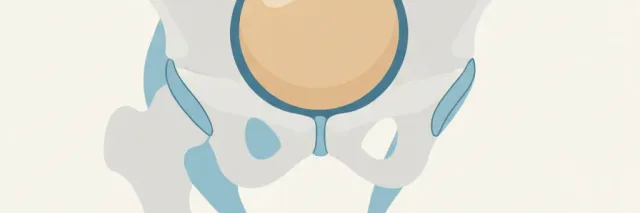
Hüftgelenksersatz
Wie groß ist die Wahrscheinlichkeit, im Laufe des Lebens ein künstliches Hüftgelenk zu benötigen?

Alzheimer
Wie hoch ist die Wahrscheinlichkeit, an Alzheimer oder einer anderen Demenz zu sterben?

Kniegelenksersatz
Wie groß ist die Wahrscheinlichkeit, im Laufe des Lebens ein künstliches Kniegelenk zu benötigen?

Menopause: Herz-Kreislauf-Risiko
Wie wahrscheinlich ist es, dass eine Frau nach den Wechseljahren eine Herz-Kreislauf-Erkrankung entwickelt — und wie stark beschleunigt die Menopause dieses Risiko?

Pflegeheimeinweisung
Wie groß ist die Wahrscheinlichkeit, in einem Pflegeheim zu verbringen mindestens eine Nacht im Laufe Ihres Lebens?

Sehverlust
Wie hoch ist die Wahrscheinlichkeit, im Laufe des Lebens einen erheblichen Sehverlust zu erleiden?

Nicht-Alzheimer-Demenz
Wie wahrscheinlich ist eine Nicht-Alzheimer-Demenz (vaskulär, Lewy-Körperchen, FTD)?

Altenvernachlässigung
Wie hoch ist die Wahrscheinlichkeit, im Pflegeheim von der Familie verlassen zu werden?
Vergleichsrisiko wählen
Hip fracture sits at an unusual intersection: it is common enough to be near-inevitable for women who live into their eighties, and serious enough to be a leading cause of loss of independent living. Across 29 European countries, the lifetime risk from age 50 reaches roughly 15% for women and 6% for men — a gap that reflects both lower peak bone density in women and longer survival into the ages when fracture risk is highest. Worldwide, approximately 1.6 million hip fractures occur each year, a figure projected to reach six million by 2050 as populations age in Asia and Latin America.
One-year mortality — up to 20% of patients, according to the SCOPE 2021 European scorecard, though only about 30% of those deaths are judged causally related to the fracture — is what transforms hip fracture from a painful but recoverable injury into a major cause of late-life death. The mechanism is often not the fracture itself but the cascade that follows: immobilisation increases the risk of pneumonia, deep-vein thrombosis, and pressure injuries; surgical repair carries perioperative risk in older patients with multiple conditions; and muscle deconditioning from even brief bed rest is difficult to reverse in the ninth decade. The risk of a second fracture within two years roughly doubles the baseline, making first-fracture prevention a high-return clinical intervention.
Regional variation in hip fracture rates is large — perhaps threefold between Northern Europe (highest) and East Asia (lowest) — and not fully explained by diet or activity alone. Genetic factors, differences in hip geometry, and urban-rural differences all contribute. The personal risk is substantially stratifiable using dual-energy X-ray absorptiometry (DEXA) and the FRAX risk calculator, which integrates bone density, age, sex, and clinical risk factors. This is a risk that rewards early assessment, not one where the only response is acceptance.
Verwandte Fakten
Im weiteren Leben ab 50 erleiden etwa 1 von 7 Frauen und 1 von 18 Männern eine Hüftfraktur. Der Geschlechterunterschied ist groß, und das Ereignis ist selten beiläufig: Bei älteren Menschen markiert eine gebrochene Hüfte oft einen scharfen Einbruch von Mobilität und Überleben im folgenden Jahr.
Quellenregister
Jede Zahl unten ist das, was die jeweilige Quelle berichtet hat — mit dem wörtlichen Zitat, auf das wir uns stützen, und wie wir zu unserer Zahl gelangt sind. Klicke auf einen Link, um direkt zu prüfen.
1/3 Quellen unabhängig wortwörtlich mit der zitierten Quelle abgeglichen
-
[1] Archives of Osteoporosis (Kanis et al.) — SCOPE 2021: a new scorecard for osteoporosis in Europe
SCOPE 2021: a new scorecard for osteoporosis in Europe- Statistik
Average lifetime probability of hip fracture at age 50 in the EU (EU27 + UK + Switzerland): 15.0% in women, 5.7% in men; up to 20% of patients die in the first year following hip fracture- Auszug
“"The average lifetime probability of hip fracture (weighted for population size) at the age of 50 years in the EU was 5.7% in men and 15.0% in women. Up to 20% of patients die in the first year following hip fracture, mostly as a result of serious underlying medical conditions; it is estimated that approximately 30% of deaths are causally related." ”
- Quelldaten von
- 2021-06-02
- Abgerufen
- 2026-07-11 · archivierte Kopie
- Berechnung
- Kanis et al., SCOPE 2021 (Arch Osteoporos 16(1):82, PMC8172408, doi 10.1007/s11657-020-00871-9) reports the population-weighted lifetime probability of hip fracture from age 50 across the 29 countries of the EU27 plus the UK and Switzerland. Native rate: 15 in 100 women from age 50 (direct lifetime probability, verbatim from the paper). Normalized: 0.15 (no conversion needed; figure is already expressed as lifetime probability). Europe-29 pooled estimate used as proxy for global high-income-country rate. Male rate 0.057 treated as supporting figure. Mortality: the paper states up to 20% of hip-fracture patients die within one year (of which ~30% of deaths are causally related to the fracture) — this replaces an earlier "21–30% excess mortality" figure that was not supported by any cited source.
-
[2] Osteoporosis International — Hip fractures in the elderly: a world-wide projection
Hip fractures in the elderly: a world-wide projection- Statistik
Hip fractures worldwide projected to rise from 1.66 million in 1990 to 6.26 million by 2050, with the burden shifting to Asia and Latin America- Auszug
“"The projections indicate that the number of hip fractures occurring in the world each year will rise from 1.66 million in 1990 to 6.26 million by 2050. While Europe and North America account for about half of all hip fractures among elderly people today, this proportion will fall to around one quarter in 2050, by which time steep increases will be observed throughout Asia and Latin America." ”
- Quelldaten von
- 1992-11-01
- Abgerufen
- 2026-06-30 · archivierte Kopie
- Berechnung
- Cooper, Campion & Melton 1992 (Osteoporos Int 2(6):285-9, PMID 1421796) is the original source of the ~1.66M-in-1990 to ~6.26M-by-2050 world-wide hip fracture projection cited in the assumption text. Used here for global burden context, not for the lifetime probability calculation directly. The lifetime probability (0.15) is drawn from the Kanis et al. SCOPE 2021 source above.
-
[3] The Lancet — Epidemiology and outcomes of osteoporotic fractures Verifiziert
Epidemiology and outcomes of osteoporotic fractures- Statistik
Hip fracture frequency is rising 1–3% per year in most regions and varies more widely from region to region than vertebral fracture prevalence- Auszug
“"Hip fractures, the most serious outcome of osteoporosis, are becoming more frequent than before because the world's population is ageing and because the frequency of hip fractures is increasing by 1-3% per year in most areas of the world. Rates of hip fracture vary more widely from region to region than does the prevalence of vertebral fractures." ”
- Quelldaten von
- 2002-05-18
- Abgerufen
- 2026-06-30 · archivierte Kopie
- Verifizierung
- Der Auszug wurde bei unserer Grounding-Prüfung unabhängig erneut abgerufen und Wort für Wort mit der zitierten Quelle abgeglichen.
- Berechnung
- Cummings & Melton 2002 Lancet review (Lancet 359(9319):1761-7, PMID 12049882) — foundational epidemiological reference establishing that hip fractures are the most serious osteoporotic outcome, that incidence is rising 1–3% per year, and that rates vary widely by region. Used as a historical anchor to corroborate the regional variation and rising-burden context; the headline lifetime probability (0.15) and the one-year mortality figure (up to 20% of patients) are drawn from the Kanis et al. SCOPE 2021 source above.