Evidenzqualität 4.88/5
Bewertungsergebnis nach acht Dimensionen gemäß der Qualitätsrubrik . Jede Dimension wird mit 1–5 bewertet.
- D1 Quellenverankerung
- 5/5
- D2 Quellenautorität
- 5/5
- D3 Arithmetik
- 5/5
- D4 Unsicherheit
- 5/5
- D5 Geltungsbereich
- 5/5
- D6 Prosa
- 5/5
- D7 Ehrlichkeit zur Wahrnehmung
- 4/5
- D8 Vollständigkeit der Einschränkungen
- 5/5
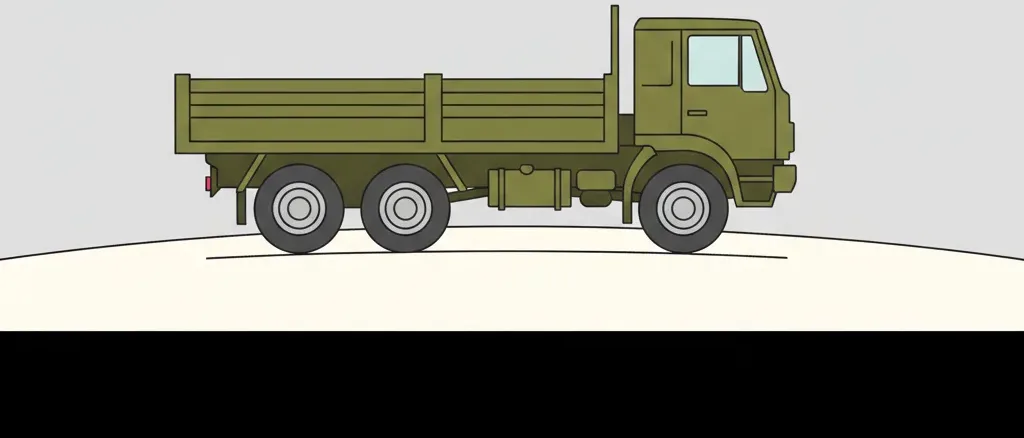
The intuition that military support and logistics roles are substantially safer than frontline infantry is directionally correct but less reliable than it once was. In the 1982 Lebanon War, a peer-reviewed military medicine analysis found support units accounted for 16-21% of total casualties while infantry accounted for 43-56%, a ratio of approximately 2-3:1 in favor of support troops. This distribution shows that support roles carried meaningfully lower risk than direct-combat roles in conventional warfare — but “lower” is not “negligible,” particularly in high-intensity conflicts.
The Ukraine conflict has introduced a specific complication: FPV drones, long-range precision rockets, and ballistic missiles with reported ranges of 50-200 kilometers have specifically targeted logistics depots, fuel dumps, railway hubs, repair facilities, and supply convoys throughout the conflict. The geographic assumption underlying the historical infantry-to-support differential — that rear-area personnel are physically separated from the battlefield — has been partially eroded. Ukraine’s own National Security and Defense Council reported in January 2026 that drone strikes account for roughly 60% of all Russian battlefield losses — further evidence that no rear-area role is as geographically insulated from precision weapons as the historical infantry-to-support ratios assume. Whether this has fundamentally shifted per-capita support casualty rates to match frontline rates, or has merely nudged them upward, cannot be determined from currently available disaggregated casualty data.
No reliable per-capita casualty rate for support and logistics roles in the Ukraine conflict is publicly available. Ukrainian casualty data is classified as a state secret and is not disaggregated by military occupational specialty. Applying 1982 Lebanon War or WWII-era infantry-to-support ratios to the current conflict would produce a number without meaningful empirical grounding in modern drone warfare conditions. The honest conclusion is that support-role risk in a Ukraine-scale conflict is: substantially lower than frontline infantry, materially higher than the near-zero conventional assumptions, and not currently quantifiable from public data with sufficient precision to report as a single probability.
Verwandte Fakten
Es gibt keine verlässliche Zahl für die Wahrscheinlichkeit, dass ein Logistik- oder Unterstützungssoldat in einem Krieg vom Ausmaß der Ukraine getötet oder schwer verwundet wird. Drohnen und Tiefschlagwaffen haben die alte Sicherheit der rückwärtigen Gebiete untergraben, doch Daten, die Unterstützungs- von Kampfrollen trennen, werden nicht veröffentlicht.
Quellenregister
Jede Zahl unten ist das, was die jeweilige Quelle berichtet hat — mit dem wörtlichen Zitat, auf das wir uns stützen, und wie wir zu unserer Zahl gelangt sind. Klicke auf einen Link, um direkt zu prüfen.
2/3 Quellen unabhängig wortwörtlich mit der zitierten Quelle abgeglichen
-
[1] Military Medicine (Oxford Academic / PMC) — Review of Military Casualties in Modern Conflicts -- The Re-emergence of Casualties From Armored Warfare Verifiziert
Review of Military Casualties in Modern Conflicts -- The Re-emergence of Casualties From Armored Warfare- Statistik
In the 1982 Lebanon War, support units accounted for 21.1% of casualties in urban combat and 16.6% in non-urban combat, compared to infantry at 56% and 43% respectively.- Auszug
“"In the 1982 Lebanon War, infantry suffered the highest fraction of battlefield injuries in both urban and non-urban combat, at 56% and 43% respectively, followed by armor divisions at 17.1% and 34.8%, and support units at 21.1% and 16.6%." ”
- Quelldaten von
- 2022-01-01
- Abgerufen
- 2026-05-09 · archivierte Kopie
- Verifizierung
- Der Auszug wurde bei unserer Grounding-Prüfung unabhängig erneut abgerufen und Wort für Wort mit der zitierten Quelle abgeglichen.
- Berechnung
- This study provides share-of-total-casualties data by role category, not per-capita rates. The support-unit share (16-21%) relative to infantry share (43-56%) shows that support troops were somewhat less likely to be casualties, but the ratio is much less favorable than civilian intuition would suggest. The paper cannot be used to derive a per-capita support-troop rate for Ukraine because: (a) the 1982 Lebanon War used different doctrine and technology, (b) the troop mix was different, and (c) the rise of long-range precision weapons and FPV drones in Ukraine has specifically targeted logistics and support infrastructure. This source establishes the historical baseline but does not provide a reliable modern estimate.
- Unabhängigkeit
- Military Medicine is a peer-reviewed journal of the Association of Military Surgeons of the United States; the study is independent of Ukrainian or Russian government data.
-
[2] Wikipedia (citing military doctrine and historical analysis) — Tooth-to-tail ratio
Tooth-to-tail ratio- Statistik
In the 2005 Iraq deployment, combat troops comprised only 11% of personnel (a tooth-to-tail ratio of 1:8.1), down from 19% in WWII (1:4.3) -- the large majority of a modern force is logistics and support.- Auszug
“"The tooth-to-tail ratio (T3R), in military jargon, is the number of military personnel it takes to supply and support ('tail') each combat soldier ('tooth'). [...] WW2: 19% combat proportion, ratio 1 : 4.3 [...] Iraq 2005: 11% combat proportion, ratio 1 : 8.1." ”
- Quelldaten von
- 2024-01-01
- Abgerufen
- 2026-05-09 · archivierte Kopie
- Berechnung
- The tooth-to-tail ratio documents the relative size of support versus combat forces but does not provide per-capita casualty rates for support troops in high-intensity peer-on-peer warfare. Ukraine is understood to operate with a much lower tooth-to-tail ratio than the modern US military (Ukraine's acute manpower shortage has pushed more personnel toward direct combat roles), making US-derived support/combat troop ratios even less applicable to the Ukraine context. Cited as structural context, not as a basis for a numeric estimate.
- Unabhängigkeit
- Sourced from military doctrine and historical records; independent of the PMC military medicine study.
-
[3] National Security and Defense Council of Ukraine (RNBO) — Results of Ukraine's Defense Industry in 2025: FPV Drones Verifiziert
Results of Ukraine's Defense Industry in 2025: FPV DronesSee all 2 Likelier entries citing this source →
- Statistik
60% of Russian army losses are inflicted through the use of FPV drones (stated January 2026)- Auszug
“"Today, 60% of the losses of the Russian army are inflicted precisely through the use of FPV drones." ”
- Quelldaten von
- 2026-01-23
- Abgerufen
- 2026-07-04 · archivierte Kopie
- Verifizierung
- Der Auszug wurde bei unserer Grounding-Prüfung unabhängig erneut abgerufen und Wort für Wort mit der zitierten Quelle abgeglichen.
- Berechnung
- Cited as evidence that long-range and FPV drone strikes have become the dominant casualty mechanism in the conflict, supporting the body's point that rear-area and logistics targets are no longer geographically insulated the way historical infantry-to-support ratios assume. This is a Russian-side casualty-attribution figure (Ukrainian casualty data broken down by role or mechanism is not published), used as the best available public evidence for the general trend; it is not used to derive a per-capita support-troop rate, which this entry flags as unquantifiable from public data.
- Unabhängigkeit
- RNBO is an official Ukrainian government body; this is Kyiv's own assessment of Russian losses, independent of the PMC military-medicine study and the tooth-to-tail source above.